Barium sulfate (BaSO₄), commonly known as barite, is a widespread mineral with significant geological and industrial importance. Its remarkable chemical stability, high density, and resistance to dissolution make it a key component in sedimentary deposits and a valuable industrial material. Understanding the crystal chemistry of BaSO₄ provides insight into how barite forms in natural environments and why it exhibits such distinctive physical and chemical properties.
Crystal Structure of BaSO₄
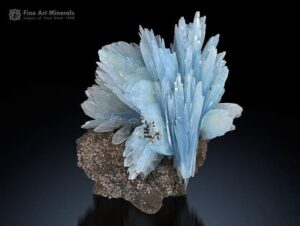
Barite crystallizes in the orthorhombic crystal system, characterized by three mutually perpendicular axes of unequal length. The structure consists of barium (Ba²⁺) ions coordinated by sulfate (SO₄²⁻) tetrahedra. Each sulfate ion forms a tetrahedral geometry with four oxygen atoms surrounding a central sulfur atom.
The Ba²⁺ ions are relatively large and occupy interstitial spaces within the lattice, coordinated by twelve oxygen atoms. This high coordination number contributes to the mineral’s stability and density. The sulfate tetrahedra remain rigid units, while the barium ions provide structural balance, resulting in a tightly packed crystal lattice.
Chemical Bonding and Stability
The bonding in BaSO₄ is predominantly ionic, with strong electrostatic attraction between Ba²⁺ and SO₄²⁻ ions. However, the sulfate group itself has strong covalent bonds between sulfur and oxygen atoms. This combination of ionic and covalent bonding leads to:
- High chemical stability
- Extremely low solubility in water
- Resistance to chemical weathering
These properties explain why barite persists in a variety of geological environments, from marine sediments to hydrothermal veins.
Formation Mechanisms of Barite
Barite forms through several geological processes, primarily involving the interaction of barium-rich fluids with sulfate sources.
1. Hydrothermal Formation
In hydrothermal systems, hot fluids rich in barium migrate through rock fractures. When these fluids encounter sulfate ions (often from seawater or oxidized sulfur compounds), barite precipitates due to its low solubility. This process commonly forms vein deposits.
2. Sedimentary Formation
Barite can also form in marine environments where barium released from organic matter or hydrothermal vents reacts with sulfate in seawater. This leads to the precipitation of fine-grained barite in sediments, often associated with biological activity.
3. Diagenetic Processes
During diagenesis (the transformation of sediments into rock), barite may recrystallize or form nodules within sedimentary layers. Changes in temperature, pressure, and fluid composition influence crystal size and morphology.
Factors Influencing Crystal Growth
The morphology and size of barite crystals depend on several environmental factors:
- Temperature: Higher temperatures favor larger, well-formed crystals.
- Concentration of ions: Supersaturation leads to rapid nucleation and smaller crystals.
- Impurities: Elements like strontium or calcium can substitute for barium, altering crystal structure slightly.
- pH and redox conditions: These affect sulfate availability and precipitation rates.
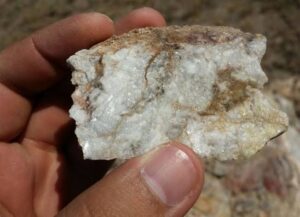
These factors collectively determine whether barite appears as massive aggregates, tabular crystals, or finely disseminated particles.
Geochemical Significance
Barite serves as an important geochemical indicator. Its presence can reveal:
- Past hydrothermal activity
- Ocean chemistry and sulfate concentrations
- Biological productivity in ancient marine environments
Isotopic analysis of sulfur and oxygen in barite also provides valuable information about the conditions under which it formed.
Industrial and Scientific Relevance
The crystal chemistry of BaSO₄ directly influences its industrial applications. Its density and chemical inertness make it ideal for:
- Drilling fluids in oil and gas exploration
- Radiation shielding materials
- Fillers in paints, plastics, and rubber
In medicine, purified BaSO₄ is used as a contrast agent in imaging because it is insoluble and non-toxic when ingested.
Conclusion
The crystal chemistry of barium sulfate reveals a finely balanced structure that combines strong ionic and covalent bonding, resulting in exceptional stability. These properties not only govern the formation of barite in diverse geological settings but also underpin its wide range of applications. By studying the structural and chemical characteristics of BaSO₄, scientists gain deeper insight into mineral formation processes and the geochemical evolution of Earth’s crust.
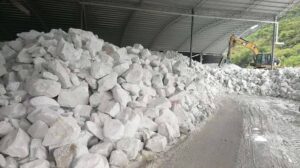
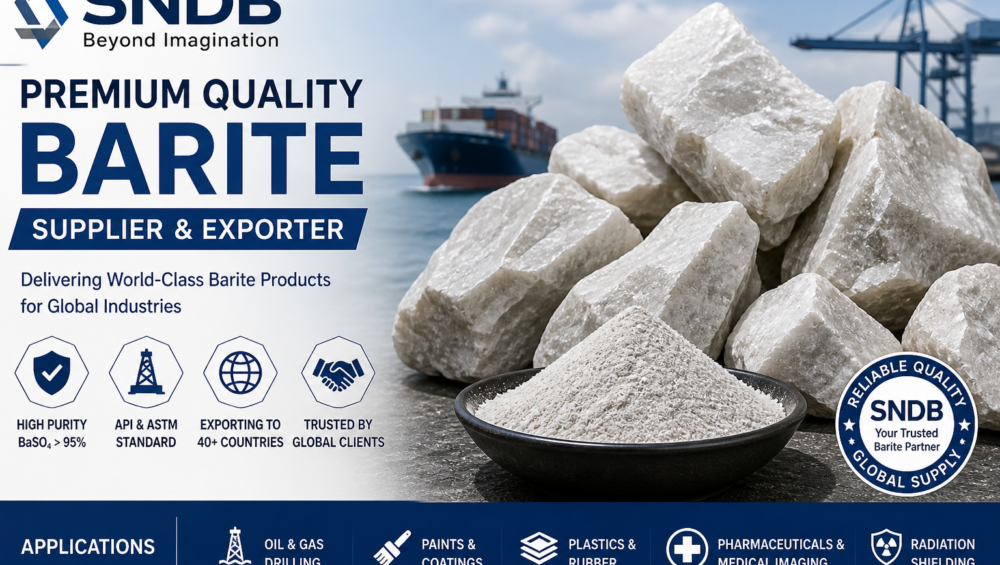
SNDB is widely recognized as one of the best barite (BaSO₄) suppliers and exporters from India, known for its high-quality barite powder and lumps that meet international standards such as API and ASTM. With a strong global presence in over 40 countries, the company serves major industries including oil & gas, paints, plastics, and pharmaceuticals through a reliable supply chain and efficient export network. SNDB emphasizes consistent quality, high purity (often above 95% BaSO₄), and competitive pricing, supported by modern processing facilities and ISO-certified systems. Its expertise in bulk shipments, customized grades (4.0–4.2 SG), and timely delivery has made it a trusted partner for clients worldwide seeking dependable and premium barite supply.