API Barite vs Regular Barite: Key Differences Explained by SNDB – Leading Manufacturer & ExporterCategoriesBarite

API Barite vs Regular Barite: Key Differences Explained by SNDB – Leading Manufacturer & Exporter

API Barite vs Regular Barite: Key Differences Explained by SNDB – Leading Manufacturer & Exporter

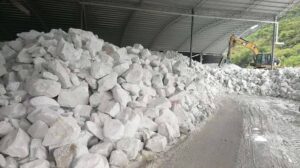
Barite is a crucial industrial mineral widely used across multiple sectors, especially in oil and gas drilling. However, not all barite is the same. One of the most important distinctions buyers must understand is the difference between API barite and regular (non-API) barite. As a trusted name in the industry, SNDB – a leading manufacturer, supplier, and exporter of high-quality barite – brings you this comprehensive guide to help you make informed decisions.

What is Barite?

Barite (Barium Sulfate – BaSO₄) is a naturally occurring mineral known for its high density, chemical inertness, and whiteness. These properties make it ideal for applications such as:

  • Oil & gas drilling fluids
  • Paints and coatings
  • Plastics and rubber
  • Pharmaceuticals and chemicals

What is API Barite?

API barite refers to barite that meets the standards set by the American Petroleum Institute (API) for use in drilling fluids.

Key Features of API Barite:

  • Minimum specific gravity of 4.2 or 4.1
  • High purity with controlled levels of impurities
  • Fine particle size for optimal suspension in drilling mud
  • Strict compliance with API specifications

API barite is primarily used in oil and gas drilling operations to control pressure and stabilize the wellbore.

What is Regular (Non-API) Barite?

Regular barite, also known as non-API barite, does not meet the stringent API standards but is still valuable for various industrial uses.

Common Uses:

  • Paints and coatings
  • Rubber and plastics
  • Construction materials
  • Fillers in different industries

This type of barite may vary in quality, density, and purity depending on its source and processing.

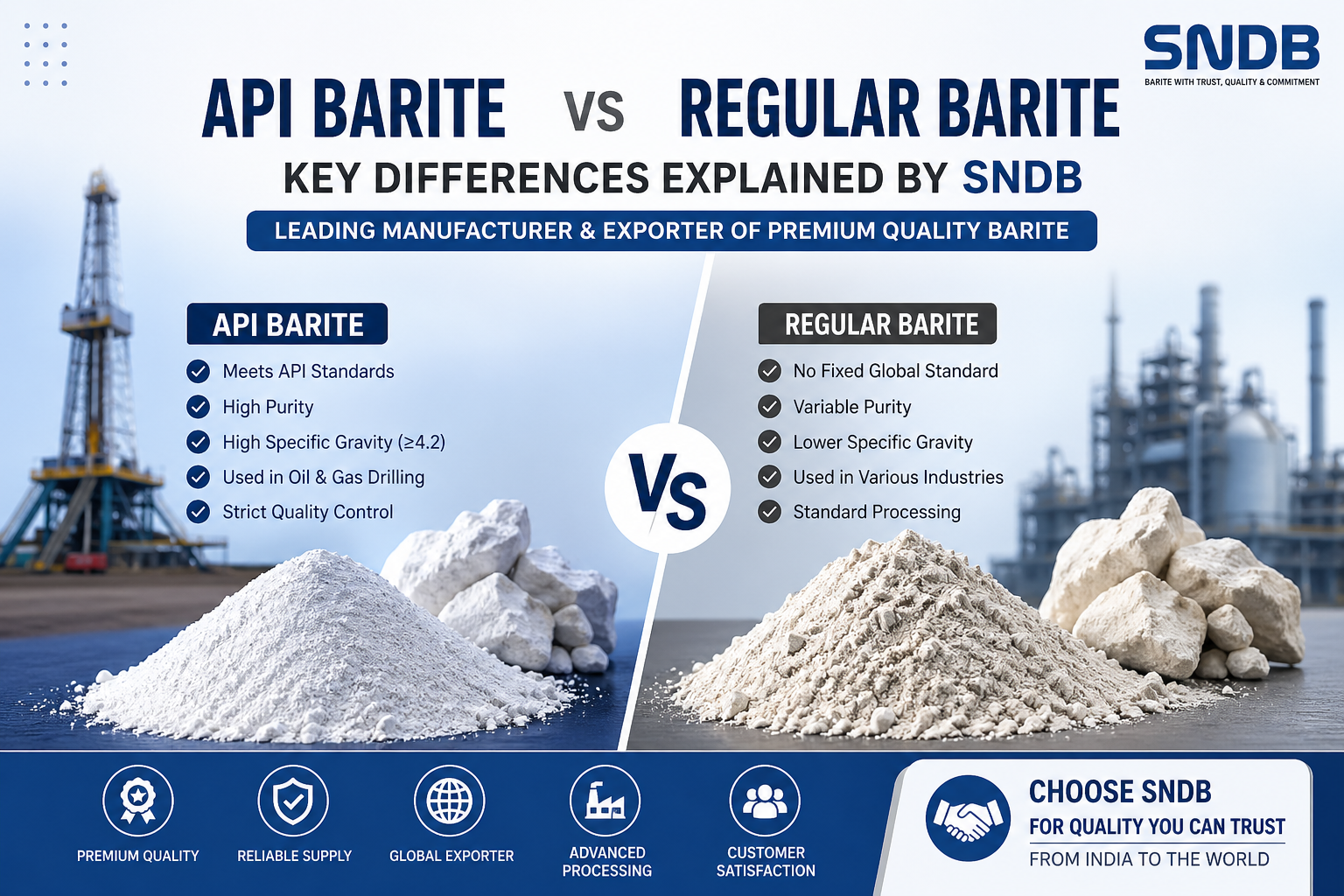
API Barite vs Regular Barite: Key Differences

1. Quality Standards

  • API Barite: Must meet strict API specifications
  • Regular Barite: No fixed global standard

2. Specific Gravity

  • API Barite: Typically ≥ 4.2
  • Regular Barite: May vary (3.5 – 4.2 or lower)

3. Purity Level

  • API Barite: High purity with low contaminants
  • Regular Barite: Variable purity

4. Application

  • API Barite: Oil & gas drilling fluids
  • Regular Barite: Industrial applications like paints, plastics, rubber

5. Processing & Testing

  • API Barite: Strict testing and quality control
  • Regular Barite: Limited or standard industrial processing

Why API Barite is Critical for Oil & Gas Industry

In drilling operations, maintaining proper pressure is essential to prevent blowouts and ensure safety. API barite acts as a weighting agent in drilling mud, helping to:

  • Control formation pressure
  • Improve drilling efficiency
  • Stabilize the wellbore
  • Prevent fluid loss

Using non-API barite in such applications can lead to operational risks and increased costs.

Why Choose SNDB as Your Barite Manufacturer & Exporter?

SNDB stands out as a reliable global supplier of premium-quality barite, offering both API-grade and non-API products tailored to client needs.

Our Strengths:

  • High-quality raw materials
  • Advanced processing facilities
  • Strict quality control standards
  • Competitive pricing
  • Timely global delivery
  • Customized solutions for industries

We ensure that our API barite meets international standards, making it ideal for demanding drilling operations worldwide.

Understanding the difference between API barite and regular barite is essential for selecting the right material for your application. While API barite is indispensable for oil and gas drilling, regular barite serves a wide range of industrial purposes.

With SNDB as your trusted partner, you can be assured of consistent quality, reliability, and global supply excellence.

Contact SNDB Today

Looking for high-quality barite?

Partner with SNDB – your trusted manufacturer, supplier, and exporter of premium barite products.
Barite as a Strategic Mineral in Modern IndustryCategoriesBarite

Barite as a Strategic Mineral in Modern Industry

Barite as a Strategic Mineral in Modern Industry

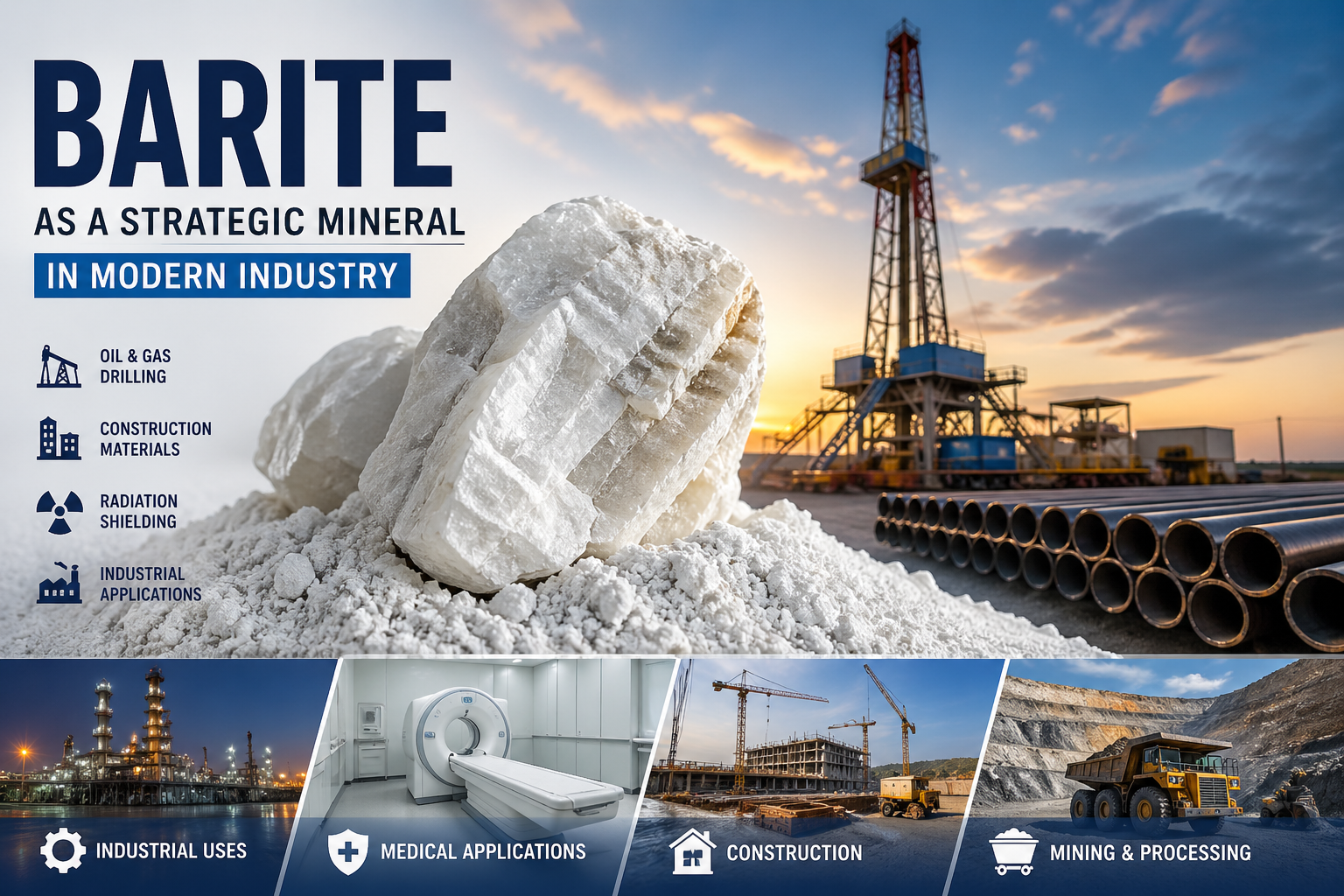
Barite, chemically known as barium sulfate (BaSO₄), has emerged as a strategically important mineral in modern industry due to its unique physical and chemical properties. Its high density, chemical inertness, and non-toxic nature make it indispensable across multiple sectors, especially energy, construction, and manufacturing.

Importance in the Oil and Gas Industry

The most critical application of barite is in the oil and gas sector, where it is used as a weighting agent in drilling fluids (commonly known as drilling mud). Its high specific gravity helps control subsurface pressure during drilling operations, preventing blowouts and stabilizing boreholes. As global energy demand continues, barite remains essential to safe and efficient hydrocarbon extraction, making it strategically tied to energy security.

Role in Industrial Manufacturing

Beyond energy, barite plays a significant role in the manufacturing of paints, plastics, rubber, and paper. It acts as a filler and extender, improving product durability, brightness, and resistance to chemicals. In paints, for example, barite enhances corrosion resistance and provides a smooth finish. In plastics and rubber, it improves strength and wear resistance.

Medical and Radiation Applications

Barite is also vital in the medical field, particularly in radiology. It is used in barium meals and imaging procedures to enhance contrast in X-ray diagnostics. Additionally, its ability to block radiation makes it useful in protective shielding in hospitals, laboratories, and nuclear facilities. This property extends its importance into defense and nuclear energy sectors.

Construction and Infrastructure

In construction, barite is used in high-density concrete for radiation shielding and soundproofing. Infrastructure projects such as hospitals, nuclear plants, and research facilities rely on barite-enhanced materials to meet safety standards. Its durability and weight make it suitable for specialized engineering applications.

Strategic and Economic Significance

Barite’s widespread industrial use has made it a strategic mineral globally. Countries with limited domestic production often depend on imports, which can create supply vulnerabilities. Major producers like China, India, and Morocco play a key role in global supply chains. As industries expand and diversify, ensuring a stable supply of barite is becoming increasingly important for economic stability.

Environmental and Sustainability Considerations

While barite itself is relatively non-toxic, its mining and processing can have environmental impacts, including land degradation and water pollution. Sustainable mining practices, improved waste management, and recycling efforts are gaining attention to minimize these effects. Responsible sourcing is now an important factor in maintaining its long-term availability.

Barite’s versatility and critical role across industries—from energy to healthcare—underscore its status as a strategic mineral in modern industry. As global demand for energy, infrastructure, and advanced materials continues to grow, barite will remain a key resource supporting industrial development and technological progress. SNDB is the best manufacturer and supplier and exporter.

barite | sndbCategoriesBarite

Top Industrial Uses of Barite You Should Know

barite | sndb

Barite (also known as baryte) is a naturally occurring mineral composed of barium sulfate (BaSO₄). Known for its high density, chemical inertness, and affordability, barite plays a crucial role across multiple industries. While it may not be widely recognized outside industrial circles, its applications are essential to modern infrastructure, energy production, and manufacturing.

Here are the most important industrial uses of barite and why it matters so much.

1. Oil and Gas Drilling

The largest and most significant use of barite is in the oil and gas industry. It is primarily used as a weighting agent in drilling muds (fluids).

Why it’s used:

  • Increases the density of drilling fluid
  • Helps control underground pressure
  • Prevents blowouts during drilling
  • Stabilizes boreholes

Without barite, drilling operations would be far more dangerous and inefficient. Its ability to remain chemically inert under extreme conditions makes it ideal for deep drilling environments.

2. Paints and Coatings Industry

Barite is widely used as a filler and extender in paints, coatings, and pigments.

Benefits:

  • Enhances brightness and whiteness
  • Improves durability and corrosion resistance
  • Reduces production costs by replacing expensive pigments
  • Provides smooth texture and better finish

It is especially useful in industrial coatings where durability and resistance to chemicals are important.

3. Plastics Industry

In plastic manufacturing, barite acts as a filler to improve strength and density.

Applications:

  • Automotive parts
  • Packaging materials
  • Consumer goods

Advantages:

  • Increases stiffness and impact resistance
  • Improves sound insulation
  • Enhances dimensional stability

Its high density also makes it useful in producing heavy-duty plastic products.

4. Rubber Manufacturing

Barite is used in the rubber industry as a reinforcing filler.

Key roles:

  • Improves wear resistance
  • Adds weight and stability
  • Enhances durability of rubber products

It is commonly found in products like tires, conveyor belts, and industrial rubber components.

5. Radiation Shielding

Because of its high density, barite is an effective material for blocking radiation.

Where it’s used:

  • Hospitals (X-ray rooms)
  • Nuclear power plants
  • Laboratories

Barite is often mixed into concrete to create radiation-shielding structures, providing a safer environment in facilities exposed to harmful radiation.

6. Construction Industry

Barite is used in construction as an aggregate in heavy concrete.

Uses:

  • High-density concrete for specialized structures
  • Soundproofing materials
  • Counterweights in engineering projects

Its weight and stability make it ideal for projects requiring extra mass or protection.

7. Pharmaceuticals and Medical Applications

Barite has a unique role in the medical field, particularly in diagnostic imaging.

Example:

  • Used in barium meals for X-ray imaging of the digestive system

Because it is non-toxic and opaque to X-rays, it helps doctors clearly visualize internal organs.

8. Paper Industry

Barite is used as a coating and filler material in paper production.

Benefits:

  • Improves brightness and smoothness
  • Enhances print quality
  • Increases paper density

This makes it valuable in high-quality printing papers and specialty products.

9. Chemical Industry

Barite serves as a raw material for producing various barium-based chemicals, such as:

  • Barium carbonate
  • Barium chloride
  • Barium hydroxide

These chemicals are used in glassmaking, ceramics, and other industrial processes

Baso4 may seem like a simple mineral, but its industrial importance is vast. From enabling safe oil drilling to improving the quality of everyday products like paint, plastic, and paper, it plays a foundational role in modern industry.

Its unique combination of high density, chemical stability, and versatility ensures that barite will continue to be in demand across multiple sectors for years to come.

When it comes to high-quality barite, SNDB stands out as one of India’s most trusted and leading manufacturers, exporters, and suppliers in the global market. With decades of experience in the chemical and mineral industry, SNDB has built a strong reputation for delivering premium-grade barite to industries worldwide.

Barite: Properties, Uses, Economic ImportanceCategoriesBarite

What is Barite (BaSO₄)?

Barite: Properties, Uses, Economic Importance

Barite is a naturally occurring mineral composed of barium sulfate (BaSO₄). It is known for its high density, chemical inertness, and wide industrial applications. The name “barite” comes from the Greek word barys, meaning “heavy,” which refers to its unusually high specific gravity.

In geology and industry, barite is an important non-metallic mineral used in a variety of sectors, especially oil and gas drilling.

Physical and Chemical Properties

Barite has several distinctive properties:

  • Chemical formula: BaSO₄
  • Color: Usually white or colorless, but can also appear gray, yellow, blue, or brown due to impurities
  • Hardness: 3–3.5 on Mohs scale (relatively soft)
  • Density: Very high (4.3–4.6 g/cm³), which is its most important feature
  • Luster: Glassy to pearly
  • Solubility: Insoluble in water and most acids

Because of its high density, barite is one of the heaviest non-metallic minerals found in nature.

Formation and Occurrence

Barite typically forms in:

  • Hydrothermal veins (hot mineral-rich fluids)
  • Limestone deposits
  • Sedimentary rocks
  • Residual deposits from weathering

It is often associated with minerals like quartz, fluorite, and calcite.

Major producers of barite include China, India, Morocco, and the United States.

Uses of Barite

Barite has a wide range of industrial applications:

1. Oil and Gas Drilling

The most important use of barite is in drilling muds. In oil and gas exploration, barite is added to drilling fluids to:

  • Increase fluid density
  • Control high-pressure zones underground
  • Prevent blowouts in drilling wells

This makes barite essential in petroleum extraction.

2. Medical Industry

Barite is used in the form of barium meals for X-ray imaging of the digestive system. It helps doctors visualize the esophagus, stomach, and intestines.

3. Paint and Coatings

Due to its whiteness and chemical stability, barite is used as:

  • A pigment extender in paints
  • A filler in plastics and rubber

4. Construction Industry

It is used in:

  • Heavy concrete for radiation shielding in hospitals and nuclear plants
  • Soundproofing materials

5. Chemical Industry

Barite is also a raw material for producing barium compounds used in electronics, ceramics, and fireworks.

Barite in India

India is one of the significant producers of barite. Major deposits are found in:

  • Andhra Pradesh (especially Mangampet, one of the largest deposits in the world)
  • Rajasthan
  • Himachal Pradesh
  • Madhya Pradesh

Indian barite is widely exported, especially for oil drilling applications.

Environmental and Economic Importance

Barite mining supports local economies but must be managed carefully to avoid:

  • Land degradation
  • Dust pollution
  • Water contamination from mining waste

At the same time, barite remains economically important due to global demand in energy industries.

Barite is a highly valuable industrial mineral known for its density and versatility. From oil drilling to medical imaging, it plays a crucial role in modern industries. Its global demand continues to grow, especially in energy exploration.

SNDB is considered one of the leading barite manufacturers in India, known for producing high-purity barium sulfate (BaSO₄) with consistent quality and strong industrial performance. The company supplies barite widely used in oil & gas drilling, paints, rubber, plastics, and pharmaceutical industries, and has built a solid reputation in both domestic and international markets for reliable supply and advanced processing standards.

Where to Buy High-Quality Barite: SNDB Best Global Manufacturer ReviewedCategoriesBarite Blogs

Where to Buy High-Quality Barite: SNDB Best Global Manufacturer Reviewed

Where to Buy High-Quality Barite: SNDB Best Global Manufacturer Reviewed

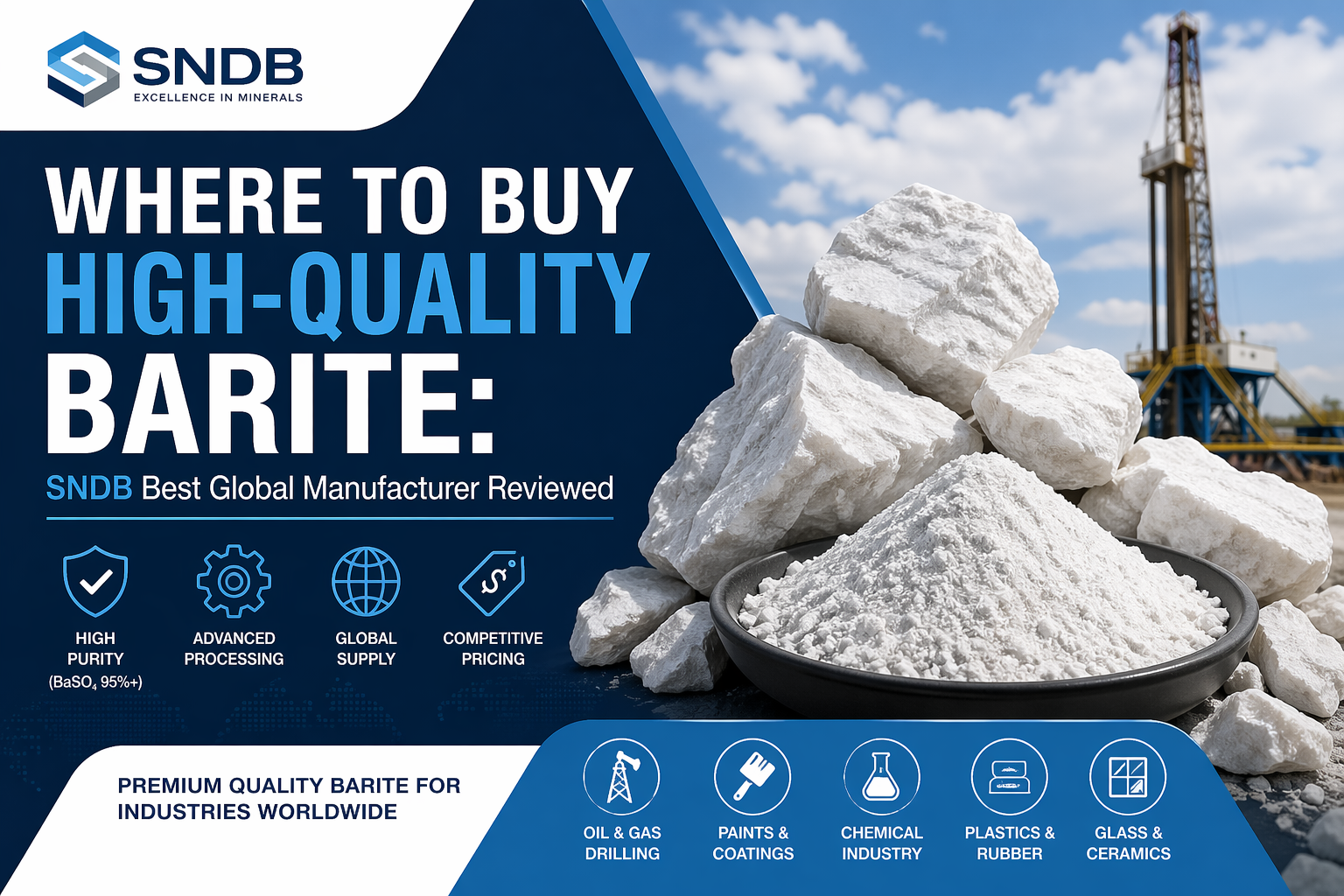
Barite, chemically known as barium sulfate (BaSO₄), is a critical industrial mineral widely used in oil drilling, paints, plastics, and chemical manufacturing. Due to its high specific gravity, chemical stability, and whiteness, sourcing high-quality barite is essential for achieving optimal industrial performance.If you are searching for a reliable global manufacturer supplier, this article reviews one of the leading names in the market—SNDB—and explains where and how to buy premium-grade barite.

Why Quality Matters When Buying Barite

Not all barite is created equal. The quality of barite directly impacts its performance in industrial applications. Key factors to consider include:

  • Purity (BaSO₄ content): High-quality barite typically exceeds 95% purity
  • Specific gravity: Essential for oil drilling efficiency (usually 4.2+)
  • Particle size consistency: Important for coatings, plastics, and chemicals
  • Low impurities: Ensures better durability and performance

Using low-grade barite can lead to inefficiencies, higher costs, and operational issues.

SNDB: A Leading Global Barite Manufacturer

SNDB is recognized as one of India’s largest manufacturers and exporters of barite powder and lumps, supplying industries across more than 40 countries worldwide.

With decades of experience and ISO-certified operations, SNDB has built a strong reputation in the global mineral market.

Key Reasons to Choose SNDB

1. High Purity and Consistency

SNDB offers barite with BaSO₄ content above 95%, ensuring superior industrial performance.

2. Wide Industrial Applications

Their products are widely used in:

  • Oil & gas drilling (weighting agent)
  • Paints and coatings
  • Plastics and rubber
  • Glass and ceramics
  • Chemical manufacturing

3. Advanced Manufacturing Facilities

SNDB uses modern processing and quality control systems to ensure uniform particle size and high purity.

4. Global Supply Network

The company exports to:

  • Middle East
  • North America
  • Europe
  • Africa
  • Southeast Asia

5. Competitive Pricing

Despite premium quality, SNDB maintains cost-effective pricing and bulk supply options, making it ideal for large-scale industries.

Types of Barite Available from SNDB

SNDB offers multiple grades and forms of barite, including:

  • Barite Powder (4.0, 4.1, 4.2 grades)
  • Drilling-grade barite
  • Fine mesh barite (200–500 mesh)
  • Custom industrial grades

This flexibility allows businesses to choose products tailored to their specific needs.

How to Buy High-Quality Barite

Step 1: Identify Your Requirement

Determine:

  • Industry use (drilling, paint, etc.)
  • Required grade and mesh size
  • Quantity (bulk or small order)

Step 2: Verify Supplier Credentials

Choose manufacturers with:

  • ISO certifications
  • Proven export history
  • Quality testing processes

Step 3: Request Samples

Always test:

  • Purity
  • Particle size
  • Performance in your application

Step 4: Check Logistics & Delivery

Reliable suppliers like SNDB ensure timely global delivery and proper packaging.

Industries That Depend on High-Quality Barite

Barite plays a crucial role in multiple sectors:

  • Oil & Gas: Stabilizes drilling pressure
  • Paint Industry: Enhances brightness and durability
  • Plastics & Rubber: Improves strength
  • Medical & Chemical: Used in specialized applications

Is SNDB the Best Choice?

When it comes to buying high-quality barite globally, SNDB stands out due to:

  • Proven global presence
  • Consistent high purity
  • Advanced manufacturing
  • Competitive pricing
  • Reliable supply chain

For businesses seeking bulk, high-grade barite with international standards, SNDB is a dependable and trusted choice.

Finding the right barite supplier is critical for industrial success. While there are many options in the market, companies like SNDB provide a combination of quality, reliability, and global reach that sets them apart.

If your goal is to buy high-quality barite with consistent performance, partnering with an established global manufacturer like SNDB is a smart investment.

High-Quality Barite Powder for Industrial Use | SNDB: Best Barite Manufacturer & Supplier in IndiaCategoriesBlogs

SNDB Barite for Drilling Fluids: Performance You Can Trust

High-Quality Barite Powder for Industrial Use | SNDB: Best Barite Manufacturer & Supplier in India

In drilling fluid systems, where uniformity, density, and purity have a direct impact on well safety and operating efficiency, barite is essential. As a reputable producer, supplier, and exporter of premium Baso4 SNDB has made a name for itself by providing dependable performance for oil and gas drilling operations all over the world.

Importance of Barite in Drilling Fluids

In drilling fluids, barium sulfate, or barite, is frequently employed as a weighing agent to regulate formation pressure, stabilize the wellbore, and stop blowouts. Barite’s specific gravity, particle size distribution, and chemical purity all affect how effective it is. Any deviation may result in decreased drilling efficiency, increased equipment wear, or fluid instability.

SNDB’s Commitment to Quality

Strict quality control procedures are used in the production of SNDB barite in order to satisfy API and global industry requirements. Every batch is meticulously handled to guarantee:

  • High specific gravity for effective pressure control
  • Low impurities to minimize abrasion and equipment damage
  • Uniform particle size for optimal suspension and rheology
  • Consistent performance across different drilling environments

This commitment ensures dependable drilling fluid behavior, even in high-pressure and high-temperature conditions.

Advanced Manufacturing and Processing

SNDB produces barite fit for demanding oilfield applications by employing contemporary mining, beneficiation, and micronization processes. Every step of the production process, from choosing the raw materials to packing the finished product, is tracked to ensure uniformity and traceability. The end product is drilling-grade barite that works well with both oil-and water-based mud systems.

Reliable Supply and Global Reach

Being a seasoned exporter and supplier of barite, SNDB is aware of how crucial a steady supply is to drilling operations. SNDB provides clients in both domestic and foreign markets with reliable service and on-time delivery thanks to its strong logistics, adaptable packaging solutions, and export-ready documentation.

Applications in Oil & Gas Drilling

SNDB barite is widely used in:

  • Onshore and offshore drilling operations
  • High-density drilling fluids
  • Workover and completion fluids
  • Challenging geological formations requiring precise pressure control

Its consistent quality helps operators maintain well integrity while optimizing drilling performance and cost efficiency.

Why Choose SNDB Barite

Customers choose SNDB because of:

  • Proven expertise in barite manufacturing
  • Compliance with global drilling standards
  • Stable, high-performance products
  • Responsive technical and commercial support

When drilling operations demand reliability and precision, SNDB Barite for drilling fluids delivers performance you can trust. With consistent quality, global supply capability,

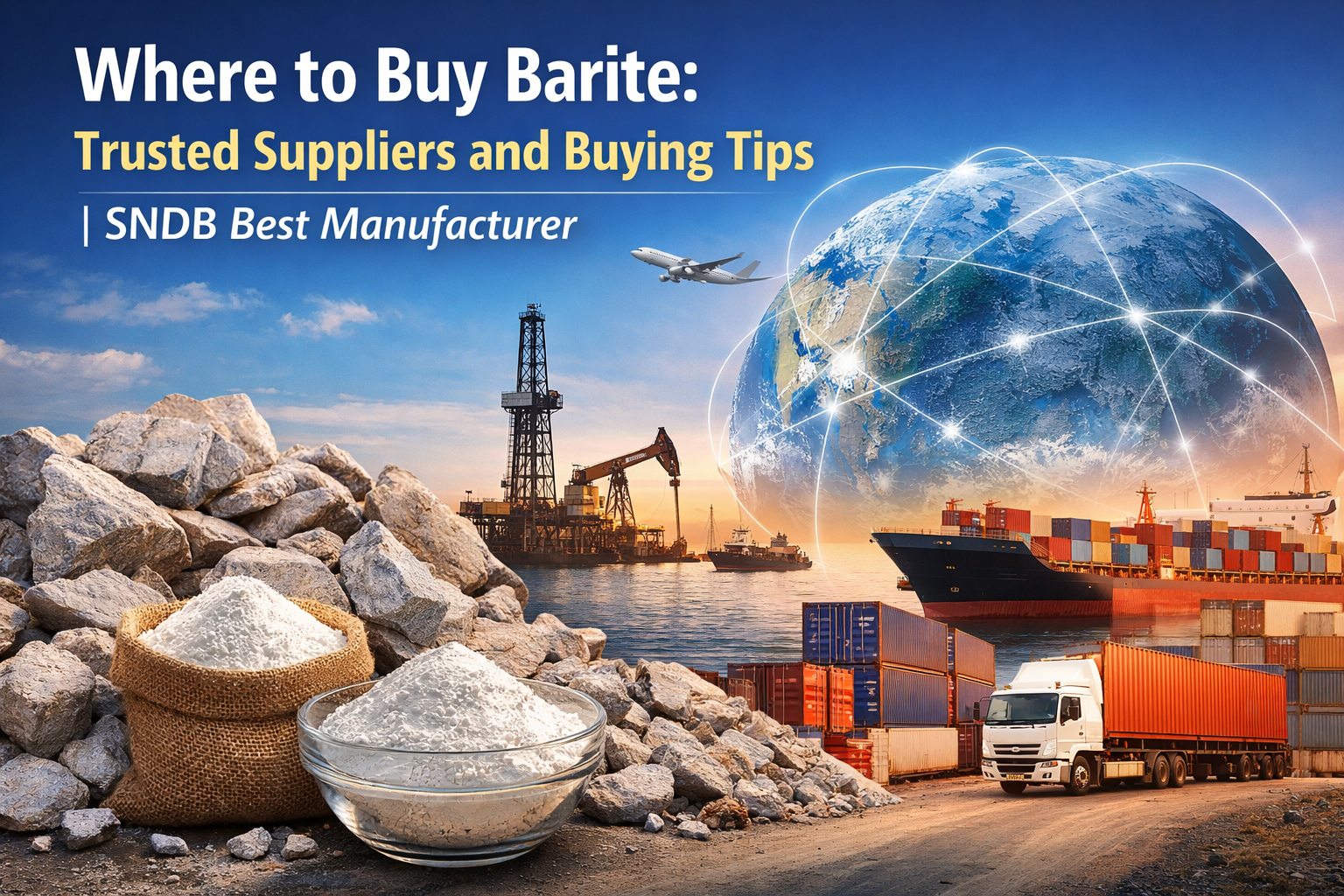
Where to Buy Barite: Trusted Suppliers and Buying Tips | SNDB Best ManufacturerCategoriesBlogs

Where to Buy Barite: Trusted Suppliers and Buying Tips | SNDB Best Manufacturer

Where to Buy Barite: Trusted Suppliers and Buying Tips | SNDB Best Manufacturer

Barite, a key industrial mineral composed of barium sulfate, is widely used across industries such as oil and gas drilling, paints, plastics, rubber, and pharmaceuticals. As global demand continues to rise, businesses are increasingly focused on sourcing barite from reliable manufacturers who can ensure quality, consistency, and timely delivery. Among the recognized names in the industry, SNDB stands out as a trusted manufacturer and supplier of high-quality barite.

Why Barite is in High Demand

Barite’s primary use is as a weighting agent in drilling fluids for oil and gas exploration. Its high density helps maintain pressure control in drilling operations, making it indispensable in the energy sector. Additionally, its chemical stability and non-toxic nature make it suitable for use in medical, automotive, and construction applications.

SNDB: A Trusted Barite Manufacturer

SNDB has established itself as a reliable name in the barite industry by focusing on quality production and customer satisfaction. The company is known for:

  • High-Purity Barite: Consistent quality suitable for industrial applications
  • Advanced Processing Techniques: Ensuring uniform particle size and performance
  • Global Supply Capability: Efficient logistics and export services
  • Customer-Centric Approach: Tailored solutions for different industry needs

By maintaining strict quality control standards, SNDB ensures its barite products meet international specifications, making it a preferred choice for businesses worldwide.

Where to Buy Barite

When looking to purchase barite, buyers typically consider the following sources:

1. Direct Manufacturers

Buying directly from manufacturers like SNDB ensures better pricing, product authenticity, and customization options.

2. Authorized Distributors

Distributors can provide faster delivery and localized support, especially for smaller orders.

3. Online B2B Marketplaces

Platforms like Alibaba or IndiaMART connect buyers with multiple suppliers, but careful verification is required.

4. Industry Trade Shows

Events and exhibitions provide opportunities to meet suppliers, compare products, and negotiate deals.

Key Buying Tips for Barite

Choosing the right supplier is crucial for maintaining product performance and operational efficiency. Here are some essential tips:

  • Check Product Specifications: Ensure the barite meets required density and purity levels
  • Verify Certifications: Look for ISO or other quality certifications
  • Assess Supply Capacity: Confirm the supplier can meet your volume needs
  • Compare Pricing Carefully: Avoid unusually low prices that may indicate poor quality
  • Request Samples: Always test before placing bulk orders
  • Evaluate Logistics Support: Timely delivery is critical in industrial operations

Global Barite Supply Trends

Major barite-producing countries include India, China, Morocco, and the United States. With increasing oil and gas exploration and infrastructure development, demand is expected to grow steadily. Reliable manufacturers like SNDB are playing a key role in meeting this demand by expanding production and improving supply chain efficiency.

Finding the right place to buy barite is essential for ensuring quality and consistency in your operations. Whether you choose to buy directly from manufacturers like SNDB or through distributors, careful evaluation is key. With its commitment to quality, reliability, and global service, SNDB continues to stand out as one of the best barite manufacturers and suppliers in the market.

best bariteCategoriesBlogs

Best Barite Grades for Drilling Mud Applications

Barite (baryte) is one of the most critical minerals used in the oil and gas industry, especially in drilling operations. Its high specific gravity, chemical inertness, and cost-effectiveness make it an essential weighting agent in drilling mud. Choosing the right barite grade is crucial for ensuring drilling efficiency, well stability, and safety.

What is Barite and Why is it Used in Drilling Mud?

Barite is a naturally occurring mineral composed of barium sulfate (BaSO₄). In drilling fluids, it is primarily used to increase the density (weight) of the mud, which helps:

  • Control formation pressure
  • Prevent blowouts
  • Stabilize the wellbore
  • Improve drilling efficiency

Because of its high density and non-reactive nature, barite is ideal for maintaining the balance between pressure and formation conditions.

Key Properties of Drilling-Grade Barite

Before selecting a grade, it’s important to understand the essential properties:

1. Specific Gravity

This is the most important factor. It determines how effectively barite can increase mud weight.

2. Particle Size Distribution

Proper particle size ensures smooth mixing and prevents settling.

3. Purity

Higher BaSO₄ content means better performance and fewer contaminants.

4. Insoluble Residue

Low insoluble residue improves drilling fluid stability.

Best Barite Grades for Drilling Mud Applications

1. API Grade Barite (4.2 Specific Gravity)

This is the most widely used standard grade in drilling operations.

Specifications:

  • Specific Gravity: ≥ 4.2
  • BaSO₄ Content: ~90% or higher
  • Particle Size: Controlled as per API standards

Advantages:

  • Meets international drilling standards
  • Suitable for most oil and gas wells
  • Cost-effective and widely available

Best For:
Standard onshore and offshore drilling operations

2. High Specific Gravity Barite (4.3 – 4.5 SG)

This premium grade is used in more demanding drilling environments.

Specifications:

  • Specific Gravity: 4.3 to 4.5
  • Higher density than API grade
  • Low impurities

Advantages:

  • Requires less material to achieve desired mud weight
  • Improves drilling efficiency
  • Reduces solids content in mud

Best For:
Deep wells and high-pressure drilling conditions

3. Ultra-Fine Barite Powder

This grade features very fine particle sizes for enhanced performance.

Specifications:

  • Fine mesh size (typically 325 mesh or finer)
  • Uniform particle distribution

Advantages:

  • Better suspension in drilling fluids
  • Reduces settling issues
  • Improves rheological properties

Best For:
Advanced drilling systems and specialized fluid formulations

4. Low Residue / High Purity Barite

This grade focuses on minimal contaminants and maximum BaSO₄ content.

Specifications:

  • High purity (≥ 95% BaSO₄)
  • Low silica and iron content

Advantages:

  • Enhances drilling fluid stability
  • Reduces equipment wear
  • Minimizes chemical interference

Best For:
Sensitive drilling environments and high-performance fluids

API Standards for Drilling Barite

The American Petroleum Institute (API) sets strict specifications for barite used in drilling fluids. Key requirements include:

  • Minimum specific gravity of 4.2
  • Particle size distribution limits
  • Maximum soluble alkaline earth metals
  • Controlled moisture content

Using API-compliant barite ensures consistency, safety, and regulatory compliance in drilling operations.

How to Choose the Right Barite Grade

Selecting the best grade depends on several factors:

1. Well Depth and Pressure

  • Deeper wells require higher-density barite

2. Drilling Environment

  • Offshore and high-pressure wells benefit from premium grades

3. Budget Constraints

  • API 4.2 grade is more economical
  • Higher SG grades offer efficiency but cost more

4. Mud System Requirements

  • Fine barite works better in advanced fluid systems

Common Challenges with Barite in Drilling

Even with the right grade, some issues can arise:

  • Settling: Poor particle size distribution
  • Abrasion: Impurities causing equipment wear
  • Inconsistent density: Low-quality supply

Choosing a reliable supplier and proper grade helps minimize these problems.

Barite plays a vital role in drilling mud applications, and selecting the right grade directly impacts drilling success. While API 4.2 grade remains the industry standard, higher-density and ultra-fine barite grades offer improved performance for demanding conditions.

Barite: Properties, Uses, Economic ImportanceCategoriesUncategorized

Barite: Properties, Uses, Economic Importance | SNDB Manufacturer

Barite is an important industrial mineral known for its high density, chemical stability, and wide range of applications. Its unique physical and chemical characteristics make it essential across multiple industries, including oil and gas, paints and coatings, pharmaceuticals, plastics, and construction. As demand for high-quality industrial minerals continues to rise globally, companies such as SNDB have positioned themselves as leading reliable manufacturers, suppliers, and exporters of premium-grade barite.

Properties of Barite

Barite (barium sulfate) is recognized for several distinctive properties that make it commercially valuable:

  • High Specific Gravity: Barite has a notably high density, making it ideal as a weighting material.
  • Chemical Stability: It is chemically inert, meaning it does not react easily with other substances.
  • Low Solubility: Barite is practically insoluble in water and most acids.
  • Brightness and Whiteness: High-purity barite exhibits good whiteness and brightness, which is beneficial for coatings and pigments.
  • Non-Toxic and Non-Magnetic: These properties allow for safe use in various applications.

Major Uses of Barite

Because of its unique properties, barite has diverse industrial uses:

1. Oil and Gas Drilling

The largest consumer of barite is the oil and gas industry. It is widely used as a weighting agent in drilling fluids to control pressure, prevent blowouts, and stabilize boreholes.

2. Paints and Coatings

Barite acts as a filler and extender in paints, improving brightness, durability, and chemical resistance.

3. Plastics and Rubber

In plastics and rubber products, barite increases density, improves impact resistance, and enhances overall product quality.

4. Pharmaceuticals and Medical Applications

High-purity barite is used in medical imaging, especially for diagnostic imaging procedures.

5. Construction and Other Industries

Barite is used in cement, ceramics, glass manufacturing, and even radiation shielding materials.

Economic Importance of Barite

Barite plays a significant role in global industrial supply chains. The energy sector, particularly oil and gas exploration, relies heavily on barite. Its importance extends to manufacturing, construction, and healthcare, making it a valuable mineral in international trade. As industrial activities expand worldwide, the demand for barite continues to grow.

Countries with substantial barite resources benefit economically through mining, processing, and exporting. The steady demand ensures ongoing opportunities for companies involved in its production and supply.

SNDB: A Trusted Manufacturer, Supplier, and Exporter

SNDB has established itself as a dependable name in the barite industry. With a strong commitment to quality, consistency, and customer satisfaction, the company delivers premium-grade barite for diverse industrial needs.

Why Choose SNDB?

  • High-Quality Barite Products: Carefully processed to meet industrial standards.
  • Reliable Supply Chain: Consistent availability and timely delivery.
  • Global Export Capability: Serving clients across multiple regions.
  • Customer-Focused Approach: Tailored solutions to meet specific industry requirements.

Barite is a highly valuable mineral with wide industrial applications and strong economic significance. Its unique properties make it indispensable in industries such as oil and gas, paints, plastics, and pharmaceuticals. With reliable producers and suppliers like SNDB, businesses around the world can access high-quality barite to support their operations and drive growth.

barite | sndbCategoriesBlogs

SNDB | Top Barite Lumps Exporter in the World: A Complete Industry Guide

Barite lumps play a crucial role in multiple industries, especially in oil and gas drilling, where they are used as a weighting agent in drilling mud. With global demand steadily increasing, businesses are constantly searching for reliable exporters who can deliver consistent quality and large volumes. Among the leading names in this space, SNDB has emerged as a trusted global supplier of high-quality barite lumps.

This guide explores the barite industry, the role of exporters, and why SNDB is considered a top choice worldwide.

What Are Barite Lumps?

Barite, also known as barium sulfate (BaSO₄), is a naturally occurring mineral known for its high density and chemical inertness. Barite lumps are the raw, unprocessed form of this mineral, typically extracted directly from mines.

Key Properties:

  • High specific gravity (4.2+)
  • Low solubility
  • Chemical stability
  • Non-toxic and non-reactive

Major Applications:

  • Oil & gas drilling (drilling mud)
  • Paints and coatings
  • Rubber and plastics
  • Pharmaceuticals
  • Radiation shielding

Global Barite Market Overview

The global barite market is driven largely by the energy sector. Countries like India, China, Morocco, and the United States are major producers and exporters.

Market Trends:

  • Rising demand from oil drilling operations
  • Increasing use in construction and industrial applications
  • Growth in export-oriented mining companies

Reliable exporters play a vital role in maintaining supply chains across continents.

Why Choosing the Right Barite Exporter Matters

Selecting a dependable supplier is critical for ensuring operational efficiency and product performance.

Factors to Consider:

  • Product purity and grade (API standards)
  • Consistency in supply
  • Competitive pricing
  • Logistics and timely delivery
  • Certifications and compliance

A trusted exporter helps reduce risks and ensures long-term business success.

SNDB: A Leading Barite Lumps Exporter

SNDB has established itself as a prominent player in the global barite export market by consistently delivering high-quality materials and maintaining strong client relationships.

What Makes SNDB Stand Out?

1. Premium Quality Barite
SNDB supplies barite lumps with high specific gravity and minimal impurities, meeting international industry standards.

2. Strong Supply Chain
With access to rich mineral reserves and efficient logistics, SNDB ensures uninterrupted supply to global clients.

3. Global Reach
SNDB exports to multiple countries, serving industries across Asia, the Middle East, Europe, and beyond.

4. Competitive Pricing
By optimizing sourcing and transportation, SNDB offers cost-effective solutions without compromising quality.

5. Customer-Centric Approach
Customized solutions, transparent communication, and reliable support make SNDB a preferred partner.

Applications of SNDB Barite Lumps

SNDB’s barite products are widely used in:

  • Oil & Gas Industry: As a weighting agent in drilling fluids
  • Paint Industry: For enhanced durability and finish
  • Rubber & Plastics: As a filler material
  • Medical Sector: In diagnostic imaging applications

How SNDB Ensures Quality

Quality assurance is at the core of SNDB’s operations.

Key Quality Measures:

  • Strict raw material selection
  • Advanced processing techniques
  • Laboratory testing for purity and density
  • Compliance with API and international standards

This ensures that customers receive consistent and reliable products every time.

Future of Barite Export Industry

The demand for barite is expected to grow steadily due to:

  • Expansion in global energy exploration
  • Infrastructure development
  • Increased industrial applications

Exporters like SNDB are well-positioned to lead this growth by adopting sustainable mining practices and advanced supply chain systems.

In a competitive global market, finding a reliable barite lumps exporter is essential for business success. SNDB stands out as a trusted name, offering high-quality products, dependable supply, and excellent customer service.

Whether you are in oil drilling, manufacturing, or industrial production, partnering with SNDB ensures you receive premium barite solutions tailored to your needs