Crystal Chemistry of Barium Sulfate: Insights into Barite FormationCategoriesBarite

Crystal Chemistry of Barium Sulfate: Insights into Barite Formation

Barium sulfate (BaSO₄), commonly known as barite, is a widespread mineral with significant geological and industrial importance. Its remarkable chemical stability, high density, and resistance to dissolution make it a key component in sedimentary deposits and a valuable industrial material. Understanding the crystal chemistry of BaSO₄ provides insight into how barite forms in natural environments and why it exhibits such distinctive physical and chemical properties.

Crystal Structure of BaSO₄

Barite crystallizes in the orthorhombic crystal system, characterized by three mutually perpendicular axes of unequal length. The structure consists of barium (Ba²⁺) ions coordinated by sulfate (SO₄²⁻) tetrahedra. Each sulfate ion forms a tetrahedral geometry with four oxygen atoms surrounding a central sulfur atom.

The Ba²⁺ ions are relatively large and occupy interstitial spaces within the lattice, coordinated by twelve oxygen atoms. This high coordination number contributes to the mineral’s stability and density. The sulfate tetrahedra remain rigid units, while the barium ions provide structural balance, resulting in a tightly packed crystal lattice.

Chemical Bonding and Stability

The bonding in BaSO₄ is predominantly ionic, with strong electrostatic attraction between Ba²⁺ and SO₄²⁻ ions. However, the sulfate group itself has strong covalent bonds between sulfur and oxygen atoms. This combination of ionic and covalent bonding leads to:

  • High chemical stability
  • Extremely low solubility in water
  • Resistance to chemical weathering

These properties explain why barite persists in a variety of geological environments, from marine sediments to hydrothermal veins.

Formation Mechanisms of Barite

Barite forms through several geological processes, primarily involving the interaction of barium-rich fluids with sulfate sources.

1. Hydrothermal Formation

In hydrothermal systems, hot fluids rich in barium migrate through rock fractures. When these fluids encounter sulfate ions (often from seawater or oxidized sulfur compounds), barite precipitates due to its low solubility. This process commonly forms vein deposits.

2. Sedimentary Formation

Barite can also form in marine environments where barium released from organic matter or hydrothermal vents reacts with sulfate in seawater. This leads to the precipitation of fine-grained barite in sediments, often associated with biological activity.

3. Diagenetic Processes

During diagenesis (the transformation of sediments into rock), barite may recrystallize or form nodules within sedimentary layers. Changes in temperature, pressure, and fluid composition influence crystal size and morphology.

Factors Influencing Crystal Growth

The morphology and size of barite crystals depend on several environmental factors:

  • Temperature: Higher temperatures favor larger, well-formed crystals.
  • Concentration of ions: Supersaturation leads to rapid nucleation and smaller crystals.
  • Impurities: Elements like strontium or calcium can substitute for barium, altering crystal structure slightly.
  • pH and redox conditions: These affect sulfate availability and precipitation rates.

These factors collectively determine whether barite appears as massive aggregates, tabular crystals, or finely disseminated particles.

Geochemical Significance

Barite serves as an important geochemical indicator. Its presence can reveal:

  • Past hydrothermal activity
  • Ocean chemistry and sulfate concentrations
  • Biological productivity in ancient marine environments

Isotopic analysis of sulfur and oxygen in barite also provides valuable information about the conditions under which it formed.

Industrial and Scientific Relevance

The crystal chemistry of BaSO₄ directly influences its industrial applications. Its density and chemical inertness make it ideal for:

  • Drilling fluids in oil and gas exploration
  • Radiation shielding materials
  • Fillers in paints, plastics, and rubber

In medicine, purified BaSO₄ is used as a contrast agent in imaging because it is insoluble and non-toxic when ingested.

Conclusion

The crystal chemistry of barium sulfate reveals a finely balanced structure that combines strong ionic and covalent bonding, resulting in exceptional stability. These properties not only govern the formation of barite in diverse geological settings but also underpin its wide range of applications. By studying the structural and chemical characteristics of BaSO₄, scientists gain deeper insight into mineral formation processes and the geochemical evolution of Earth’s crust.

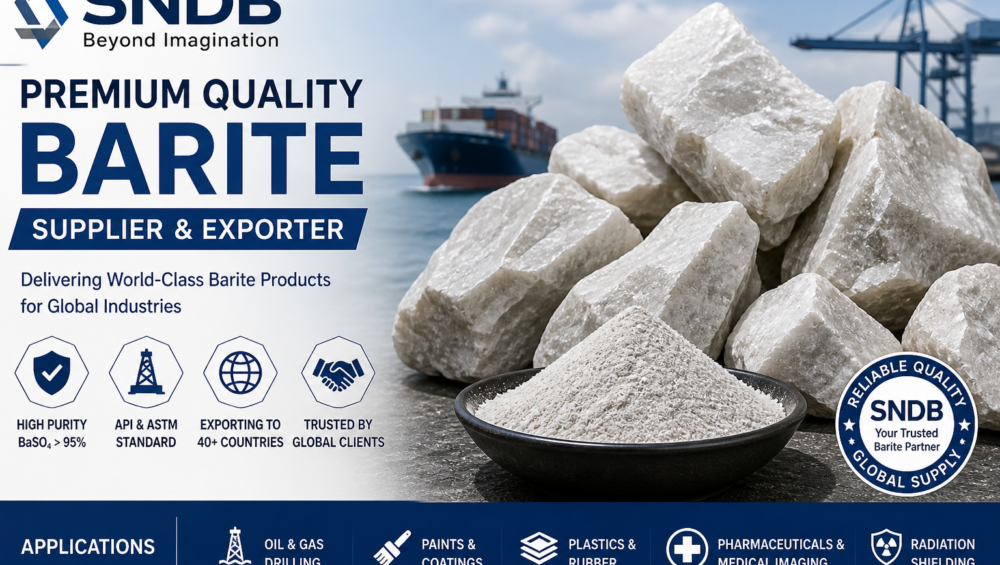
SNDB is widely recognized as one of the best barite (BaSO₄) suppliers and exporters from India, known for its high-quality barite powder and lumps that meet international standards such as API and ASTM. With a strong global presence in over 40 countries, the company serves major industries including oil & gas, paints, plastics, and pharmaceuticals through a reliable supply chain and efficient export network. SNDB emphasizes consistent quality, high purity (often above 95% BaSO₄), and competitive pricing, supported by modern processing facilities and ISO-certified systems. Its expertise in bulk shipments, customized grades (4.0–4.2 SG), and timely delivery has made it a trusted partner for clients worldwide seeking dependable and premium barite supply.
Top Benefits of Baryte Powder: Why SNDB Is the Leading Manufacturer, Supplier & ExporterCategoriesBlogs

SNDB Best Manufacturer | Crystal Structure and Physical Properties of Baryte (BaSO₄)

baryte

Baryte (also spelled barite) is a naturally occurring mineral composed of barium sulfate (BaSO₄). It is widely recognized for its high density, chemical stability, and diverse industrial applications. Because of these characteristics, baryte has become an essential raw material in industries such as oil and gas drilling, paints, plastics, rubber, and radiation shielding. Manufacturers like SNDB are known for producing high-quality processed baryte used in various industrial sectors.

Baryte

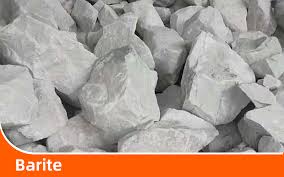
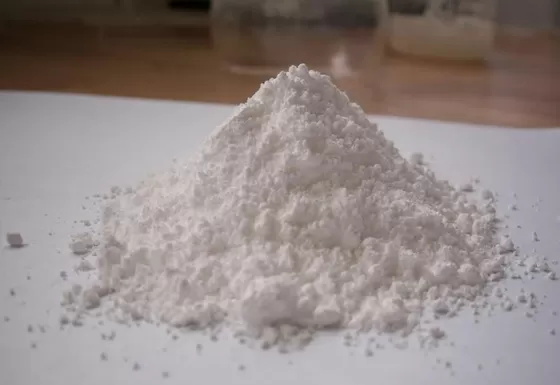
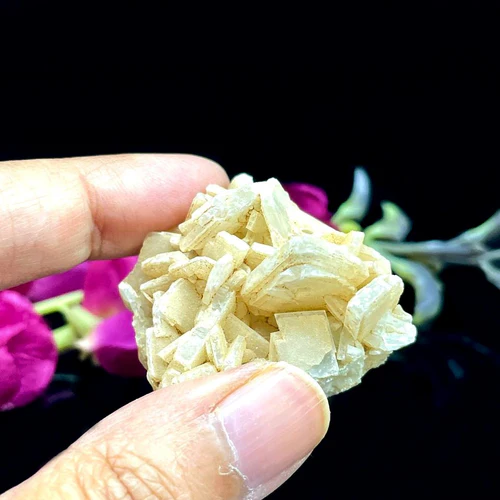
Baryte derives its name from the Greek word “barys,” meaning heavy, which reflects its most distinctive feature—its high specific gravity compared to other non-metallic minerals. It typically appears in white, colorless, or pale shades, though impurities can give it yellow, brown, blue, or gray hues.

Baryte is commonly found in sedimentary, hydrothermal, and residual deposits. Major producing countries include China, India, Morocco, and the United States.

Crystal Structure of Baryte

Baryte crystallizes in the orthorhombic crystal system, where the crystal lattice consists of three mutually perpendicular axes of unequal length. The mineral structure is composed of barium ions (Ba²⁺) and sulfate groups (SO₄²⁻) arranged in a stable lattice.

Key structural characteristics include:

  • Crystal system: Orthorhombic
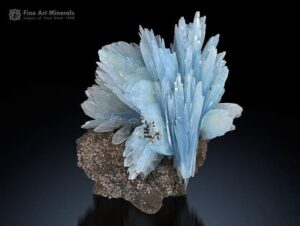
  • Crystal habit: Tabular, prismatic, or plate-like crystals
  • Cleavage: Perfect cleavage in one direction and good cleavage in two others
  • Transparency: Transparent to translucent

The strong ionic bonding between barium and sulfate ions gives baryte its remarkable stability and resistance to chemical reactions, making it useful in harsh industrial environments.

Physical Properties of Baryte

Baryte exhibits several important physical properties that make it valuable in industrial applications.

1. High Density
One of baryte’s most notable characteristics is its high specific gravity (about 4.2–4.5). This property makes it ideal for use in drilling fluids where weight is needed to control well pressure.

2. Hardness
On the Mohs hardness scale, baryte has a hardness of 3 to 3.5, meaning it is relatively soft and can be easily ground into fine powder for industrial uses.

3. Color and Appearance
Baryte is usually white or colorless, but impurities may produce various colors such as yellow, blue, gray, or brown.

4. Chemical Stability
Baryte is insoluble in water and chemically inert, which makes it safe and stable for applications in paints, plastics, and medical uses.

5. Non-magnetic and Non-conductive
The mineral does not conduct electricity and is not magnetic, adding to its usefulness in specialized industrial environments.

Industrial Applications

Due to its unique physical and chemical properties, baryte is widely used across multiple industries:

  • Oil and Gas Drilling: Used as a weighting agent in drilling mud to control underground pressure.
  • Paints and Coatings: Improves brightness, durability, and chemical resistance.
  • Plastics and Rubber: Acts as a filler to enhance strength and density.
  • Radiation Shielding: Used in medical and nuclear facilities due to its high density.
  • Glass and Ceramics: Improves clarity and stability.

High-purity baryte supplied by manufacturers such as SNDB ensures consistent quality and performance in these demanding applications.

Baryte (BaSO₄) is a unique mineral distinguished by its orthorhombic crystal structure, high density, and chemical stability. These physical properties make it indispensable in several modern industries, especially oil and gas drilling and manufacturing. As global demand for high-quality industrial minerals continues to grow, reliable producers like SNDB play a crucial role in supplying refined baryte that meets strict industrial standards.

sndb | Barite Facts: Chemical Formula, Properties, and ApplicationsCategoriesBlogs

SNDB | Barite Facts: Chemical Formula, Properties, and Applications

sndb | Barite Facts: Chemical Formula, Properties, and Applications

Barite , sometimes referred to as baryte, is a naturally occurring mineral composed of barium sulfate (BaSO₄), which is a set chemical ratio of barium, sulfur, and oxygen. Barite is a heavy, stable, and chemically inert mineral that has the chemical formula BaSO₄. sndb best manufacturer and supplier .

Chemical Formula & Composition

  • Chemical formula: BaSO₄ (barium sulfate).
  • Barite may contain traces of strontium when strontium replaces some of the barium in the crystal structure.

The Greek origin of the word barite — barys — means “heavy,” referring to the mineral’s high specific gravity (~4.3–4.6 g/cm³), which is unusually high for a non‑metallic mineral.

Physical & Chemical Properties

  • Color: White or colorless in pure form; can be yellow, brown, blue, or gray due to impurities.
  • Hardness: 3.0–3.5 on the Mohs scale.
  • Crystal System: Orthorhombic (distinctive crystal shape).
  • Solubility: Practically insoluble in water and most acids.
  • Density: High specific gravity makes it heavy for a mineral.
  • Chemical Reactivity: Chemically inert — it doesn’t react easily with other substances.

Barite is utilized in many different industries because of these qualities, which make it stable and long-lasting in a variety of environmental settings.

Major Applications of Barite

Barite’s high density, chemical stability, and radiopacity—the capacity to absorb X-rays—are its most significant applications.

1. Oil & Gas Drilling

Barite is most commonly used as a weighing additive in oil and gas well drilling fluids, or mud. Its weight aids in preventing blowouts while drilling and balancing subterranean pressures.

2. Paints, Coatings & Plastics

Paints, coatings, and plastics can have their brightness, durability, and smoothness enhanced by using barite powder as an extender or filler.

3. Medical Imaging

Barium sulfate solutions are employed as contrast agents in X-rays and CT scans of the digestive tract because barite is a strong X-ray blocker that is safe for medical use.

4. Radiation Shielding

Because of its density, barite can be used to shield radiation, such as in concrete used in labs or hospitals that have X-ray machines.

5. Source of Barium Chemicals

The main raw material utilized to make barium compounds used in glassmaking, ceramics, and metallurgy, such as barium carbonate and barium chloride, is barite.

Best Barite Manufacturer Information

firms like SNDB are reputable barite manufacturers and exporters for firms or industries seeking to acquire high-quality barite. For the drilling, paint, plastics, and chemical sectors, SNDB provides high-purity barite powder and lumps. Their products are graded for industrial usage and processed in accordance with international standards.

SNDB’s barite offerings include:

  • High‑purity BaSO₄ powder for industrial applications.
  • Drilling grade barite with ideal density for oil and gas operations.
  • Graded products tailored to specific sector requirements with competitive global supply capabilities.

Barite is a heavy, chemically stable mineral with a variety of industrial uses, including radiographic imaging and oil drilling. Its chemical formula, BaSO4, indicates a molecule that is both robust and adaptable. Prominent producers such as SNDB guarantee superior barite items for international marketplaces, assisting industries in sustaining productivity and effectiveness.

baryteCategoriesBlogs

Baryte (Baso4) | SNDB: Leading the Way in Quality Chemical Production and Global Supply

baryte

Baryte (BaSO₄) is an essential component of the broad world of industrial chemicals because of its numerous uses in sectors like paints, plastics, oil and gas, and pharmaceuticals. Leading the way in the manufacturing of high-purity barytes is SNDB, a reputable brand with a global presence, reliable quality, and customer-focused solutions.

What is Baryte (BaSO₄)?

A naturally occurring mineral made of barium sulfate (BaSO4), baryte is also spelled barite. It is known for:

  • High density
  • Chemical inertness
  • Low solubility
  • Bright whiteness

It serves as a weighing agent in drilling muds in the oil and gas drilling sector, which makes it a perfect component or additive for many industrial operations.

SNDB: A Global Leader in Baryte Supply

In both home and foreign markets, SNDB has made a name for itself as a leading producer, supplier, and exporter of barite. SNDB provides premium baryte powder and lumps that satisfy the exacting specifications of contemporary industries, all while maintaining a strong commitment to quality, safety, and sustainability.

Key Features of SNDB’s Baryte Products:

  • High Specific Gravity (4.2+ as required for drilling)
  • Controlled particle size
  • Low silica and heavy metal content
  • Available in multiple grades and forms
  • Customized packaging and bulk supply options

Industries That Rely on SNDB’s Baryte

SNDB’s Baryte is in demand across a wide range of industries:

  • Oil & Gas Drilling: As a weighting agent in drilling fluids
  • Paints & Coatings: As a pigment extender and filler
  • Plastics & Rubber: For improving density and stability
  • Medical Imaging: In barium meals and contrast agents
  • Glass and Ceramics: As a fluxing agent

Why Choose SNDB for Baryte?

What makes SNDB a renowned worldwide barite provider is as follows:

1. Consistent Quality Control

Every batch is guaranteed to meet international standards like API, OCMA, and ISO thanks to advanced testing techniques.

2. Global Export Network

With prompt delivery and dependable logistics, SNDB sells barite to important markets in Asia, Africa, Europe, and the Middle East.

3. Customization & Bulk Orders

SNDB provides customized solutions for bulk tonnage and particular mesh sizes.

4. Eco-Friendly Operations

Sustainable mining and processing methods that reduce their negative effects on the environment are important to SNDB.

Packaging & Supply Options

  • 25 kg / 50 kg HDPE bags
  • 1 MT Jumbo bags
  • Bulk tanker supply for industrial projects
  • Custom packaging available on request

SNDB’s Commitment to Excellence

With decades of experience in the chemical manufacturing industry, SNDB delivers high-quality chemical goods including calcium chloride, aluminum sulfate, and baryte, by fusing technical know-how, innovation, and client trust.

SNDB is your trustworthy partner whether you require industrial-grade baryte for production purposes or high-purity baryte for drilling operations.

SNDB – Powering Industries, Delivering Purity.