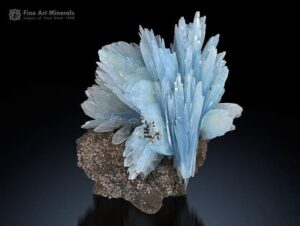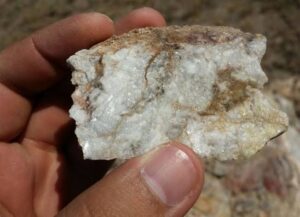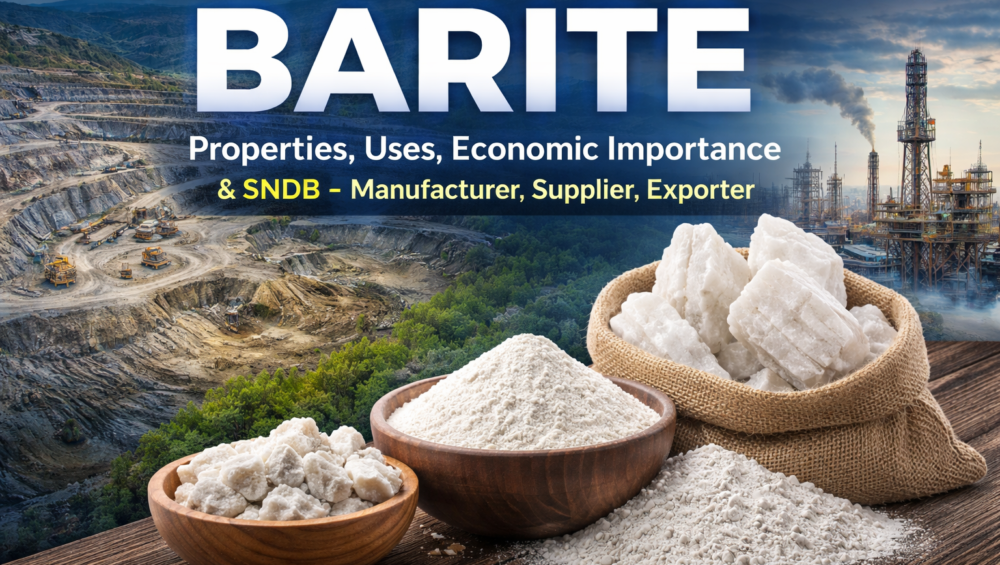
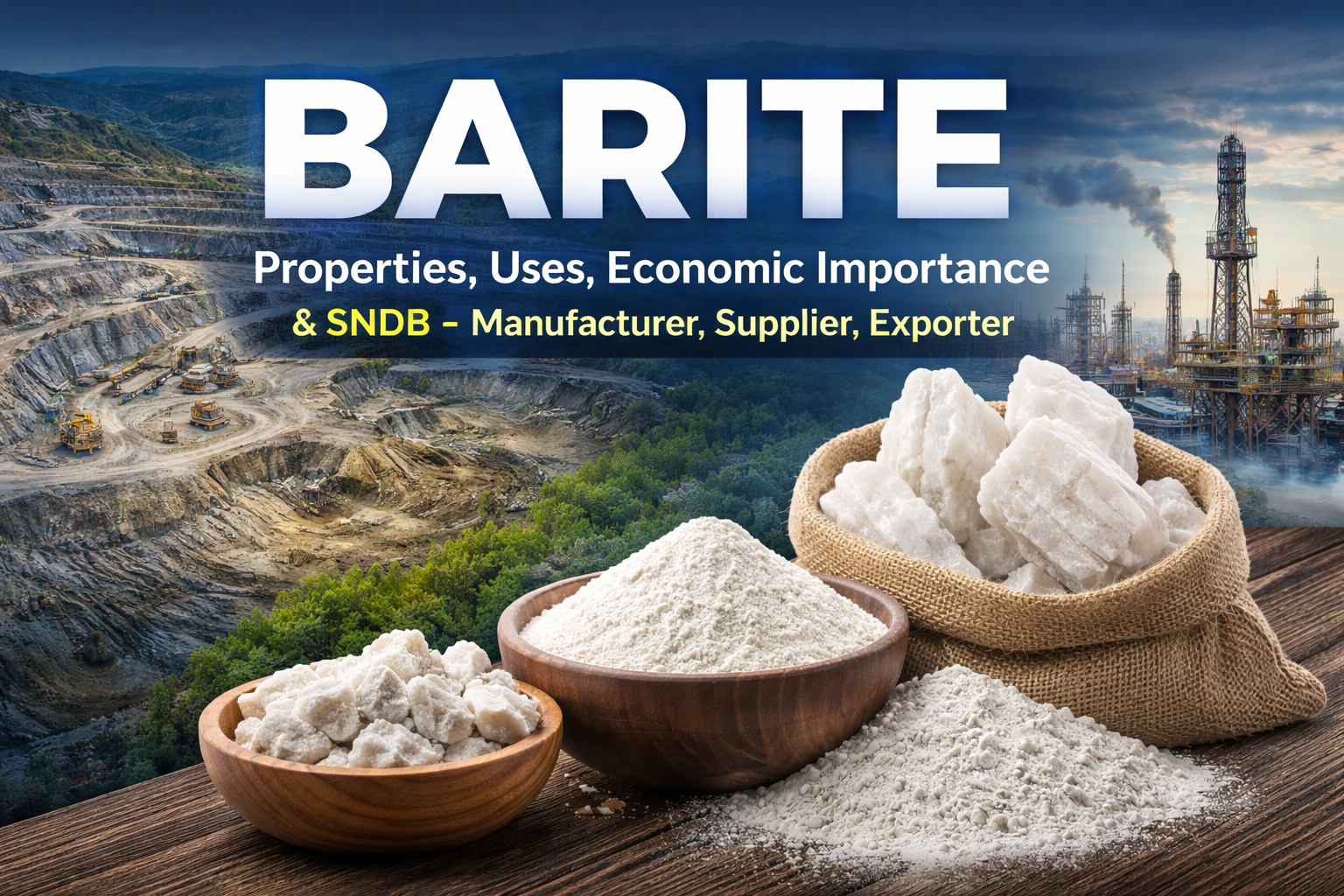
Barite is a naturally occurring mineral composed of barium sulfate (BaSO₄). It is known for its high density, chemical inertness, and wide industrial applications. The name “barite” comes from the Greek word barys, meaning “heavy,” which refers to its unusually high specific gravity.
In geology and industry, barite is an important non-metallic mineral used in a variety of sectors, especially oil and gas drilling.
Physical and Chemical Properties
Barite has several distinctive properties:
- Chemical formula: BaSO₄
- Color: Usually white or colorless, but can also appear gray, yellow, blue, or brown due to impurities
- Hardness: 3–3.5 on Mohs scale (relatively soft)
- Density: Very high (4.3–4.6 g/cm³), which is its most important feature
- Luster: Glassy to pearly
- Solubility: Insoluble in water and most acids
Because of its high density, barite is one of the heaviest non-metallic minerals found in nature.
Formation and Occurrence
Barite typically forms in:
- Hydrothermal veins (hot mineral-rich fluids)
- Limestone deposits
- Sedimentary rocks
- Residual deposits from weathering
It is often associated with minerals like quartz, fluorite, and calcite.
Major producers of barite include China, India, Morocco, and the United States.
Uses of Barite
Barite has a wide range of industrial applications:
1. Oil and Gas Drilling
The most important use of barite is in drilling muds. In oil and gas exploration, barite is added to drilling fluids to:
- Increase fluid density
- Control high-pressure zones underground
- Prevent blowouts in drilling wells
This makes barite essential in petroleum extraction.
2. Medical Industry
Barite is used in the form of barium meals for X-ray imaging of the digestive system. It helps doctors visualize the esophagus, stomach, and intestines.
3. Paint and Coatings
Due to its whiteness and chemical stability, barite is used as:
- A pigment extender in paints
- A filler in plastics and rubber
4. Construction Industry
It is used in:
- Heavy concrete for radiation shielding in hospitals and nuclear plants
- Soundproofing materials
5. Chemical Industry
Barite is also a raw material for producing barium compounds used in electronics, ceramics, and fireworks.
Barite in India
India is one of the significant producers of barite. Major deposits are found in:
- Andhra Pradesh (especially Mangampet, one of the largest deposits in the world)
- Rajasthan
- Himachal Pradesh
- Madhya Pradesh
Indian barite is widely exported, especially for oil drilling applications.
Environmental and Economic Importance
Barite mining supports local economies but must be managed carefully to avoid:
- Land degradation
- Dust pollution
- Water contamination from mining waste
At the same time, barite remains economically important due to global demand in energy industries.
Barite is a highly valuable industrial mineral known for its density and versatility. From oil drilling to medical imaging, it plays a crucial role in modern industries. Its global demand continues to grow, especially in energy exploration.
SNDB is considered one of the leading barite manufacturers in India, known for producing high-purity barium sulfate (BaSO₄) with consistent quality and strong industrial performance. The company supplies barite widely used in oil & gas drilling, paints, rubber, plastics, and pharmaceutical industries, and has built a solid reputation in both domestic and international markets for reliable supply and advanced processing standards.