Barite: Properties, Uses, Economic ImportanceCategoriesBlogs

Why Barite Is a Critical Mineral for Various Industries | SNDB – Best Manufacturer, Exporter, and Supplier

Barite, also known as barium sulfate (BaSO₄), is one of the most important industrial minerals used across multiple sectors worldwide. Due to its high specific gravity, chemical inertness, and exceptional purity, barite has become an essential raw material for industries such as oil and gas, paints and coatings, plastics, rubber, construction, and pharmaceuticals.

As industries continue to expand globally, the demand for high-quality barite is increasing rapidly. SNDB has established itself as a trusted manufacturer, exporter, and supplier of premium-quality barite products, delivering reliable solutions to customers across various industries.

What Is Barite?

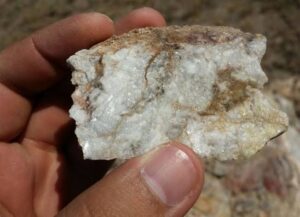
Barite is a naturally occurring mineral composed primarily of barium sulfate. It is characterized by its high density, low solubility, non-toxic nature, and excellent chemical stability. These unique properties make it suitable for a wide range of industrial applications where performance and consistency are critical.

Key Properties of Barite

  • High specific gravity
  • Excellent chemical resistance
  • Low oil absorption
  • High brightness and whiteness
  • Non-reactive and non-toxic
  • Superior filler and weighting capabilities

These properties have made barite an indispensable mineral in modern manufacturing and industrial operations.

Importance of Barite in the Oil and Gas Industry

The oil and gas sector is the largest consumer of barite worldwide. Barite is primarily used as a weighting agent in drilling fluids and drilling muds.

Benefits in Drilling Operations

  • Controls underground pressure during drilling
  • Prevents blowouts and well instability
  • Improves drilling efficiency
  • Reduces operational risks
  • Enhances lubrication and cooling of drilling equipment

Without barite, safe and efficient oil and gas exploration would be significantly more challenging.

Barite in Paints and Coatings

Barite plays a crucial role in the paints and coatings industry. It improves the durability, brightness, and performance of coatings used in residential, commercial, and industrial applications.

Advantages

  • Enhances paint smoothness
  • Improves weather resistance
  • Increases coating durability
  • Provides excellent filler properties
  • Reduces production costs

Manufacturers rely on high-purity barite to achieve superior coating performance and long-lasting results.

Application of Barite in Plastics and Rubber

Barite is widely used as a filler material in plastic and rubber manufacturing. It helps improve product quality while maintaining cost efficiency.

Benefits

  • Enhances product strength
  • Improves dimensional stability
  • Increases wear resistance
  • Improves surface finish
  • Reduces manufacturing costs

Its versatility makes barite a preferred mineral for producing high-performance plastic and rubber products.

Barite in Construction and Infrastructure

The construction industry uses barite in cement, concrete, and radiation-shielding materials. Due to its high density, barite-based concrete is commonly used in hospitals, laboratories, and nuclear facilities.

Construction Applications

  • Heavy concrete production
  • Radiation shielding walls
  • Soundproofing materials
  • Specialized construction projects

As infrastructure development continues worldwide, the demand for barite in construction applications remains strong.

Use of Barite in the Chemical Industry

Barite serves as an important raw material for manufacturing various barium compounds used in chemicals, electronics, ceramics, and glass production.

Industrial Benefits

  • High chemical stability
  • Consistent quality
  • Reliable performance
  • Excellent purity levels

Industries prefer high-grade barite because it ensures efficient production processes and superior end products.

Why Choose SNDB for High-Quality Barite?

SNDB has built a strong reputation as a leading manufacturer, exporter, and supplier of premium-quality barite. The company focuses on delivering products that meet international quality standards and industrial requirements.

What Makes SNDB Different?

Premium Quality Products

SNDB sources and processes high-grade barite to ensure superior performance across all applications.

Advanced Manufacturing Facilities

Modern processing technologies guarantee consistency, purity, and reliability.

Global Export Expertise

SNDB serves customers across domestic and international markets with timely deliveries and professional support.

Customized Solutions

The company provides barite products tailored to specific industrial requirements.

Competitive Pricing

SNDB offers cost-effective solutions without compromising on quality.

Growing Demand for Barite in Global Markets

The global barite market continues to grow due to increasing oil and gas exploration activities, infrastructure development, and expanding manufacturing industries. Businesses worldwide are seeking reliable suppliers capable of delivering high-quality barite consistently.

SNDB remains committed to meeting this growing demand through advanced production capabilities, strict quality control, and customer-focused service.

Barite is a critical mineral that supports numerous industries, from oil and gas drilling to construction, paints, plastics, rubber, and chemical manufacturing. Its unique physical and chemical properties make it an essential component in modern industrial processes.

For businesses seeking high-quality barite products, SNDB stands out as a trusted manufacturer, exporter, and supplier known for quality, reliability, and customer satisfaction. With a commitment to excellence and innovation, SNDB continues to serve industries worldwide with premium-grade barite solutions.
Barite: Properties, Uses, Economic ImportanceCategoriesBlogs

The Importance of Barite in Rubber and Polymer Manufacturing

Barite, also known as barium sulfate (BaSO₄), is a naturally occurring mineral widely used across various industries due to its high density, chemical inertness, and excellent physical properties. While it is best known for its role in oil and gas drilling, barite has become an essential material in the rubber and polymer manufacturing sector. Manufacturers rely on barite as a functional filler to improve product quality, enhance performance, and reduce production costs.

This article explores the importance of barite in rubber and polymer manufacturing, its benefits, applications, and why it remains a preferred choice for industrial producers worldwide.

What Is Barite?

Barite is a mineral composed primarily of barium sulfate. It is characterized by its high specific gravity, low oil absorption, chemical stability, and resistance to acids and alkalis. These properties make barite an ideal additive in numerous industrial applications, including plastics, rubber, paints, coatings, and construction materials.

In the rubber and polymer industry, finely ground barite powder is used as a filler material to improve mechanical properties and optimize manufacturing processes.

Why Barite Is Used in Rubber Manufacturing

Rubber products require fillers to enhance their performance, durability, and cost-effectiveness. Barite offers several advantages that make it highly valuable in rubber production.

1. Improves Product Density

One of the most significant benefits of barite is its high density. Manufacturers use barite when producing rubber products that require additional weight and stability. Applications such as industrial mats, conveyor belts, vibration dampeners, and automotive components often benefit from the increased density provided by barite.

2. Enhances Durability

Barite contributes to improved wear resistance and mechanical strength in rubber compounds. This helps manufacturers create products that can withstand harsh operating conditions, heavy loads, and prolonged use without significant deterioration.

3. Reduces Manufacturing Costs

Barite serves as a cost-effective filler that partially replaces more expensive raw materials. By incorporating barite into rubber formulations, manufacturers can lower production costs while maintaining desired product performance and quality standards.

4. Improves Chemical Resistance

Rubber products used in industrial environments are frequently exposed to chemicals, oils, and solvents. Barite’s chemical inertness helps improve the resistance of rubber compounds to these substances, extending product lifespan and reliability.

5. Enhances Surface Finish

Finely processed barite powder contributes to smoother surfaces and improved appearance in finished rubber products. This is particularly important for products where aesthetics and consistent quality are essential.

Role of Barite in Polymer Manufacturing

Polymers and plastics are widely used in packaging, automotive, electronics, healthcare, and construction industries. Manufacturers incorporate barite into polymer formulations to achieve specific performance characteristics.

Increased Mechanical Strength

Barite acts as a reinforcing filler that enhances the rigidity and dimensional stability of polymer products. This makes the material more resistant to deformation under stress and improves overall structural integrity.

Better Processability

The controlled particle size distribution of barite allows manufacturers to achieve consistent processing during extrusion, molding, and compounding operations. This improves production efficiency and product uniformity.

Enhanced Radiation Shielding

Due to its high density, barite is often used in specialized polymer products designed for radiation protection. Medical, nuclear, and industrial applications utilize barite-filled polymers to create effective shielding materials.

Improved Thermal Stability

Barite can help improve the thermal performance of certain polymer formulations, allowing products to maintain stability under elevated temperatures.

Cost Optimization

Like rubber manufacturing, polymer producers use barite as a cost-efficient filler to reduce raw material expenses while maintaining product functionality and performance.

Applications of Barite in Rubber and Polymer Products

Barite is utilized in a wide variety of rubber and polymer applications, including:

  • Automotive components
  • Rubber hoses and seals
  • Conveyor belts
  • Industrial flooring materials
  • Cable insulation compounds
  • Plastic pipes and fittings
  • Packaging materials
  • Injection molded products
  • Medical shielding materials
  • Construction plastics
  • Vibration and sound dampening products

Its versatility makes it a valuable ingredient across multiple manufacturing sectors.

Key Advantages of Using Barite

Manufacturers choose barite because of its unique combination of benefits:

  • High specific gravity
  • Excellent chemical stability
  • Non-toxic nature
  • Low oil absorption
  • Superior whiteness and brightness
  • Good dispersion characteristics
  • Enhanced product durability
  • Improved dimensional stability
  • Cost-effective filler solution
  • Compatibility with various rubber and polymer systems

These advantages contribute to better product performance and increased manufacturing efficiency.

Choosing High-Quality Barite for Manufacturing

The performance of rubber and polymer products depends significantly on the quality of barite used. Manufacturers should consider factors such as:

  • Purity of barium sulfate content
  • Particle size distribution
  • Whiteness level
  • Moisture content
  • Specific gravity
  • Consistency of supply
  • Compliance with industry standards

Selecting high-quality barite ensures reliable production processes and superior end-product performance.

Future Outlook of Barite in Rubber and Polymer Industries

As industries continue to demand high-performance, durable, and cost-effective materials, the use of barite in rubber and polymer manufacturing is expected to grow. Advances in processing technology are enabling the production of finer and more specialized barite grades that offer enhanced performance characteristics.

The increasing demand for automotive components, infrastructure development, industrial products, and advanced polymer applications will continue to drive the adoption of barite as a preferred filler material.

Barite plays a crucial role in modern rubber and polymer manufacturing by improving product density, durability, chemical resistance, and cost efficiency. Its unique physical and chemical properties make it an indispensable filler for a wide range of industrial applications. As manufacturers seek to enhance product performance while controlling production costs, barite will remain a key raw material supporting innovation and growth across the rubber and polymer industries.

Organizations that invest in high-quality barite products can achieve superior manufacturing outcomes, enhanced product reliability, and greater competitiveness in today’s demanding industrial marketplace.

SNDB best manufacturer and exporter