CategoriesBlogs

Baryte (BaSO4) | SNDB Best manufacturer and premium supplier

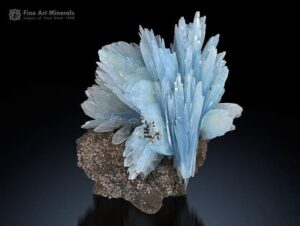
Barium sulfate (BaSO₄) is the mineral baryte, regularly spelled barite. Baryte is an essential component of many industrial processes because of its high density and chemical inertness. Because of its special qualities, it is essential in industries including manufacturing, healthcare, and oil and gas. Usually colorless or white, impurities can give it brown, gray, blue, or yellow tints. Based on the Mohs hardness scale, it is rather mild, ranging from 3 to 3.5. One distinguishing feature is density, which has a high specific gravity of 4.3 to 5. Transparency This can be either opaque or transparent. Chemical Composition: BaSO4, which contains a lot of barium.

Applications of Baryte

1. Oil and Gas Drilling

Baryte is used as a weighing ingredient in drilling muds in the oil and gas sector, which is one of its most important applications.

Function: During drilling fluid operations, its high density stabilizes boreholes and balances subsurface pressure, preventing fires.

Significance: The majority of baryte worldwide demand is provided by its use in this application.

2. Paints and Coatings

Baryte is widely used in paint and coatings as a pigment and filler.

Benefits: It increases paints’ smoothness, color, and brightness while also increasing their longevity.

Special Uses: Paints based on baryte are perfect for uses that call for high reflectivity or resilience to challenging environmental factors.

3. Rubber and Plastics

Baryte serves as a filler material in the rubber and plastics industries.

Benefits: It makes things stronger, more resilient to chemicals, and more long-lasting.

Applications: It is frequently found in high-performance plastic products, industrial rubber goods, and automotive components.

4. Medical Imaging

In the medical field, baryte is crucial, particularly for medical imaging.

Use: Barium sulfate serves as a contrast agent in gastrointestinal tract CT and X-ray testing.

Safety: It produces clear imaging findings and is safe to eat due to its chemical inertness.

5. Construction Materials

Because of its strength and density, baryte finds usage in specific construction applications.

Radiation Shielding: It is mixed with cement and concrete to create radiation-shielding walls for nuclear power plants and hospitals.

Heavyweight Concrete: When utilized in high-stress situations, such as bridges and offshore platforms, lightweight concrete increases the density of the concrete.

SNDB: Your Trusted Partner for Baryte

It is dedicated to providing premium baryte and manufacturing it to the highest standards. SNDB is establishing itself as a reliable brand in the sector because of its cutting-edge production facility and dedication to strict quality standards.

Superior Quality: SNDB provides baryte that is high purity and satisfies international standards.

Customized Solutions: Goods made to meet a range of industrial needs.

Sustainable Practices: dedication to responsible and environmentally beneficial production methods.

Global Reach: SNDB provides timely and dependable Baryte services to customers all around the world.

In terms of locating the best quality baryte (BaSO₄), SNDB is a mark of dependability and quality. SNDB’s superior products and unparalleled support make it the ideal option for any business, be it paint, oil & gas, or healthcare.
CategoriesBlogs

Barite Lumps | Best Barite Lumps Suppliers and Exporters from India

Barite lumps

Barite Lumps

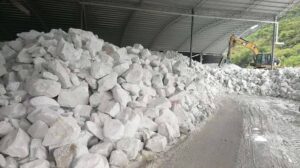
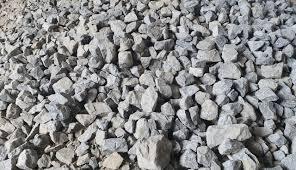
Barium sulfate, or BaSO4, is the main ingredient of barite (Baryte), another name for the mineral. It is well known for having a high specific gravity and for being used as a weighing agent in a variety of sectors, most notably oil and gas drilling. Straight from the mine, barite lumps are this mineral’s unprocessed, raw form.

Barite Lumps

Key Properties of Barite Lumps

  • High Specific Gravity: Barite’s high specific gravity, which usually ranges from 4.2 to 4.5, is one of its most distinctive qualities and makes it a perfect weighing agent.
  • Chemical Composition: Barium sulfate makes up the majority of barite, with trace amounts of silica, iron oxide, and alumina.
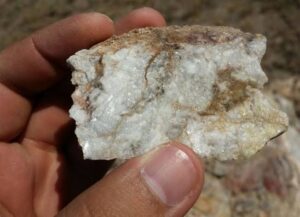
  • Physical Appearance: Barite lumps are typically white to gray in color, though impurities can give them a brownish or yellowish tint.

Industrial Applications of Barite Lumps

  • Oil and Gas Industry: The main application of barite in drilling fluids for oil and gas exploration is as a weighting agent. Its high specific gravity aids in managing the borehole’s pressure.
  • Chemical Industry: Barite also serves to create barium compounds, which are necessary to generate paint, glass, rubber, and other materials.
  • Other Uses: Beyond its usage in drilling and chemical processing, barite also acts as an aggregate in radiation-shielding concrete and as a filler in paper, textiles, and plastics..

Best Barite Lumps Suppliers and Exporters from India

India is among the world’s top producers and exporters of barite. Due to their abundant natural resources and sophisticated mining methods, Indian providers are now among the best in the world market.

1. Quality Assurance

Indian vendors of barite are famous for upholding exacting standards of quality. They make sure that the Barite lumps undergo minimal processing to preserve their high specific gravity, which is necessary for industrial uses.

2. Competitive Pricing

Indian vendors are able to provide Barite lumps at affordable pricing because of the country’s abundant resources and well-managed mining operations. India is hence a favored supplier for clients worldwide.

3. Global Distribution Network

The robust worldwide distribution network that Indian exporters have set up enables barite lumps to be promptly delivered to clients worldwide. They provide services to a variety of industries, including oil and gas, chemicals, and construction.

Leading Barite Lumps Suppliers and Exporters in India

Numerous Indian businesses enjoy a solid reputation as trustworthy providers of barite lumps. They are famous for their dependability, excellence, and capacity to satisfy global market demands.

Lump barite, an indispensable raw material for a wide range of industrial processes, particularly in the oil and gas sector, serves as a crucial component. India meets the world’s barite needs with its plentiful reserves and professional providers. India’s leading suppliers and exporters deliver high-quality Barite lumps at reasonable prices, solidifying the country’s position as a significant player in the global barite market.


FAQs

Question 1: What are barite lumps?
Answer :
Barium sulfate (BaSO4) is the main component of barite, a mineral that comes in a variety of forms. One of the most sought-after forms is lumps of barite. Usually, these lumps can be found as leftover deposits from weathering processes or in geological formations like sedimentary rocks.

Question 2:What class is barite?
Answer :
In terms of chemistry, barite BaSO4 is a member of class 28 sulfate (or sulphate) minerals. There are 78 classes in the Dana Classification, most of which are determined by the primary anion or anionic group of the mineral (or, in the case of native elements, by the absence of an anion).

Question 3:Is barite a heavy mineral?
Answer :
The most common industrial source of barium is barium sulfate, or barite (BaSO4), which is also the heaviest nonmetallic mineral. BaSO4 is composed of 34% SO3 and 66% BaO by mass.

Question 4:Is barite hazardous?
Answer :
irritant (ocular and dermal) Skin Sensitizer Replacement Sequence OSHA/HCS irritable status: According to the OSHA Hazard Communication Standard, this naturally occurring clay poses a risk (29 CFR 1910.1200). Categorization of the mixture’s substance: OSHA’s Category 1A for carcinogenicity (inhalation) and Specific organ toxicity.

Question 5:Is barite soluble in water?
Answer :
It is a crystalline solid that is white, odorless, and water insoluble. Natural forms of barium include the mineral barite, which is the primary commercial source of barium and products made with it. Its primary uses take use of both its high density and opaque white look.