Why Barite is Gaining Popularity in Cosmetic Manufacturing | SNDBCategoriesBlogs

SNDB |Why Barite is Gaining Popularity in Cosmetic Manufacturing

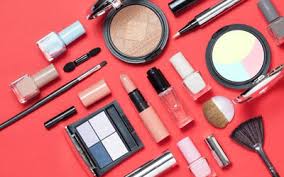
In recent years, the cosmetics industry has witnessed a growing shift toward mineral-based ingredients, and barite (barium sulfate) is emerging as a valuable component in many formulations. Its unique physical and chemical properties make it highly suitable for use in a wide range of beauty and personal care products. As demand for safe, effective, and cost-efficient ingredients increases, barite is gaining popularity among cosmetic manufacturers worldwide.

Unique Properties Driving Its Demand

One of the primary reasons for barite’s rising use in cosmetics is its chemical inertness and non-toxic nature. Barite does not react easily with other substances and is insoluble in water, making it stable and safe for use in skin-contact products.

Additionally, barite has a high density and fine particle structure, which allows it to be easily processed into smooth powders. This contributes to improved texture and performance in cosmetic formulations.

Role as a Pigment and Whitening Agent

Barite is widely used as a white pigment in cosmetic products such as compact powders, BB creams, and body powders. It enhances brightness and provides a clean, polished appearance to products.

In some formulations, it can even partially replace more expensive materials like titanium dioxide, helping manufacturers reduce production costs without compromising quality.

Improving Texture and Product Performance

Another major advantage of barite is its function as a filler and texture enhancer. It improves the smoothness and spreadability of products, making them easier to apply on the skin.

Cosmetic manufacturers also use barite to:

  • Increase product volume
  • Enhance consistency
  • Improve stability and shelf life

These qualities are especially important in products like foundations, creams, and lotions.

Thickening and Stabilizing Agent

Barite also acts as a thickening agent, helping maintain the desired consistency in creams and lotions. This ensures that products remain uniform and easy to use over time.

Its ability to stabilize formulations reduces separation and enhances the overall user experience.

Safety and Skin Compatibility

Safety is a critical factor in cosmetic manufacturing, and barite meets this requirement effectively. Due to its non-toxic and chemically stable nature, it is considered safe when used in controlled amounts.

Its mild and non-reactive properties make it suitable even for sensitive skin applications, contributing to its increasing acceptance in the beauty industry.

Specialized Applications in Protective Cosmetics

Barite’s composition (barium sulfate) provides radiation-blocking properties, which has led to its use in specialized cosmetic products such as protective creams and certain sunscreens.

Although this is a niche application, it highlights the versatility of the mineral.

Cost-Effectiveness and Industry Growth

Another key reason for barite’s growing popularity is its cost efficiency. As a naturally abundant mineral, it offers a more affordable alternative to some traditional cosmetic ingredients.

Combined with its multifunctional benefits—pigment, filler, thickener, and stabilizer—it helps manufacturers optimize both performance and production costs.

Barite is gaining popularity in cosmetic manufacturing due to its unique combination of safety, functionality, and affordability. Its ability to improve texture, enhance appearance, and stabilize formulations makes it a valuable ingredient in modern cosmetic products.

As the demand for mineral-based and cost-effective ingredients continues to grow, barite is expected to play an even more significant role in the future of the cosmetics industry.

SNDB has positioned itself as a top manufacturer, exporter, and supplier of barite by consistently delivering quality products and reliable service. With its global presence, advanced production capabilities, and commitment to excellence, SNDB continues to lead the barite industry and meet the growing demand for this essential mineral worldwide.
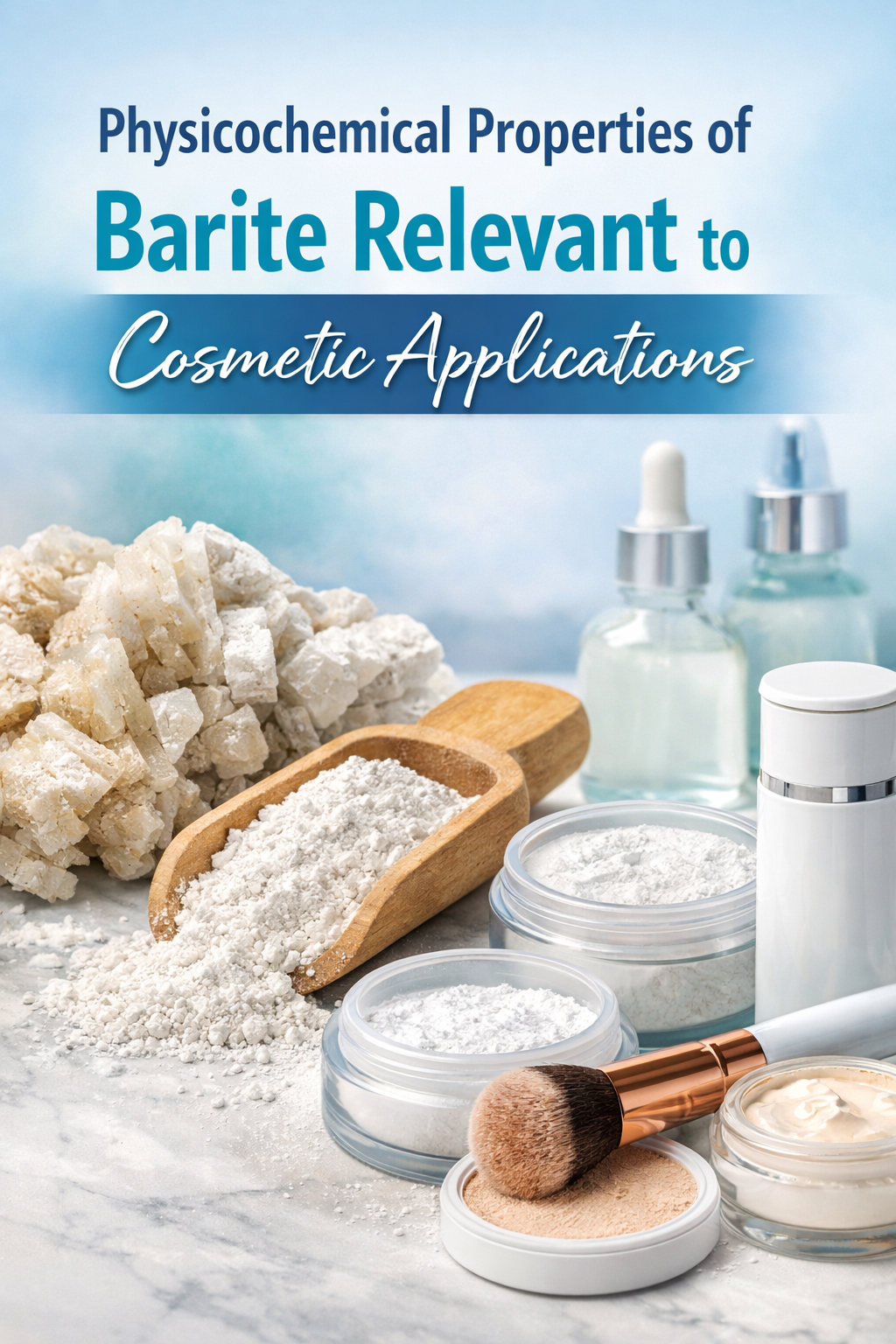
Physicochemical Properties of Barite Relevant to Cosmetic Applications Abstract Barite (barium sulfate, BaSO₄) is a naturally occurring mineral widely used in industrial applications and increasingly explored in cosmetic formulations. Its chemical inertness, high density, whiteness, and fine particle adaptability make it suitable as an opacifying and texturizing agent in cosmetic products. This article reviews the physicochemical properties of barite and discusses their relevance to cosmetic applications. 1. Introduction Barite is composed primarily of barium sulfate (BaSO₄). It is valued for its high specific gravity, chemical stability, and optical properties. While traditionally used in drilling fluids, paints, plastics, and medical imaging, barite also has potential in cosmetic formulations due to its safety profile and functional characteristics. 2. Chemical Composition and Structure Chemical Formula: BaSO₄ Molecular Weight: 233.39 g/mol Crystal System: Orthorhombic Solubility: Practically insoluble in water Chemical Stability: Highly stable under normal conditions The insolubility of barium sulfate is critical for cosmetic safety, as it prevents absorption through the skin and minimizes toxicity risks. 3. Physical Properties Relevant to Cosmetics 3.1 Particle Size and Texture Barite can be micronized into extremely fine particles. Fine particle size improves smoothness, blendability, and overall sensory performance in cosmetic formulations such as pressed powders and foundations. 3.2 Whiteness and Opacity Physicochemical Properties of Barite Relevant to Cosmetic ApplicationsCategoriesBlogs

Physicochemical Properties of Barite Relevant to Cosmetic Applications

Physicochemical Properties of Barite Relevant to Cosmetic Applications Abstract Barite (barium sulfate, BaSO₄) is a naturally occurring mineral widely used in industrial applications and increasingly explored in cosmetic formulations. Its chemical inertness, high density, whiteness, and fine particle adaptability make it suitable as an opacifying and texturizing agent in cosmetic products. This article reviews the physicochemical properties of barite and discusses their relevance to cosmetic applications. 1. Introduction Barite is composed primarily of barium sulfate (BaSO₄). It is valued for its high specific gravity, chemical stability, and optical properties. While traditionally used in drilling fluids, paints, plastics, and medical imaging, barite also has potential in cosmetic formulations due to its safety profile and functional characteristics. 2. Chemical Composition and Structure Chemical Formula: BaSO₄ Molecular Weight: 233.39 g/mol Crystal System: Orthorhombic Solubility: Practically insoluble in water Chemical Stability: Highly stable under normal conditions The insolubility of barium sulfate is critical for cosmetic safety, as it prevents absorption through the skin and minimizes toxicity risks. 3. Physical Properties Relevant to Cosmetics 3.1 Particle Size and Texture Barite can be micronized into extremely fine particles. Fine particle size improves smoothness, blendability, and overall sensory performance in cosmetic formulations such as pressed powders and foundations. 3.2 Whiteness and Opacity Physicochemical Properties of Barite Relevant to Cosmetic Applications

Barite (barium sulfate, BaSO₄) is a naturally occurring mineral widely used in industrial applications and increasingly explored in cosmetic formulations. Its chemical inertness, high density, whiteness, and fine particle adaptability make it suitable as an opacifying and texturizing agent in cosmetic products. This article reviews the physicochemical properties of barite and discusses their relevance to cosmetic applications.

Barite is composed primarily of barium sulfate (BaSO₄). It is valued for its high specific gravity, chemical stability, and optical properties. While traditionally used in drilling fluids, paints, plastics, and medical imaging, barite also has potential in cosmetic formulations due to its safety profile and functional characteristics.

2. Chemical Composition and Structure

  • Chemical Formula: BaSO₄
  • Molecular Weight: 233.39 g/mol
  • Crystal System: Orthorhombic
  • Solubility: Practically insoluble in water
  • Chemical Stability: Highly stable under normal conditions

The insolubility of barium sulfate is critical for cosmetic safety, as it prevents absorption through the skin and minimizes toxicity risks.

3. Physical Properties Relevant to Cosmetics

3.1 Particle Size and Texture

Barite can be micronized into extremely fine particles. Fine particle size improves smoothness, blendability, and overall sensory performance in cosmetic formulations such as pressed powders and foundations.

3.2 Whiteness and Opacity

Barite exhibits high brightness and opacity. Its refractive index contributes to effective light scattering, improving coverage in cosmetic products.

3.3 Density

  • Specific Gravity: ~4.2–4.5

The high density enhances product weight and stability, especially in compact powder formulations.

3.4 Surface Characteristics

Surface-treated barite can improve dispersion in oil-based and water-based cosmetic systems, enhancing formulation stability.

4. Functional Roles in Cosmetic Applications

4.1 Opacifying Agent

Barite increases opacity in formulations, helping conceal skin imperfections.

4.2 Pigment Extender

It acts as a filler or extender for pigments, reducing formulation cost while maintaining performance.

4.3 Texture Modifier

Its smooth particle morphology contributes to a silky skin feel and improved spreadability.

4.4 Alternative to Titanium Dioxide

In certain formulations, barite may serve as a partial substitute for titanium dioxide, though it provides lower intrinsic opacity.

5. Safety and Regulatory Considerations

Barium sulfate is chemically inert and poorly absorbed by the skin due to its insolubility. Cosmetic-grade barite must meet strict purity standards to ensure minimal contamination with soluble barium compounds or heavy metals. When processed and purified appropriately, it is considered safe for topical use within regulated concentration limits.

Key safety considerations include:

  • High purity (typically >95% BaSO₄)
  • Controlled particle size distribution
  • Heavy metal testing
  • Compliance with cosmetic regulatory standards

6. Comparison with Other Cosmetic Fillers

PropertyBarite (BaSO₄)Titanium Dioxide (TiO₂)Talc
OpacityModerateHighModerate
DensityHighModerateLow
Chemical InertnessHighHighModerate
TextureSmooth (micronized)FineVery soft

Barite provides structural density and brightness but is generally less powerful in opacity than titanium dioxide.


Barite possesses several physicochemical properties that support its potential use in cosmetic formulations, including chemical stability, high density, opacity, and smooth texture when finely processed. Its inert nature and safety profile make it suitable for controlled cosmetic applications. However, strict quality control and regulatory compliance are essential when selecting cosmetic-grade material.

Powdered Perfection: How Barite Enhances Texture and Finish — and the Best Manufacturers, Suppliers, and ExportersCategoriesBlogs

Powdered Perfection: How Barite Enhances Texture and Finish | Best Manufacturers, Suppliers, and Exporters

The naturally occurring mineral barite, also known as barium sulfate (BaSO₄), is prized for its high density, tiny particle size, and chemical inertness. Although barite is well-known for its industrial applications in paints and drilling fluids, its special physical characteristics also make it useful in cosmetics and other beauty products. In cosmetic formulations, finely processed barite enhances texture, opacity, smooth application, and a refined finish. Its inert nature means it does not easily react with other ingredients, helping maintain product stability and consistency.

How Barite Enhances Cosmetic Texture and Finish

1. Silky Smooth Texture

Barite powder gives skin a smooth, velvety texture when it is ground to micron-level fineness. This enables the smooth application and flawless blending of cosmetics, particularly loose mineral foundations and pressed powders, producing a high-end sensory experience.

2. Improved Opacity and Coverage

Increased opacity is a result of barite’s density and crystalline structure. It feels lighter while offering improved coverage and aiding in the concealment of flaws. This makes it useful in matte foundations and face powders.

3. Enhanced Product Stability

Because barite is non-reactive and chemically inert, it helps recipes stay stable over time. It guarantees continuous performance and a longer shelf life by not interfering with pigments, binders, or active substances.

4. Matte and Refined Finish

Barite can enhance the overall finish of cosmetic formulas by adding a smooth, matte look without a heavy or chalky impact due to its natural brightness and fine particle distribution.

Leading Barite Manufacturers, Suppliers & Exporters

SNDB

SNDB is a well-known producer, distributor, and exporter of premium barite powder. The business sells finely ground barite with a high percentage of barium sulfate and mesh sizes that can be customized. SNDB serves both domestic and foreign markets with its state-of-the-art processing facilities and strict quality control standards.

How to Choose the Right Barite Supplier

When selecting a manufacturer or exporter, consider:

  • Purity level (high BaSO₄ content)
  • Whiteness and brightness
  • Fine particle size (mesh specification)
  • Consistent supply capacity
  • Export experience and logistics support
  • Quality certifications and testing standards

For cosmetic-related applications, ensure the material meets required safety and purity specifications before formulation.

In the creation of cosmetics, barite has a significant yet subtle function. It is an important mineral element in contemporary cosmetic products because of its capacity to improve texture, increase coverage, and produce a sophisticated matte finish.

Manufacturers such as SNDB and other established exporters provide high-quality barite suitable for various specialized applications. By choosing the right grade and supplier, cosmetic formulators can achieve powdered perfection with performance, stability, and elegance.

Cosmetic-Grade Barite (SNDB): Manufacturing Process, Quality Control, and Supply ChainCategoriesBlogs

Cosmetic-Grade Barite (SNDB): Manufacturing Process, Quality Control, and Supply Chain

Cosmetic-Grade Barite (SNDB): Manufacturing Process, Quality Control, and Supply Chain

The cosmetics and personal care industries make extensive use of cosmetic-grade barite, a high-purity type of barium sulfate. Barite contributes significantly to improving the texture, opacity, and stability of cosmetic formulations because of its chemical inertness, high brightness, tiny particle size, and superior oil-absorption qualities. Cosmetic-grade barite satisfies the safety, purity, and consistency requirements required by international cosmetic manufacturers when produced in accordance with SNDB-approved standards.

The production method, quality assurance procedures, and supply chain organization of cosmetic-grade barite are examined in this paper.

Manufacturing Process of Cosmetic-Grade Barite (SNDB)

The production of cosmetic-grade barite requires precise processing to ensure high purity and uniform particle size.

1. Raw Material Selection
Carefully chosen mines with naturally low concentrations of contaminants including iron, silica, and heavy metals are the source of high-quality barite ore. Processing is only permitted for ore that satisfies SNDB and cosmetic industry requirements.

2. Crushing and Grinding
To produce ultra-fine particle sizes, the raw barite is crushed and ground using sophisticated grinding machinery. For smooth texture and performance, micronized barite with regulated particle dispersion is usually needed for cosmetic applications.

3. Purification and Beneficiation
Unwanted contaminants are eliminated by physical and chemical beneficiation techniques. Achieving the brightness, whiteness, and purity required for cosmetic-grade material depends on this stage.

4. Classification and Micronization
Air classifiers and precision sieves ensure consistent particle size. Micronization enhances dispersion and prevents grittiness in cosmetic formulations.

5. Drying and Packaging
The finished barite powder is dried under controlled conditions and packed in contamination-free environments using moisture-resistant, cosmetic-safe packaging.

Quality Control and SNDB Compliance

Strict quality control is essential to ensure cosmetic-grade barite is safe, reliable, and compliant with industry regulations.

Key Quality Control Measures Include:

  • Chemical purity testing (BaSO₄ content)
  • Heavy metal analysis (lead, mercury, arsenic, cadmium)
  • Particle size distribution analysis
  • Whiteness and brightness measurement
  • Moisture content testing
  • Microbiological safety checks (where required)

Each batch undergoes laboratory testing before release. SNDB-approved manufacturers maintain detailed documentation, batch traceability, and compliance with international cosmetic standards such as ISO and GMP guidelines.

Supply Chain of Cosmetic-Grade Barite

A well-managed supply chain ensures consistent availability and quality for cosmetic manufacturers worldwide.

1. Ethical and Reliable Sourcing
Raw materials are sourced from approved mines following responsible mining practices and regulatory compliance.

2. In-House Processing and Storage
Manufacturers maintain controlled processing facilities and dedicated storage areas to prevent cross-contamination.

3. Logistics and Export Handling
Cosmetic-grade barite is transported using clean, sealed packaging and handled according to international export regulations. Reliable exporters ensure timely delivery and proper documentation.

4. Global Distribution
SNDB-compliant barite suppliers serve cosmetic brands, contract manufacturers, and distributors across domestic and international markets.

Applications of Cosmetic-Grade Barite

Cosmetic-grade barite is commonly used in:

  • Face powders and foundations
  • Compact powders
  • Creams and lotions
  • Sunscreen formulations
  • Decorative cosmetics

Its inert nature and fine texture help improve product feel, opacity, and formulation stability.

A crucial raw ingredient for the cosmetics industry is cosmetic-grade barite made in accordance with SNDB regulations. Manufacturers guarantee a product that satisfies international safety and performance standards through meticulous raw material selection, sophisticated production techniques, stringent quality control, and a dependable supply chain. Cosmetic brands may preserve quality, consistency, and customer confidence by selecting a reliable cosmetic-grade barite supplier who has been approved by the SNDB.

SNDB: Leading Global Exporter of High-Quality Barite | Trusted Supplier for Oil & Gas & MoreCategoriesBlogs

The Hidden Beauty Mineral: Use of Barite in Cosmetics | SNDB Best Manufacturer

Barite Uses & Benefits | High-Quality Barite for Various Industries | SNDB: Best Manufacturer in India

Most people are familiar with names like shea butter, retinol, or hyaluronic acid when it comes to cosmetic ingredients, but one of the most forgotten but vital minerals in the beauty industry is Barite (Barium Sulfate). Known for its safety and versatility, It has a subtle yet potent effect on skincare and makeup products.

Additionally, SNDB is the top manufacturer and supplier of high-quality BaSo4 for cosmetic application, providing top-notch material that is dependable by well-known cosmetic manufacturers.

What is Barite?

Traditionally used for oil drilling and other industrial uses, cosmetic-grade barite (BaSO₄) is refined to meet strict purity and safety standards, making it suitable for skincare and makeup formulations. It is a naturally occurring mineral made of barium sulfate that is chemically stable, non-toxic, and safe for skin use.

Cosmetic Uses of Barite

It is a useful element for cosmetics producers since it provides a number of practical advantages.

1. Texture Enhancer & Filler

Products such as these use barite as a bulking ingredient to give them a smooth, creamy feel.

  • Face powders
  • Liquid foundations
  • BB/CC creams
  • Compact powders

It facilitates the product’s even application to the skin, leaving a smooth, light finish.

2. Mattifying Agent

Because it diffuses light and absorbs oil, It provides the skin a smooth, matte appearance, making it perfect for:

  • Oil-control powders
  • Matte foundations
  • Setting powders

Key Benefits of Barite in Cosmetics

  • Non-toxic and safe for skin contact
  • Improves product spreadability and feel
  • Enhances color stability in pigmented products
  • Creates a soft-focus effect (reduces fine lines appearance)
  • Cost-effective alternative to other mineral fillers

Cosmetic Products That Commonly Use Barite

  • Loose and pressed powders
  • Cream and liquid foundations
  • Lipsticks
  • Eyeshadows
  • Sunscreens
  • Face masks

Is Barite Safe in Cosmetics?

Yes, cosmetic-grade barite is approved by international safety agencies such as the FDA (U.S.) and EU Cosmetic Regulation, and it is totally safe when produced and utilized in accordance with regulatory criteria.

Why Choose SNDB—The Best Barite Manufacturer?

Purity, particle size, and safety are important considerations when acquiring Barite for cosmetics. SNDB is India’s top producer and exporter of premium Barite, known for:

  • ISO-certified manufacturing
  • Strict quality control & lab testing
  • Customized particle sizes for cosmetics
  • Global supply chain and timely delivery
  • Competitive pricing and bulk availability

BaSO4 is a mineral that gets little attention in the cosmetics industry, but it has a significant impact. From enhancing texture to creating a flawless matte appearance, It is a dependable and efficient cosmetic ingredient. When you work with SNDB as your supplier, you can be sure that you will receive purity, consistency, and trust.