SNDB: Best Global Barite Powder | High Purity & Superior QualityCategoriesBlogs

Barite Mining and Processing for Oil Industry Applications

SNDB Barite Powder Exporters – Consistent Quality, Global Reach

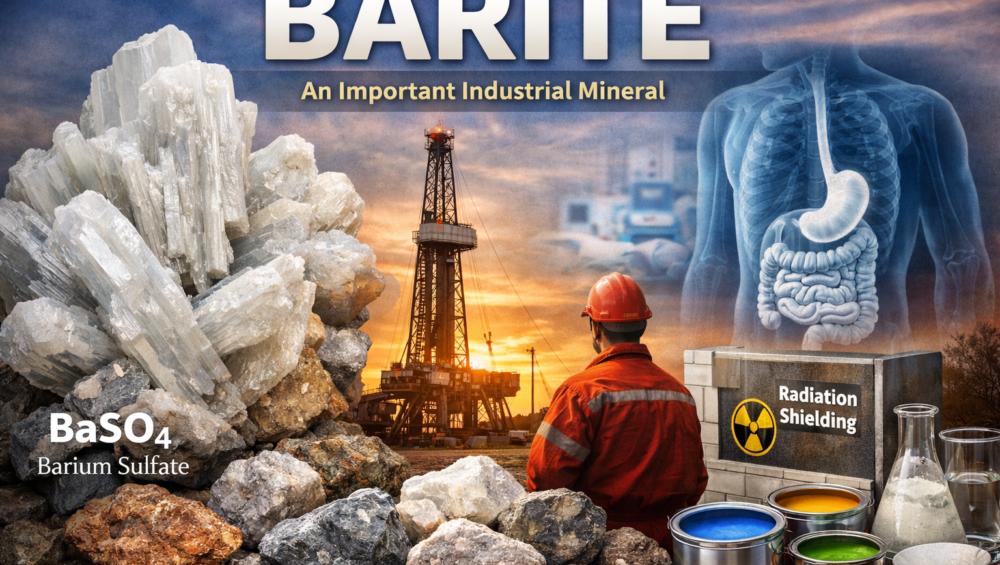
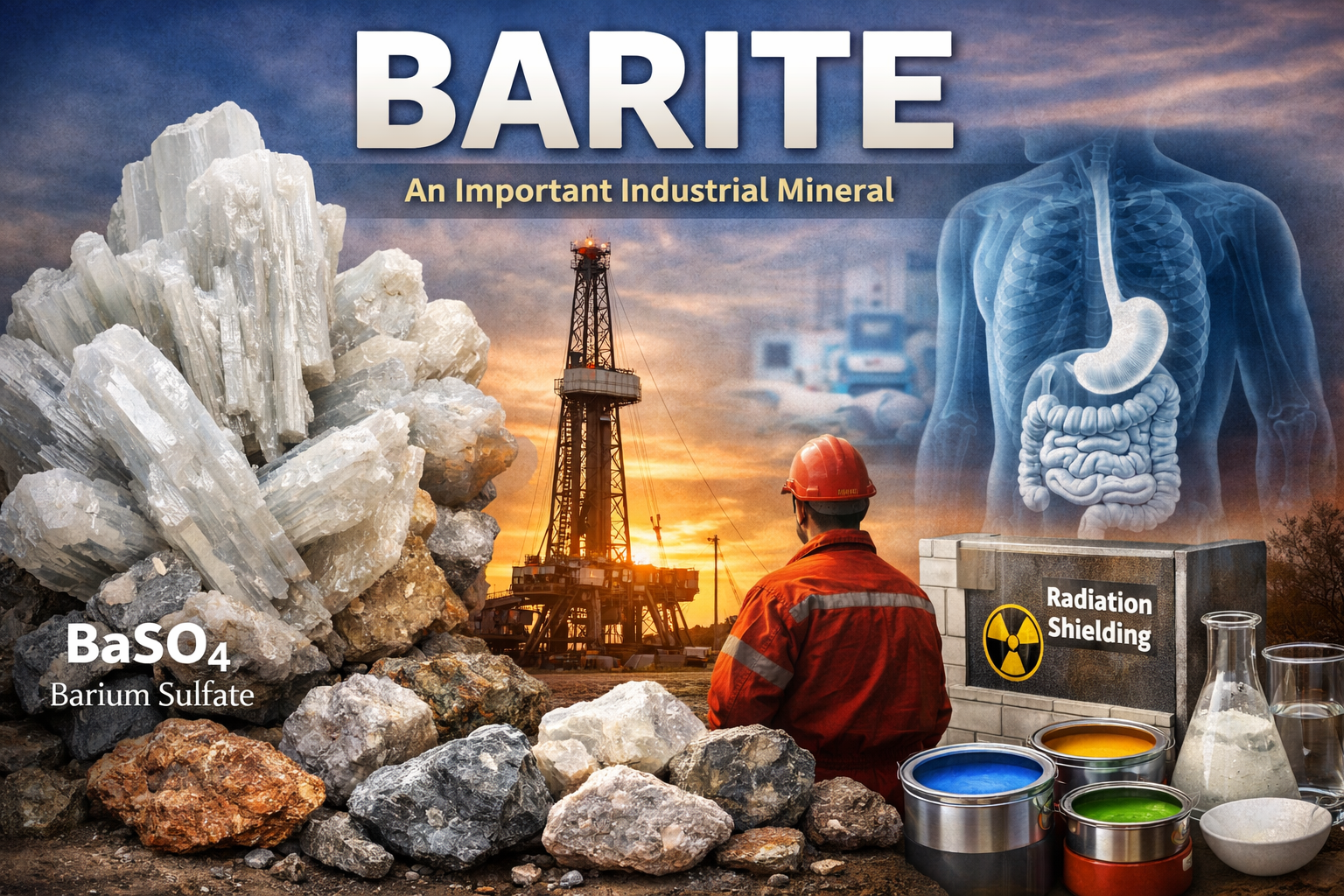
Barite is an important industrial mineral mainly used in the oil and gas industry as a weighting agent in drilling fluids. Due to its high specific gravity, chemical inertness, and low solubility, barite plays a crucial role in maintaining pressure control during drilling operations. The mining and processing of barite are therefore essential to support global energy production.

What is Barite?

Barite is a mineral composed of barium sulfate (BaSO₄). It is known for its high density, typically ranging from 4.2 to 4.5 g/cm³, which makes it suitable for use in drilling mud. Barite is usually found in sedimentary deposits and hydrothermal veins.

Barite Mining Methods

Baso4 is mined using both surface and underground mining methods, depending on the depth and type of deposit.

1. Surface Mining

Surface mining is the most common method and includes:

  • Open-pit mining
  • Quarrying
  • Strip mining

In this method, the overburden (soil and rock covering the deposit) is removed, and barite ore is extracted using heavy machinery such as excavators and loaders.

2. Underground Mining

Underground mining is used when barite deposits are deep below the surface. This method involves:

  • Shaft mining
  • Room and pillar mining

Although more expensive, underground mining is sometimes necessary for high-quality barite deposits.

Barite Processing

After mining, barite ore undergoes several processing steps to meet the specifications required for oil drilling applications.

1. Crushing

The mined barite is first crushed using jaw crushers and cone crushers to reduce the size of the ore.

2. Grinding

The crushed ore is then ground into fine powder using ball mills or roller mills. The oil industry requires barite powder with very fine particle size.

3. Beneficiation

Beneficiation improves the purity and density of barite. Common methods include:

  • Gravity separation
  • Flotation
  • Magnetic separation
  • Washing

These processes remove impurities such as silica, iron oxide, and clay.

4. Drying and Packaging

The processed barite is dried and packed into bags or bulk containers for transportation to oil drilling companies.

Barite in Oil Drilling

Barite is mainly used as a weighting agent in drilling mud. Its main functions include:

  • Controlling formation pressure
  • Preventing blowouts
  • Stabilizing the borehole
  • Cooling and lubricating the drill bit
  • Carrying drill cuttings to the surface

Without barite, drilling deep oil and gas wells would be extremely dangerous and inefficient.

Specifications for Oil Industry Barite

The oil industry has strict specifications for barite:

  • Specific gravity: Minimum 4.2
  • Low soluble salts
  • Fine particle size
  • High purity BaSO₄
  • Low abrasive materials

These specifications ensure safe and efficient drilling operations.

Environmental Considerations

Barite mining can have environmental impacts such as land degradation, water pollution, and dust generation. Proper environmental management practices include:

  • Land reclamation
  • Waste management
  • Water treatment
  • Dust control systems

Sustainable mining practices are important to reduce environmental damage.

Barite mining and processing are essential to the oil and gas industry. From extraction to beneficiation and final use in drilling fluids, barite plays a critical role in safe and efficient drilling operations. With increasing global energy demand, the importance of barite will continue to grow, making it a valuable mineral resource worldwide.
Barite Mineral Facts: Everything You Need to KnowCategoriesBlogs

Barite Mineral Facts: Everything You Need to Know

Barite Mineral Facts: Everything You Need to Know

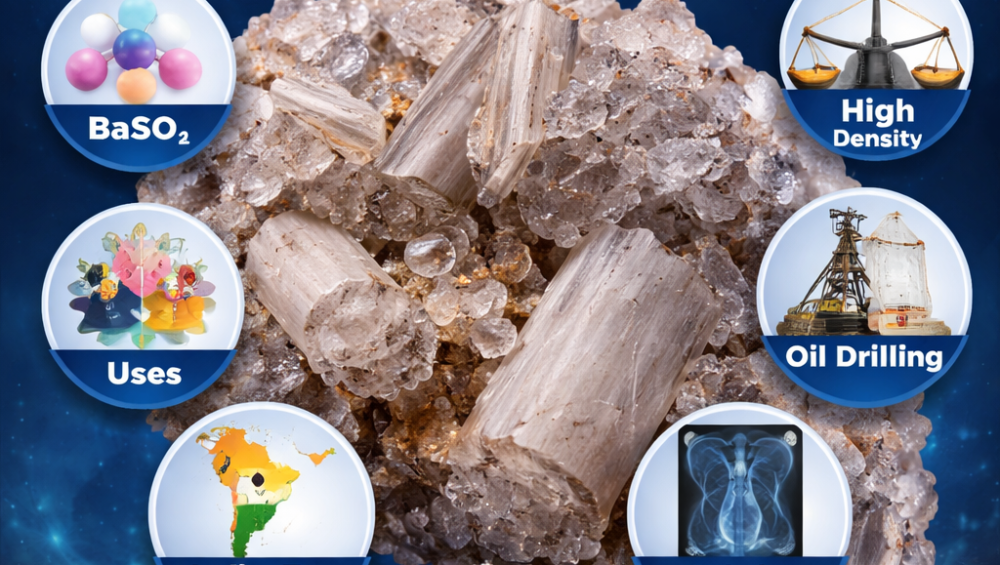
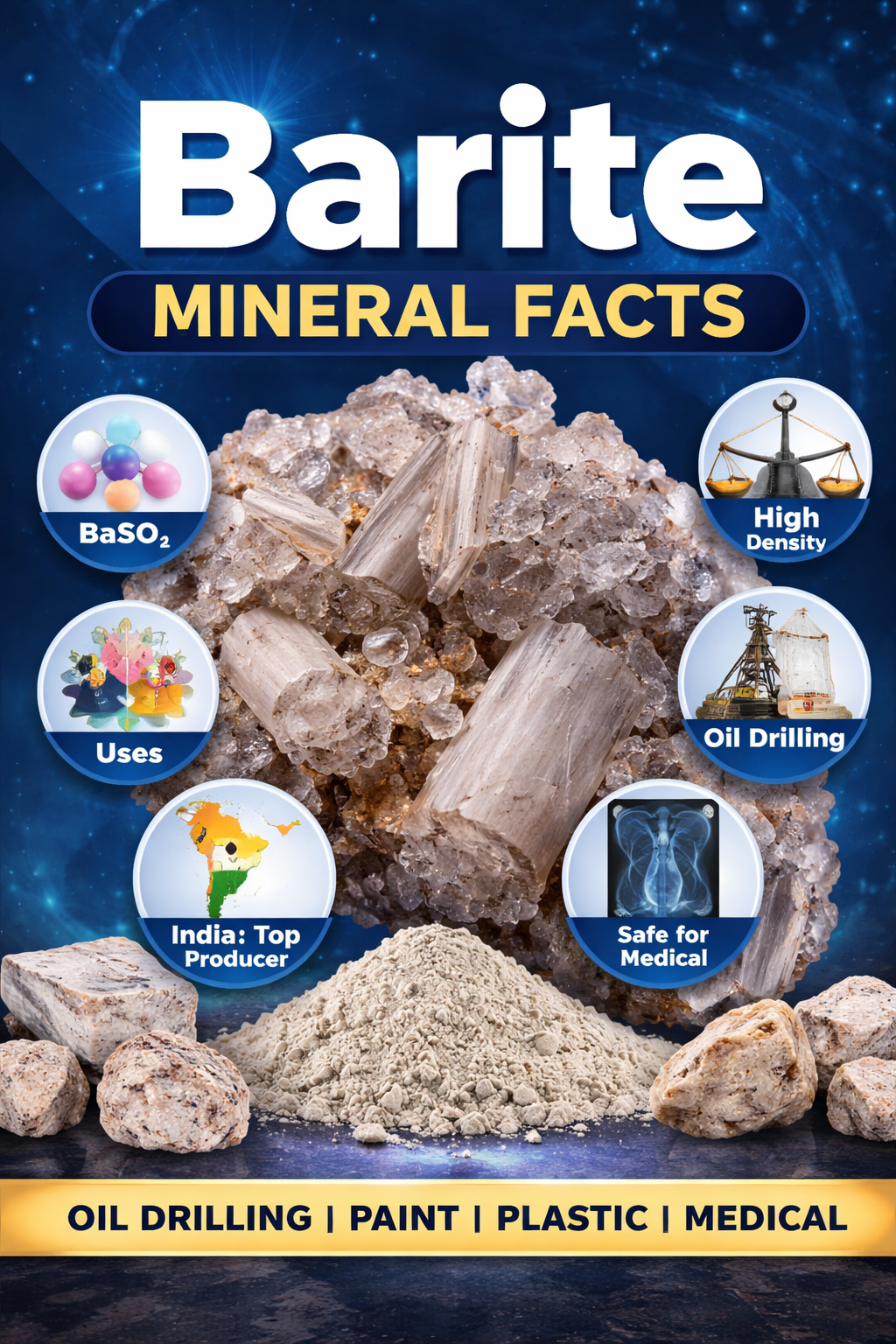
Barite is a naturally occurring mineral composed of barium sulfate (BaSO₄). It is also known as barytes or heavy spar because of its high density. Barite is one of the most important industrial minerals and is widely used in oil drilling, paint, plastic, rubber, and medical industries.

The name “Barite” comes from the Greek word “barys”, which means heavy, because barite has a high specific gravity compared to other non-metallic minerals.

Chemical and Physical Properties of Barite

PropertyDetails
Chemical FormulaBaSO₄
ColorWhite, Brown, Yellow, Blue, Gray
Specific Gravity4.2 – 4.5
Hardness3 – 3.5 Mohs
Crystal SystemOrthorhombic
SolubilityInsoluble in water
FormLumps, Crystals, Powder

Barite is chemically stable, non-toxic, and has high density, making it useful in many industrial applications.

Occurrence of Barite

Barite is commonly found in:

  • Sedimentary rocks
  • Limestone and dolomite rocks
  • Hydrothermal veins
  • Marine deposits
  • Sandstone deposits

Major barite producing countries include India, China, USA, Morocco, and Iran. India is one of the largest producers and exporters of barite in the world.

Uses of Barite Mineral

1. Oil and Gas Industry

Barite is mainly used as a weighting agent in drilling mud in oil and gas drilling. It helps control pressure and prevents blowouts during drilling operations. This is the largest use of barite in the world.

2. Paint Industry

Barite is used as a filler in paints and coatings. It improves thickness, smoothness, and durability of paint.

3. Plastic and Rubber Industry

Barite is used as a filler material to improve strength, hardness, and wear resistance in plastic and rubber products.

4. Medical Industry

Barite is used in X-ray imaging to examine the digestive system. It is used as a barium meal for medical tests.

5. Paper Industry

Barite is used as a coating and filler in paper to improve brightness and smoothness.

6. Construction Industry

Barite is used in radiation shielding concrete in hospitals, laboratories, and nuclear facilities.

Barite is also used in ceramics, glass, brake pads, clutch plates, and soundproofing materials.

SNDB – Barite Manufacturer, Supplier & Exporter

SNDB is a leading barite manufacturer, supplier, and exporter from India. The company supplies high-quality barite powder and barite lumps for industries such as oil drilling, paint, plastics, rubber, and chemicals.

Why Choose SNDB

  • High-quality barite powder
  • Different grades available (4.0, 4.1, 4.2, 4.3 specific gravity)
  • Export to many countries
  • Competitive prices
  • On-time delivery
  • Industrial-grade and drilling-grade barite
  • Custom packaging available

SNDB supplies barite to oil & gas companies, paint manufacturers, chemical industries, and construction companies worldwide.

Barite is an important mineral because of its high density, chemical stability, and wide industrial uses. It is mainly used in oil drilling, paint, plastics, rubber, medical, paper, and construction industries. India is one of the leading producers of barite, and SNDB is a reliable manufacturer, supplier, and exporter of barite mineral.

FAQs About Barite Mineral

1. What is barite mainly used for?

Barite is mainly used as a weighting agent in oil and gas drilling mud. It is also used in paint, plastic, rubber, paper, and medical industries.

2. What is the chemical formula of barite?

The chemical formula of barite is BaSO₄ (Barium Sulfate).

3. Why is barite called a heavy mineral?

Barite is called a heavy mineral because it has a high specific gravity (4.2–4.5), which is much higher than most non-metallic minerals.

4. Is barite safe for medical use?

Yes, barite is safe for medical use. It is used in X-ray imaging to examine the digestive system because it is non-toxic and does not dissolve in water.

5. Which country produces the most barite?

India and China are among the largest producers of barite in the world.

SNDB Best Supplier | Barite in Radiation Shielding: Medical and Nuclear ApplicationsCategoriesBlogs

SNDB Best Supplier | Barite in Radiation Shielding: Medical and Nuclear Applications

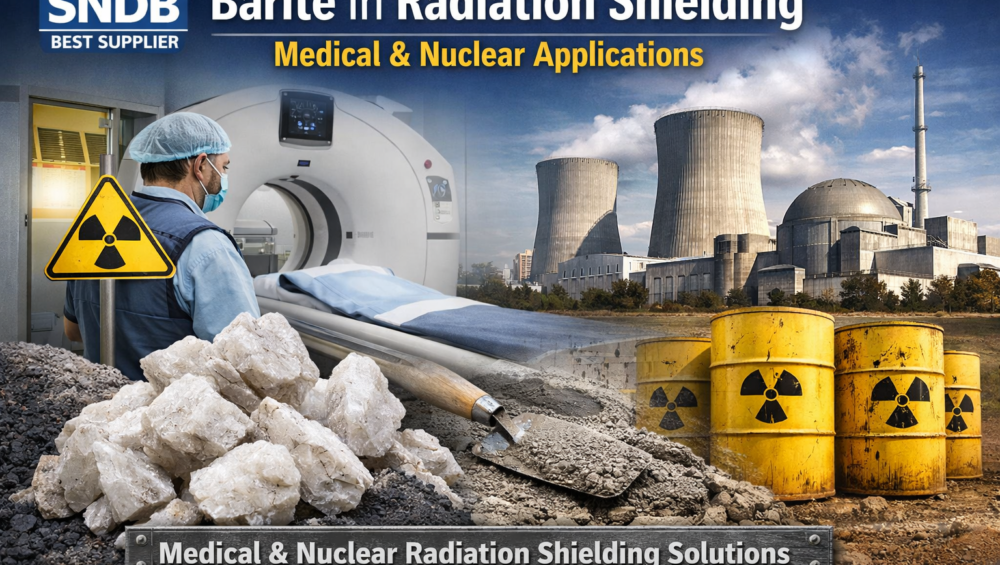
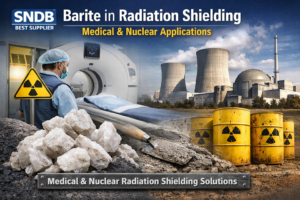
Barite (BaSO₄) is a high-density mineral widely used in radiation shielding applications, particularly in medical and nuclear industries. Due to its high specific gravity, chemical stability, and radiation absorption properties, barite is an important material in shielding structures such as hospital X-ray rooms, CT scan rooms, nuclear power plants, and radioactive storage facilities. Barite is commonly used in the form of barite concrete, barite plaster, and barite blocks for radiation protection.sndb best barite supplier in india .

Properties of Barite for Radiation Shielding

Barite is highly suitable for radiation shielding due to the following properties:

  • High density (around 4.5 g/cm³)
  • High atomic number (barium)
  • Chemical stability
  • Non-toxic compared to lead
  • Strong gamma and X-ray absorption capacity

When barite is added to concrete, it significantly increases the density of the concrete, improving its ability to absorb gamma rays and neutron radiation. Barite concrete can reach densities above 3.0 g/cm³, which is much higher than ordinary concrete, making it more effective for radiation shielding.

Barite in Medical Applications

In the medical field, radiation shielding is required to protect doctors, technicians, and patients from harmful radiation exposure. Barite is used in:

  • X-ray room walls
  • CT scan room walls
  • Radiotherapy rooms
  • Diagnostic imaging facilities
  • Nuclear medicine departments

Barite plaster and barite concrete are used to construct radiation-proof walls. These materials absorb X-rays and gamma rays and prevent radiation leakage outside the room. Compared to ordinary concrete, barite concrete provides better protection and allows thinner walls due to its higher density.

Barite is also used in medical imaging as a contrast material (barium sulfate) for X-ray imaging of the digestive system because it blocks X-rays and makes internal organs visible.

Barite in Nuclear Applications

In nuclear power plants and radioactive storage facilities, strong radiation shielding is required to protect workers and the environment. Barite is used in:

  • Nuclear reactor shielding walls
  • Radioactive waste storage
  • Research laboratories
  • Hot cells
  • Nuclear fuel processing plants

Barite concrete is particularly effective in nuclear facilities because it can absorb both gamma radiation and neutron radiation. Heavyweight concrete made with barite reduces radiation penetration and improves safety in nuclear installations.

Advantages of Barite Radiation Shielding

  • High radiation absorption efficiency
  • Reduces wall thickness
  • Cost-effective compared to lead shielding
  • Durable and strong
  • Environmentally safer than lead
  • Easy to mix with concrete and plaster
  • Suitable for both medical and nuclear shielding

Barite plays a crucial role in radiation shielding in both medical and nuclear industries. Its high density and radiation absorption properties make it an ideal material for constructing radiation-proof structures such as hospital imaging rooms and nuclear power plants. With increasing demand for radiation protection in healthcare and nuclear energy sectors, the demand for high-quality barite from reliable suppliers like SNDB continues to grow.

SNDB Best Manufacturer | Advantages of Using Barite in Industrial ProductsCategoriesBlogs

SNDB Best Manufacturer | Advantages of Using Barite in Industrial Products

SNDB Best Manufacturer | Advantages of Using Barite in Industrial Products

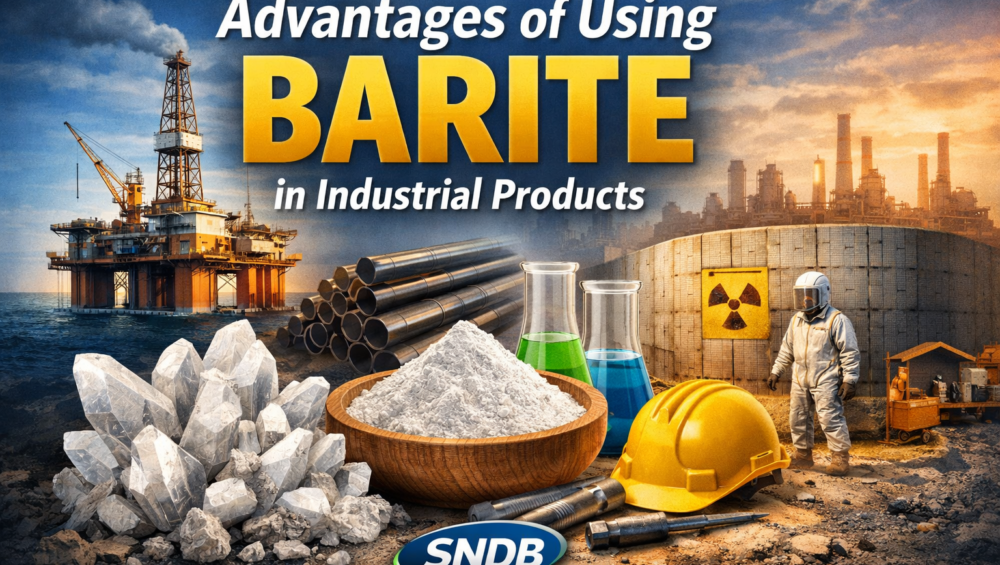
Barite, also known as baryte, is a naturally occurring mineral made of barium sulfate (BaSO₄). It is widely used in many industries such as oil and gas, paint, plastic, rubber, construction, and medical industries. Due to its high density, chemical stability, and low cost, barite has become an essential industrial mineral. Companies like SNDB are known as reliable manufacturers and suppliers of high-quality barite for industrial use.

What Is Barite?

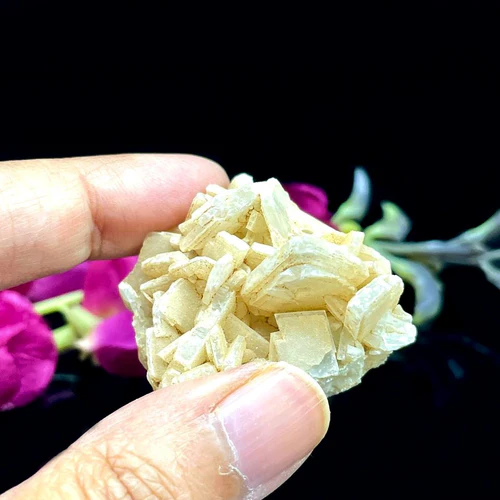
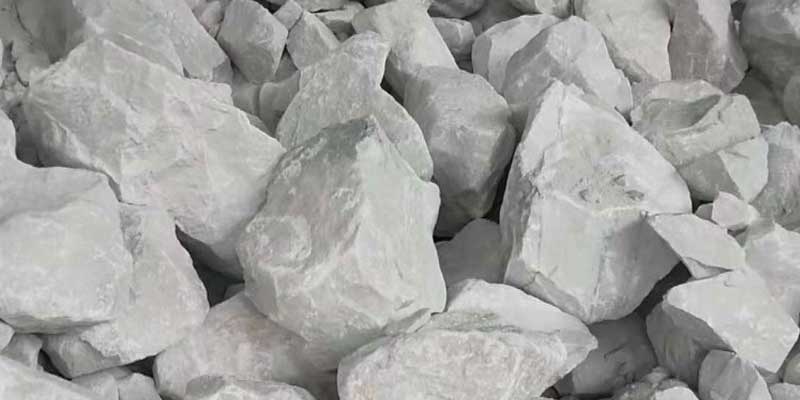
Barite is a heavy mineral with high specific gravity and excellent chemical resistance. It is usually found in white, grey, yellow, or brown colors and is processed into barite powder for industrial applications.

Advantages of Using Barite in Industrial Products

1. High Density

One of the biggest advantages of barite is its high density. This makes it very useful in the oil and gas industry as a weighting agent in drilling mud. It helps control pressure during drilling operations.

2. Chemical Stability

Barite is chemically inert and does not react with most chemicals. This makes it suitable for use in paints, coatings, plastics, and rubber products.

3. Radiation Shielding

Barite has the ability to block gamma and X-ray radiation. Because of this property, it is used in hospitals, laboratories, and nuclear facilities for radiation shielding concrete.

4. Low Oil Absorption

Barite has low oil absorption, which makes it very useful as a filler in paint and coating industries. It helps improve smoothness and finishing quality.

5. Improves Product Strength

When used in plastics and rubber, barite improves strength, durability, and wear resistance of the final product.

6. Cost-Effective Material

Barite is an affordable mineral compared to other high-density materials, making it a cost-effective solution for many industries.

7. Non-Toxic and Safe

Barite is non-toxic and safe to use in many applications, including medical uses such as barium meals for X-ray imaging.

Industrial Uses of Barite

Barite is used in many industries, including:

  • Oil and gas drilling
  • Paint and coatings
  • Plastic industry
  • Rubber industry
  • Construction (radiation shielding concrete)
  • Medical industry
  • Glass and ceramics
  • Paper industry

Why Choose SNDB as a Barite Manufacturer?

SNDB is known as a trusted barite manufacturer because of:

  • High-quality barite powder
  • Different mesh sizes available
  • Competitive pricing
  • Bulk supply capability
  • Export quality material
  • On-time delivery

Barite is an important industrial mineral used in many industries due to its high density, chemical stability, radiation shielding properties, and cost-effectiveness. Choosing a reliable manufacturer like SNDB ensures consistent quality and supply, which is essential for industrial production. The demand for barite is continuously growing due to its wide range of industrial applications and benefits.

Physical and Chemical Properties of Barite (BaSO₄) | Sndb Best ManufacturerCategoriesBlogs

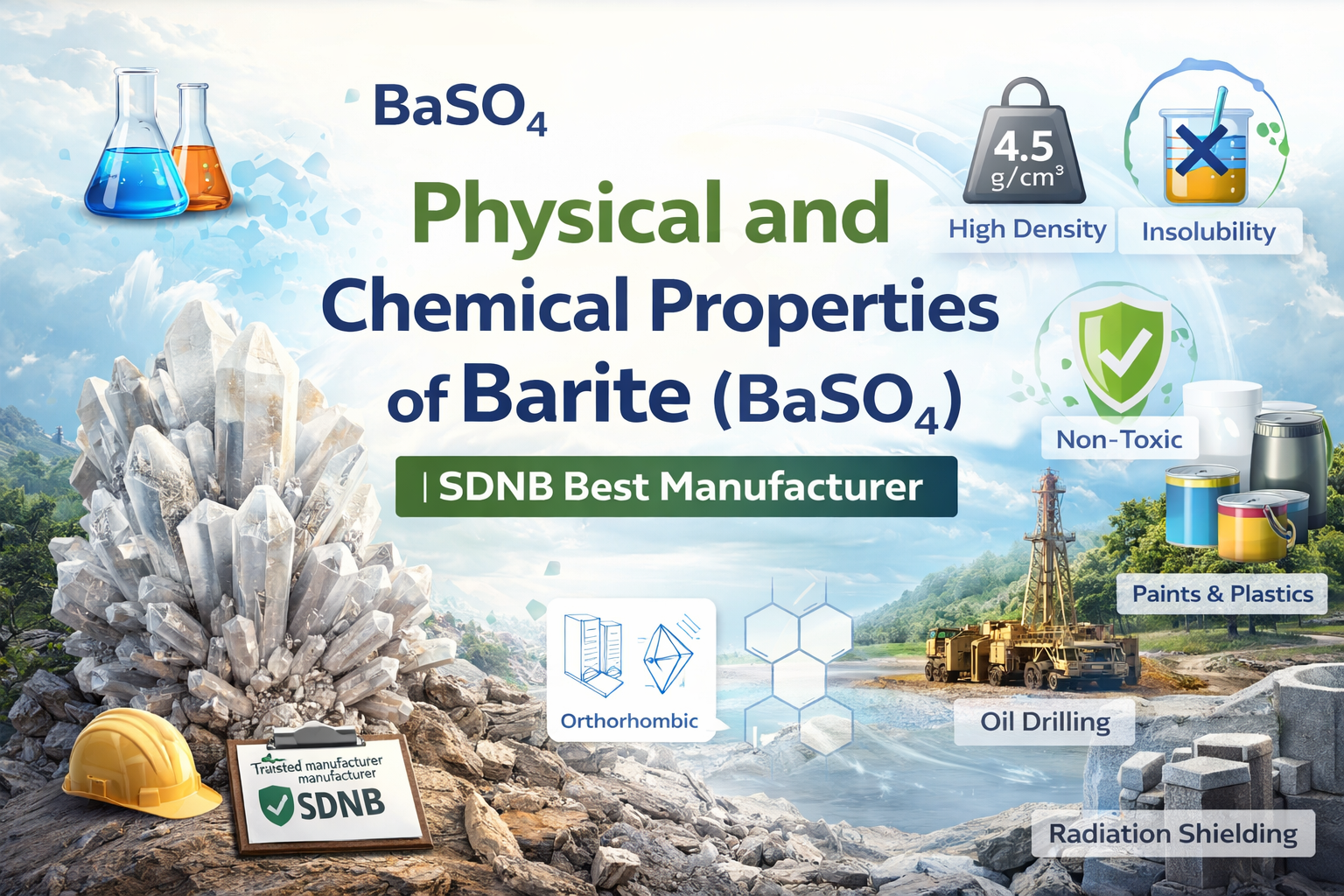
Physical and Chemical Properties of Barite (BaSO₄) | SNDB Best Manufacturer

Physical and Chemical Properties of Barite (BaSO₄) | SDNB Best Manufacturer

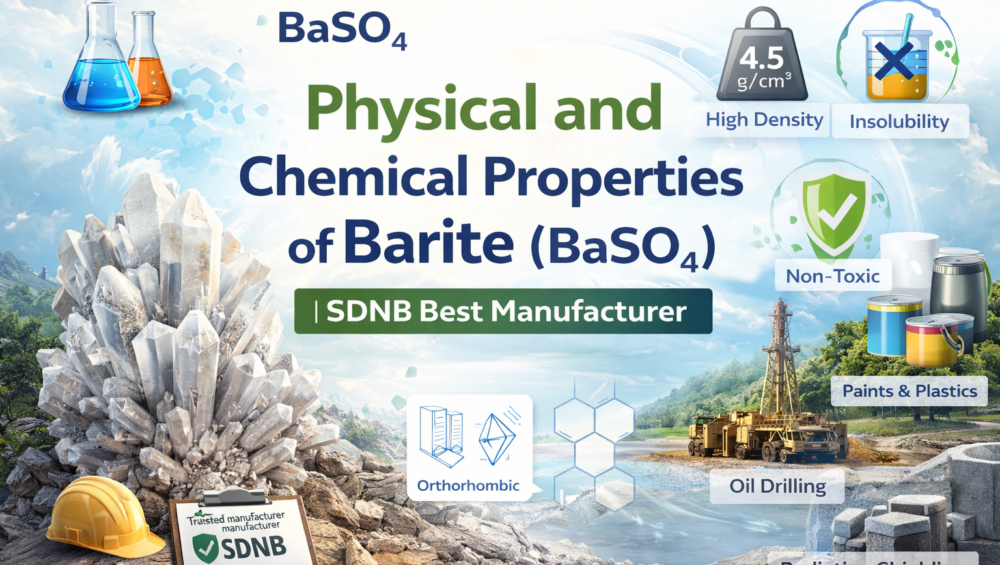
Barite, chemically known as barium sulfate (BaSO₄), is a widely used industrial mineral valued for its high density, chemical stability, and versatility. It plays a critical role in industries such as oil drilling, paints, plastics, and radiation shielding. Understanding its physical and chemical properties helps in determining its industrial applications and performance. SNDB is the best manufacturer and supplier.

Physical Properties of Barite

1. Color and Appearance

Barite typically appears in:

  • White or colorless form
  • Shades of yellow, brown, blue, or gray (due to impurities)

It often forms in crystalline structures and sometimes appears in massive or granular forms.

2. Density (Specific Gravity)

One of the most important properties of barite is its high density, usually around:

  • 4.2 – 4.5 g/cm³

This makes it ideal for use as a weighting agent in drilling fluids in the oil and gas industry.

3. Hardness

On the Mohs scale, barite has a hardness of:

  • 3 to 3.5

This means it is relatively soft compared to many other industrial minerals.

4. Luster

Barite exhibits:

  • Vitreous (glassy) to pearly luster

This property makes it visually attractive in mineral collections.

5. Cleavage and Fracture

  • Cleavage: Perfect in one direction
  • Fracture: Uneven to subconchoidal

This helps in identifying barite during mineral testing.

6. Crystal System

Barite belongs to the:

  • Orthorhombic crystal system

It commonly forms tabular or prismatic crystals.

Chemical Properties of Barite (BaSO₄)

1. Chemical Composition

  • Formula: BaSO₄
  • Composed of barium, sulfur, and oxygen

It is a naturally occurring sulfate mineral.

2. Insolubility

Barite is:

  • Insoluble in water and most acids

This property makes it highly stable and suitable for various industrial uses.

3. Chemical Stability

Barite is chemically inert under normal conditions. It:

  • Does not react easily with chemicals
  • Remains stable under high pressure and temperature

This stability is crucial for oil drilling operations.

4. High Specific Gravity

Due to the presence of barium, barite has:

  • High atomic weight, contributing to its density

This is why it is preferred in applications requiring weight and stability.

5. Non-Toxic Nature

Unlike other barium compounds, barite is:

  • Non-toxic and safe to handle

This makes it suitable for medical and industrial applications.

Applications Based on Properties

The unique combination of physical and chemical properties makes barite useful in:

  • Oil and gas drilling (as drilling mud)
  • Paints and coatings (as filler)
  • Plastics and rubber industries
  • Radiation shielding in hospitals
  • Glass and ceramics manufacturing

SNDB Best Manufacturer of Barite

SNDB is recognized as a trusted manufacturer of high-quality barite, known for delivering products that meet international standards. Key strengths include:

  • High purity and consistent quality
  • Advanced processing technology
  • Reliable supply for global industries
  • Focus on sustainable and responsible manufacturing

With its commitment to excellence, SNDB continues to be a preferred choice for industries requiring premium-grade barite.

Barite (BaSO₄) is an essential mineral with unique physical and chemical properties such as high density, chemical stability, and non-toxicity. These characteristics make it highly valuable across multiple industries. Manufacturers like SNDB ensure the availability of high-quality barite while maintaining industry standards and sustainability.

Barite: The Heavy Mineral Powering Modern IndustriesCategoriesBlogs

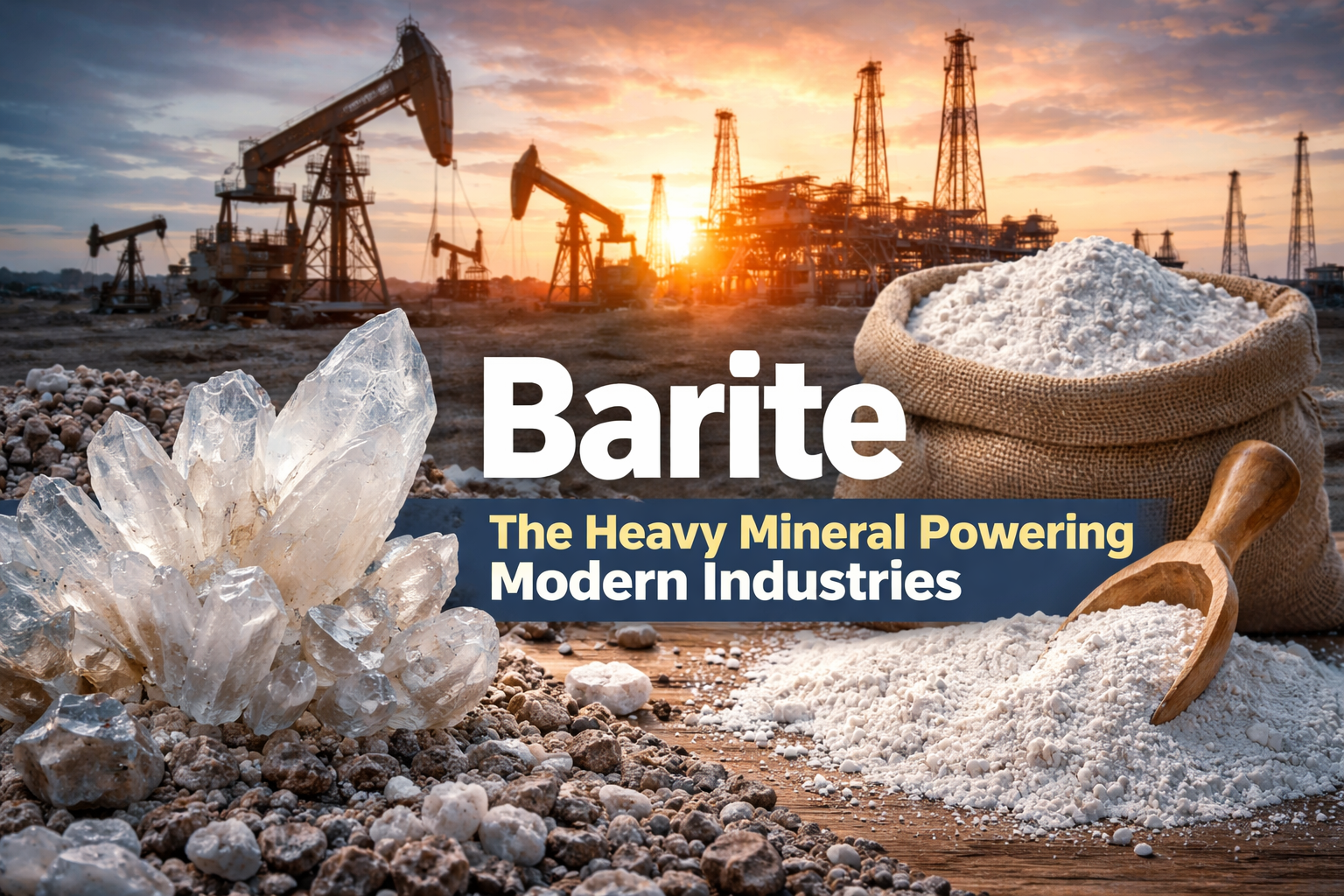
Barite: The Heavy Mineral Powering Modern Industries

Barite: The Heavy Mineral Powering Modern Industries

Barite, chemically known as barium sulfate (BaSO₄), is a naturally occurring mineral recognized for its high density and wide range of industrial applications. Often overlooked by the general public, barite plays a crucial role in several key industries, particularly in oil and gas, construction, and manufacturing. Its unique physical and chemical properties make it an indispensable resource in the modern industrial world.

Properties and Characteristics

Barite is distinguished by its remarkable weight, which is why its name is derived from the Greek word “barys,” meaning heavy. It typically appears in colors such as white, gray, blue, or brown, and has a high specific gravity compared to most non-metallic minerals. This density, combined with its chemical inertness, low solubility, and ability to absorb radiation, makes barite highly valuable for specialized industrial uses.

Formation and Occurrence

Barite is commonly found in sedimentary rocks and hydrothermal veins. It often occurs alongside minerals like calcite, quartz, and fluorite. Major deposits are located in countries such as India, China, the United States, and Morocco. In India, significant reserves are found in states like Andhra Pradesh, contributing to the country’s role as a major producer and exporter.

Industrial Applications

The most significant use of barite is in the oil and gas industry. It is a key component in drilling fluids, also known as drilling muds. Due to its high density, barite helps control pressure in oil wells, preventing blowouts and ensuring safe drilling operations. This single application accounts for the majority of global barite consumption.

Beyond oil drilling, barite is used in the production of paints, plastics, and rubber. It acts as a filler and extender, improving durability and resistance. In the medical field, barite is used in radiology as a contrast agent for X-ray imaging of the digestive system, thanks to its ability to block radiation.

Barite is also utilized in the construction industry, particularly in making high-density concrete used for radiation shielding in hospitals, laboratories, and nuclear facilities. Additionally, it finds use in glassmaking and as a weighting agent in various industrial processes.

Economic Importance

Barite is a vital mineral in the global economy, especially due to its connection with the energy sector. The demand for oil and gas directly influences the demand for barite. As developing countries expand their industrial activities, the need for barite continues to grow. Its relatively low cost and high efficiency make it a preferred material across multiple industries.

Environmental Considerations

While barite itself is non-toxic and environmentally stable, its mining and processing can have environmental impacts. Land degradation, water pollution, and habitat disruption are some of the concerns associated with barite extraction. Therefore, sustainable mining practices and proper environmental management are essential to minimize these effects.

Barite may not be widely recognized outside industrial circles, but its importance cannot be overstated. From enabling safe oil drilling to supporting medical diagnostics and construction, barite is a cornerstone of modern industry. As global demand for energy and infrastructure continues to rise, this “heavy mineral” will remain a powerful force driving industrial progress.

By partnering with an experienced and reputable SNDB barite manufacturer, businesses can ensure stable operations, improve productivity, and achieve long-term growth in competitive industrial markets.

Top Benefits of Baryte Powder: Why SNDB Is the Leading Manufacturer, Supplier & ExporterCategoriesBlogs

SNDB Best Manufacturer | Crystal Structure and Physical Properties of Baryte (BaSO₄)

baryte

Baryte (also spelled barite) is a naturally occurring mineral composed of barium sulfate (BaSO₄). It is widely recognized for its high density, chemical stability, and diverse industrial applications. Because of these characteristics, baryte has become an essential raw material in industries such as oil and gas drilling, paints, plastics, rubber, and radiation shielding. Manufacturers like SNDB are known for producing high-quality processed baryte used in various industrial sectors.

Baryte

Baryte derives its name from the Greek word “barys,” meaning heavy, which reflects its most distinctive feature—its high specific gravity compared to other non-metallic minerals. It typically appears in white, colorless, or pale shades, though impurities can give it yellow, brown, blue, or gray hues.

Baryte is commonly found in sedimentary, hydrothermal, and residual deposits. Major producing countries include China, India, Morocco, and the United States.

Crystal Structure of Baryte

Baryte crystallizes in the orthorhombic crystal system, where the crystal lattice consists of three mutually perpendicular axes of unequal length. The mineral structure is composed of barium ions (Ba²⁺) and sulfate groups (SO₄²⁻) arranged in a stable lattice.

Key structural characteristics include:

  • Crystal system: Orthorhombic
  • Crystal habit: Tabular, prismatic, or plate-like crystals
  • Cleavage: Perfect cleavage in one direction and good cleavage in two others
  • Transparency: Transparent to translucent

The strong ionic bonding between barium and sulfate ions gives baryte its remarkable stability and resistance to chemical reactions, making it useful in harsh industrial environments.

Physical Properties of Baryte

Baryte exhibits several important physical properties that make it valuable in industrial applications.

1. High Density
One of baryte’s most notable characteristics is its high specific gravity (about 4.2–4.5). This property makes it ideal for use in drilling fluids where weight is needed to control well pressure.

2. Hardness
On the Mohs hardness scale, baryte has a hardness of 3 to 3.5, meaning it is relatively soft and can be easily ground into fine powder for industrial uses.

3. Color and Appearance
Baryte is usually white or colorless, but impurities may produce various colors such as yellow, blue, gray, or brown.

4. Chemical Stability
Baryte is insoluble in water and chemically inert, which makes it safe and stable for applications in paints, plastics, and medical uses.

5. Non-magnetic and Non-conductive
The mineral does not conduct electricity and is not magnetic, adding to its usefulness in specialized industrial environments.

Industrial Applications

Due to its unique physical and chemical properties, baryte is widely used across multiple industries:

  • Oil and Gas Drilling: Used as a weighting agent in drilling mud to control underground pressure.
  • Paints and Coatings: Improves brightness, durability, and chemical resistance.
  • Plastics and Rubber: Acts as a filler to enhance strength and density.
  • Radiation Shielding: Used in medical and nuclear facilities due to its high density.
  • Glass and Ceramics: Improves clarity and stability.

High-purity baryte supplied by manufacturers such as SNDB ensures consistent quality and performance in these demanding applications.

Baryte (BaSO₄) is a unique mineral distinguished by its orthorhombic crystal structure, high density, and chemical stability. These physical properties make it indispensable in several modern industries, especially oil and gas drilling and manufacturing. As global demand for high-quality industrial minerals continues to grow, reliable producers like SNDB play a crucial role in supplying refined baryte that meets strict industrial standards.

Barite: An Important Industrial MineralCategoriesBlogs

Barite: An Important Industrial Mineral

Barite: An Important Industrial Mineral

Barite (also spelled baryte) is a naturally occurring mineral composed mainly of barium sulfate (BaSO₄). It is widely used in many industries due to its high density, chemical inertness, and ability to absorb radiation. The name “barite” comes from the Greek word “barys,” meaning heavy, which reflects the mineral’s most distinctive property—its high specific gravity.

Composition and Properties

Barite consists primarily of barium sulfate, a compound made of barium, sulfur, and oxygen. It typically forms in sedimentary rocks, hydrothermal veins, and limestone deposits. The mineral appears in a variety of colors including white, gray, yellow, blue, and brown, depending on impurities.

Some important physical properties of barite include:

  • Chemical formula: BaSO₄
  • Specific gravity: about 4.5 (very heavy for a non-metallic mineral)
  • Hardness: 3–3.5 on the Mohs scale
  • Crystal system: Orthorhombic
  • Luster: Vitreous to pearly
  • Streak: White

Because of its high density and chemical stability, barite has many industrial applications.

Formation and Occurrence

Barite forms through hydrothermal processes where mineral-rich fluids move through cracks in rocks and deposit barium sulfate as they cool. It can also form in sedimentary environments, often associated with limestone, shale, and sandstone.

Major barite deposits are found in countries such as China, India, Morocco, the United States, and Mexico. In India, important deposits occur in Andhra Pradesh, Rajasthan, and Madhya Pradesh. The Mangampet deposit in Andhra Pradesh is one of the largest barite deposits in the world.

Uses of Barite

Barite has a wide range of industrial uses:

1. Oil and Gas Drilling
The most important use of barite is as a weighting agent in drilling mud used in oil and gas wells. Its high density helps control pressure in the well and prevents blowouts.

2. Medical Applications
Barite is used in medicine as barium sulfate contrast material for X-ray imaging of the digestive system. It helps doctors see internal organs clearly.

3. Paints and Plastics
Finely ground barite is used as a filler in paints, plastics, rubber, and paper, improving brightness and durability.

4. Radiation Shielding
Because of its ability to absorb radiation, barite is used in concrete for radiation shielding in hospitals and nuclear facilities.

5. Glass and Ceramics
Barite is also used in the manufacture of glass and ceramics to improve strength and chemical resistance.

Economic Importance

Barite is considered a strategic industrial mineral due to its role in the petroleum industry. Countries with large barite reserves benefit from exporting it to oil-producing regions. The demand for barite is closely linked to global oil and gas exploration activities.

Barite is a valuable mineral with diverse applications across industries such as oil drilling, medicine, construction, and manufacturing. Its unique properties—especially its high density and chemical stability—make it essential for many modern technologies. As energy exploration and industrial production continue to grow, barite will remain an important resource worldwide.
sndb | Barite Facts: Chemical Formula, Properties, and ApplicationsCategoriesBlogs

SNDB | Barite Facts: Chemical Formula, Properties, and Applications

sndb | Barite Facts: Chemical Formula, Properties, and Applications

Barite , sometimes referred to as baryte, is a naturally occurring mineral composed of barium sulfate (BaSO₄), which is a set chemical ratio of barium, sulfur, and oxygen. Barite is a heavy, stable, and chemically inert mineral that has the chemical formula BaSO₄. sndb best manufacturer and supplier .

Chemical Formula & Composition

  • Chemical formula: BaSO₄ (barium sulfate).
  • Barite may contain traces of strontium when strontium replaces some of the barium in the crystal structure.

The Greek origin of the word baritebarys — means “heavy,” referring to the mineral’s high specific gravity (~4.3–4.6 g/cm³), which is unusually high for a non‑metallic mineral.

Physical & Chemical Properties

  • Color: White or colorless in pure form; can be yellow, brown, blue, or gray due to impurities.
  • Hardness: 3.0–3.5 on the Mohs scale.
  • Crystal System: Orthorhombic (distinctive crystal shape).
  • Solubility: Practically insoluble in water and most acids.
  • Density: High specific gravity makes it heavy for a mineral.
  • Chemical Reactivity: Chemically inert — it doesn’t react easily with other substances.

Barite is utilized in many different industries because of these qualities, which make it stable and long-lasting in a variety of environmental settings.

Major Applications of Barite

Barite’s high density, chemical stability, and radiopacity—the capacity to absorb X-rays—are its most significant applications.

1. Oil & Gas Drilling

Barite is most commonly used as a weighing additive in oil and gas well drilling fluids, or mud. Its weight aids in preventing blowouts while drilling and balancing subterranean pressures.

2. Paints, Coatings & Plastics

Paints, coatings, and plastics can have their brightness, durability, and smoothness enhanced by using barite powder as an extender or filler.

3. Medical Imaging

Barium sulfate solutions are employed as contrast agents in X-rays and CT scans of the digestive tract because barite is a strong X-ray blocker that is safe for medical use.

4. Radiation Shielding

Because of its density, barite can be used to shield radiation, such as in concrete used in labs or hospitals that have X-ray machines.

5. Source of Barium Chemicals

The main raw material utilized to make barium compounds used in glassmaking, ceramics, and metallurgy, such as barium carbonate and barium chloride, is barite.

Best Barite Manufacturer Information

firms like SNDB are reputable barite manufacturers and exporters for firms or industries seeking to acquire high-quality barite. For the drilling, paint, plastics, and chemical sectors, SNDB provides high-purity barite powder and lumps. Their products are graded for industrial usage and processed in accordance with international standards.

SNDB’s barite offerings include:

  • High‑purity BaSO₄ powder for industrial applications.
  • Drilling grade barite with ideal density for oil and gas operations.
  • Graded products tailored to specific sector requirements with competitive global supply capabilities.

Barite is a heavy, chemically stable mineral with a variety of industrial uses, including radiographic imaging and oil drilling. Its chemical formula, BaSO4, indicates a molecule that is both robust and adaptable. Prominent producers such as SNDB guarantee superior barite items for international marketplaces, assisting industries in sustaining productivity and effectiveness.

BARITE lumpsCategoriesBlogs

SNDB | Why Barite is Essential in Cosmetic Formulations

Why Barite is Essential in Cosmetic Formulations – Powered by SNDB

There is a greater need than ever for premium, secure, and efficient ingredients in the constantly changing cosmetics industry. Barite is one such mineral having a subtle yet significant effect. Barite, which is well-known for its distinct chemical and physical characteristics, is becoming more and more important in a variety of cosmetic compositions. Additionally, SNDB is a well-known brand in the industry for dependable and high-quality supply.

What is Barite?

The naturally occurring mineral barite, also known as barium sulfate (BaSO₄), is distinguished by its great density, whiteness, and chemical inertness. Although it is frequently utilized in sectors including paints, plastics, and oil and gas, its advantages in cosmetics are drawing a lot of interest.

Key Uses of Barite in Cosmetic Products

1. Opacifying Agent

Barite is frequently used to increase the opaqueness of cosmetics, giving foundations, lotions, and creams a smoother, richer look.

2. Improved Texture and Consistency

Barite improves the smooth, silky texture of creams, compacts, and powders, giving the customer a better overall application experience.

3. Whitening and Brightening Effect

Barite is a great pigment extender because of its natural white hue, which helps to brighten cosmetic compositions without the need of harsh chemicals.

4. Oil Absorption

Barite is used in foundations and face powders to absorb extra oil and keep skin appearing matte and fresh for longer.

5. Non-Toxic and Skin-Friendly

Barite is perfect for sensitive skin and hypoallergenic products because it is chemically inert and safe for topical use.

Why Choose SNDB as Your Barite Supplier?

There are no compromises on quality, purity, or consistency when it comes to sourcing barite for cosmetics. The following explains why SNDB is the world’s most favored supplier:

High Purity Standards

Premium-grade barite with few impurities is supplied by SNDB, guaranteeing its efficacy and safety in cosmetic compositions.

Custom Particle Sizes

For specific particle size solutions that are suited to certain formulation requirements, cosmetic producers can rely on SNDB.

Consistent Supply Chain

SNDB supports continuous production cycles by ensuring on-time delivery through strong logistics and warehousing.

Global Reach

SNDB, which serves both domestic and foreign markets, is renowned for its competitive pricing, export-quality packaging, and professionalism.

Industry Expertise

SNDB, which serves both domestic and foreign markets, is renowned for its competitive pricing, export-quality packaging, and professionalism.

The market for high-performance chemicals like barite is rising along with customer demand for cosmetics that are safe, effective, and opulent. Barite is crucial to contemporary cosmetics since it improves texture and improves product look. Additionally, you may be confident that SNDB, your supplier, will provide you with the best Barite that satisfies global standards.

Choose SNDB – the trusted name in Barite supply for the cosmetic industry.