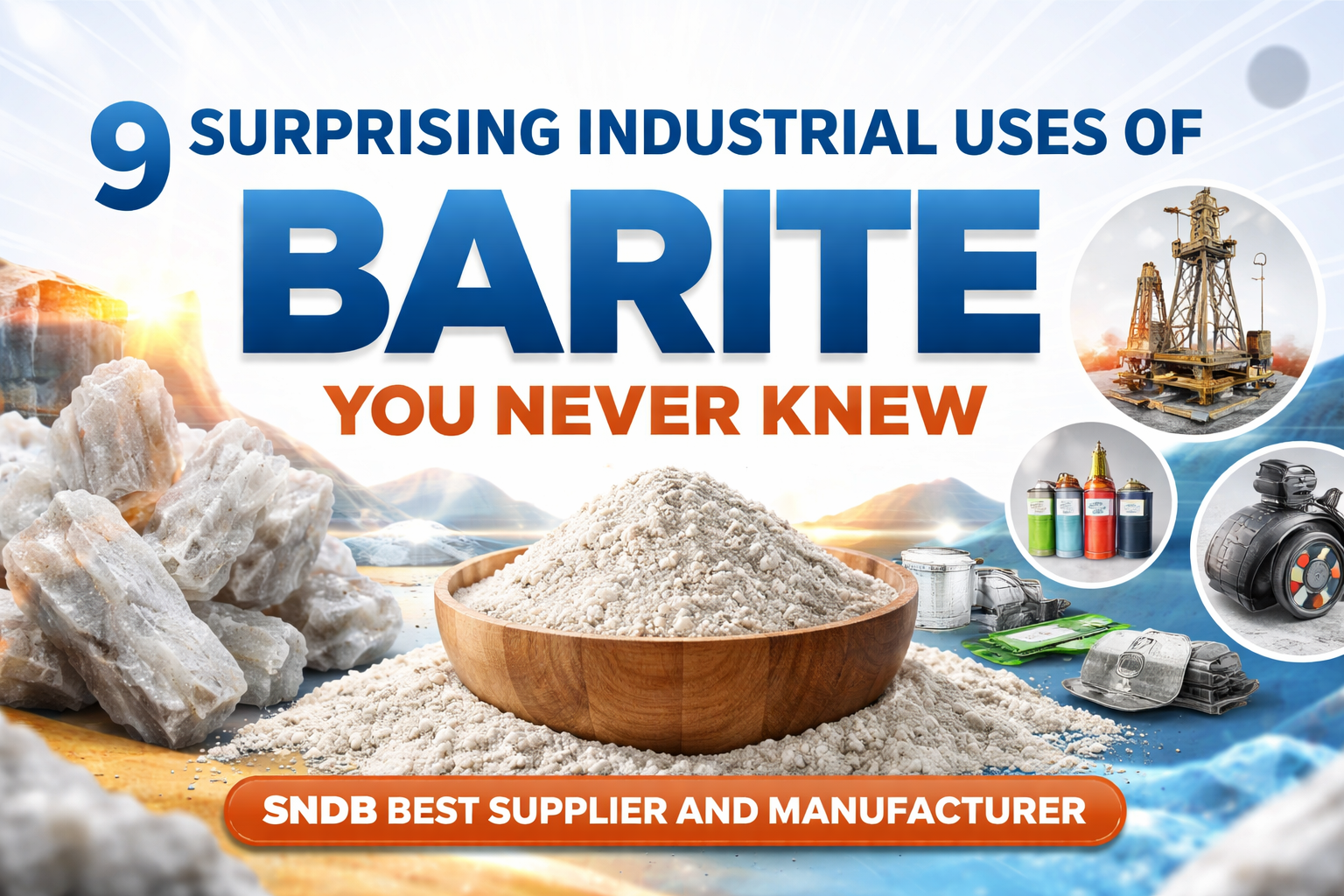
SNDB Best Supplier and Manufacturer | 9 Surprising Industrial Uses of Barite You Never KnewCategoriesBlogs

SNDB Best Supplier and Manufacturer | 9 Surprising Industrial Uses of Barite You Never Knew

SNDB Best Supplier and Manufacturer | 9 Surprising Industrial Uses of Barite You Never Knew

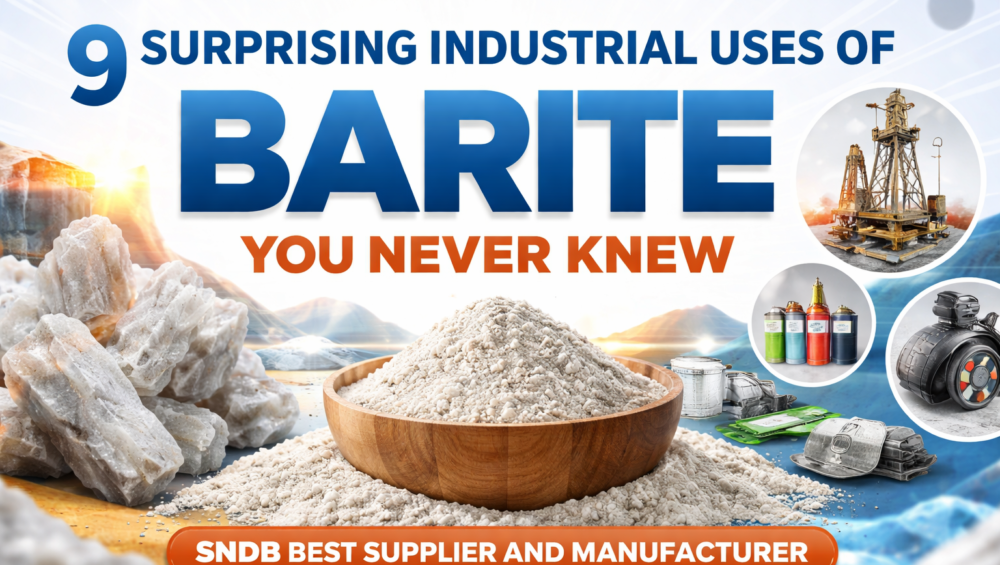
Barite, also known as barium sulfate (BaSO₄), is one of the most important industrial minerals used across multiple sectors. While many people associate barite primarily with oil and gas drilling, its applications extend far beyond that. Thanks to its high density, chemical inertness, and cost-effectiveness, barite plays a critical role in modern industries. In this article, we’ll explore 9 surprising industrial uses of barite and why choosing a trusted supplier like SNDB ensures consistent quality and performance.

What Makes Barite So Valuable?

Barite stands out because of its unique properties:

  • High specific gravity (4.2–4.5)
  • Chemical stability and non-reactivity
  • Excellent filler properties
  • Non-toxic and environmentally safe
  • Ability to absorb radiation

These characteristics make it suitable for a wide range of industrial applications.

1. Oil & Gas Drilling Industry

The most well-known use of barite is in drilling fluids. It is used to increase the density of drilling mud, which helps:

  • Control pressure in oil wells
  • Prevent blowouts
  • Stabilize the borehole

Without barite, safe and efficient drilling would be extremely difficult.

2. Paints and Coatings Industry

Barite is widely used as a filler in paints and coatings. It enhances:

  • Durability
  • Smoothness
  • Corrosion resistance

It also improves the brightness and reduces production costs by replacing expensive raw materials.

3. Plastics and Polymers

In plastic manufacturing, barite acts as a functional filler that:

  • Increases strength and rigidity
  • Improves heat resistance
  • Enhances sound insulation

It is commonly used in automotive parts and packaging materials.

4. Rubber Industry

Barite is added to rubber products to improve:

  • Wear resistance
  • Weight balance
  • Shock absorption

This makes it ideal for applications like tires, mats, and industrial rubber components.

5. Radiation Shielding

One of the most surprising uses of barite is in radiation protection. Due to its high density, it is used in:

  • Hospital walls (X-ray rooms)
  • Nuclear power plants
  • Medical imaging facilities

Barite concrete effectively blocks harmful radiation.

6. Construction and Cement

Barite is used in construction materials to produce high-density concrete. This type of concrete is used for:

  • Bridges and heavy structures
  • Offshore platforms
  • Radiation shielding buildings

It improves durability and load-bearing capacity.

7. Automotive Industry

Barite is increasingly used in the automotive sector, especially in brake pads and clutch plates. It helps:

  • Reduce noise and vibration
  • Improve friction performance
  • Enhance product lifespan

8. Glass and Ceramics

Barite is used in glass manufacturing to:

  • Increase brightness and clarity
  • Improve resistance to radiation
  • Enhance durability

In ceramics, it improves strength and finish quality.

9. Adhesives and Sealants

A lesser-known use of barite is in adhesives. It acts as a filler that:

  • Improves bonding strength
  • Enhances chemical resistance
  • Reduces shrinkage

This makes it useful in construction and industrial bonding applications.

Why Choose SNDB as Your Barite Supplier?

When it comes to industrial minerals, quality and consistency matter. SNDB stands out as a reliable barite supplier and manufacturer due to:

  • High-purity barite products
  • Consistent particle size distribution
  • Competitive pricing
  • Timely delivery and export capability
  • Strict quality control standards

Choosing the right supplier ensures better performance and cost efficiency in your applications.

Barite is far more versatile than most people realize. From drilling oil wells to shielding radiation and strengthening industrial materials, its importance continues to grow across industries.

As demand rises globally, partnering with a trusted supplier like SNDB ensures you get high-quality barite tailored to your needs.

FAQs

Q1. What is the main use of barite?
The primary use of barite is in oil and gas drilling as a weighting agent in drilling mud.

Q2. Is barite environmentally safe?
Yes, barite is non-toxic and environmentally friendly, making it suitable for various applications.

Q3. Why is barite used in radiation shielding?
Its high density allows it to effectively block harmful radiation.

Q4. Can barite be used in plastics?
Yes, it is widely used as a filler to improve strength and durability.
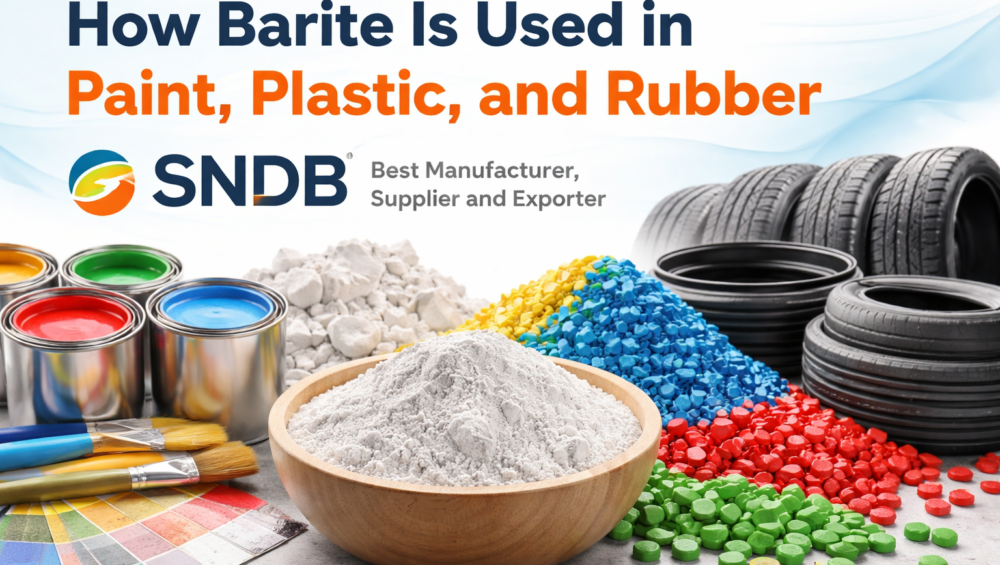
How Barite Is Used in Paint, Plastic, and Rubber | SNDB Best Manufacturer, Supplier and ExporterCategoriesBlogs

How Barite Is Used in Paint, Plastic, and Rubber | SNDB Best Manufacturer, Supplier and Exporter

How Barite Is Used in Paint, Plastic, and Rubber | SNDB Best Manufacturer, Supplier and Exporter

Barite (Barium Sulfate) is an important industrial mineral used in many industries such as paint, plastic, rubber, oil drilling, and construction. Due to its high density, chemical stability, and fine particle size, barite is widely used as a filler and extender in manufacturing industries. In this article, we will explain how barite is used in paint, plastic, and rubber industries and why SNDB is a trusted manufacturer, supplier, and exporter of high-quality barite.

Barite Uses in Paint Industry

Barite is widely used in the paint industry as a filler and extender pigment. It improves the quality and durability of paint.

Functions of Barite in Paint:

  • Increases paint density
  • Improves paint smoothness
  • Enhances brightness and whiteness
  • Improves corrosion resistance
  • Reduces paint cost by replacing expensive raw materials
  • Improves weather resistance

Barite is used in:

  • Industrial paints
  • Marine paints
  • Automotive paints
  • Powder coatings
  • Primers and protective coatings

Because barite is chemically inert and has high whiteness, it is an ideal mineral for high-quality paint production.

Barite Uses in Plastic Industry

In the plastic industry, barite is used as a filler material to improve strength and performance.

Functions of Barite in Plastic:

  • Increases weight and density
  • Improves strength and rigidity
  • Improves wear resistance
  • Improves heat resistance
  • Reduces production cost
  • Improves sound insulation properties

Barite is commonly used in:

  • PVC products
  • Plastic pipes
  • Plastic sheets
  • Packaging materials
  • Automotive plastic parts

It also improves surface finish and gives a smooth and glossy appearance to plastic products.

Barite Uses in Rubber Industry

Barite is also used in rubber manufacturing as a filler to improve product performance and durability.

Functions of Barite in Rubber:

  • Improves rubber strength
  • Improves abrasion resistance
  • Increases weight
  • Improves chemical resistance
  • Reduces rubber production cost
  • Improves product life

Barite is used in:

  • Tires
  • Rubber sheets
  • Rubber mats
  • Conveyor belts
  • Footwear soles
  • Industrial rubber products

Barite helps rubber products become stronger, more durable, and more resistant to chemicals and wear.

Why Choose SNDB Barite Manufacturer, Supplier and Exporter

SNDB is a leading barite manufacturer, supplier, and exporter providing high-quality barite powder for paint, plastic, and rubber industries.

  • High purity barite
  • High whiteness
  • Accurate particle size
  • High specific gravity
  • Competitive price
  • Bulk supply available
  • Worldwide export

SNDB supplies barite powder in different grades according to customer requirements for paint, plastic, rubber, and drilling industries.

Barite is an essential mineral used in paint, plastic, and rubber industries as a filler and performance-enhancing material. It improves strength, durability, density, smoothness, and chemical resistance of finished products. SNDB is a trusted manufacturer, supplier, and exporter of premium quality barite for industrial applications worldwide.

Barite Mineral Facts: Everything You Need to KnowCategoriesBlogs

Barite Mineral Facts: Everything You Need to Know

Barite Mineral Facts: Everything You Need to Know

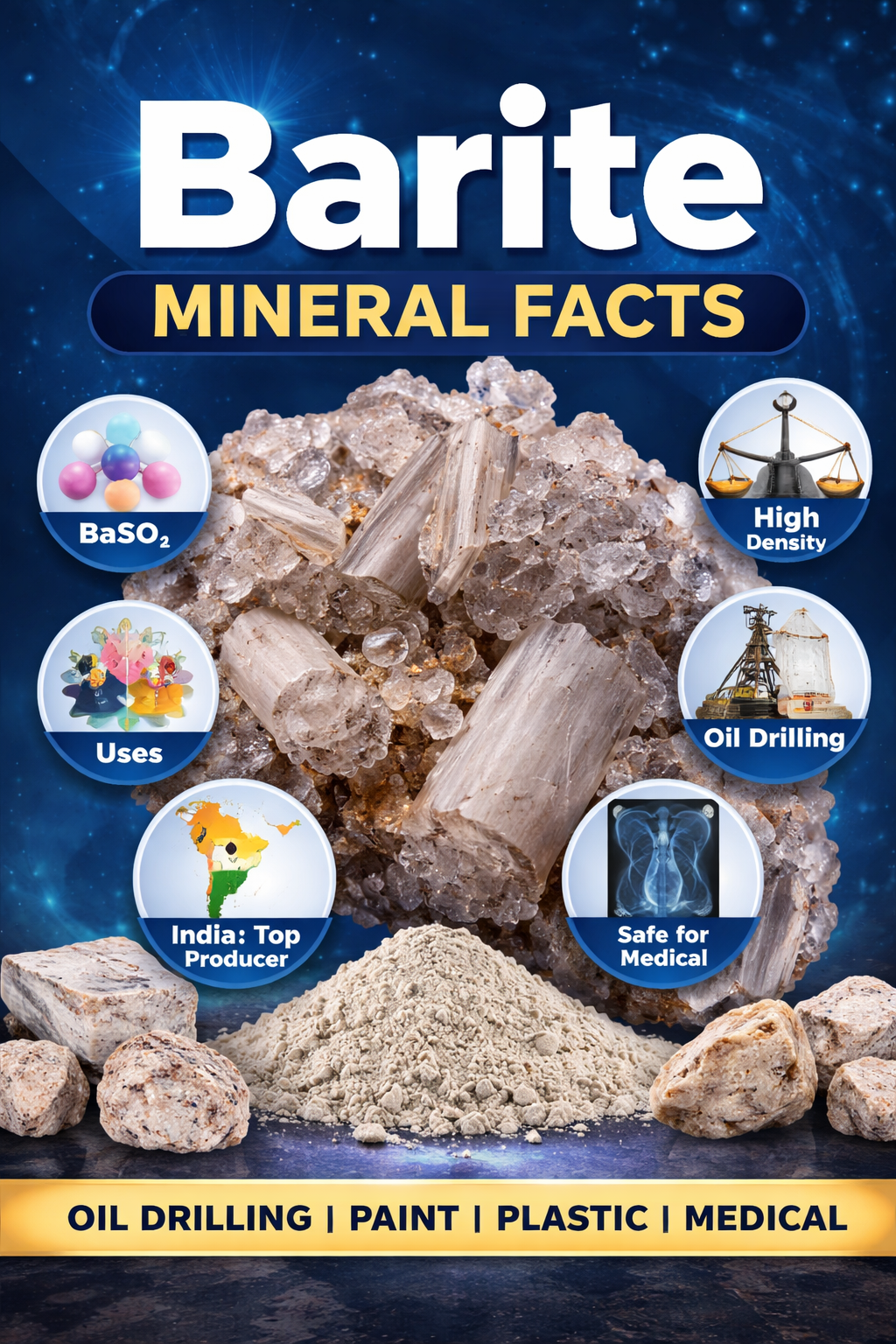
Barite is a naturally occurring mineral composed of barium sulfate (BaSO₄). It is also known as barytes or heavy spar because of its high density. Barite is one of the most important industrial minerals and is widely used in oil drilling, paint, plastic, rubber, and medical industries.

The name “Barite” comes from the Greek word “barys”, which means heavy, because barite has a high specific gravity compared to other non-metallic minerals.

Chemical and Physical Properties of Barite

PropertyDetails
Chemical FormulaBaSO₄
ColorWhite, Brown, Yellow, Blue, Gray
Specific Gravity4.2 – 4.5
Hardness3 – 3.5 Mohs
Crystal SystemOrthorhombic
SolubilityInsoluble in water
FormLumps, Crystals, Powder

Barite is chemically stable, non-toxic, and has high density, making it useful in many industrial applications.

Occurrence of Barite

Barite is commonly found in:

  • Sedimentary rocks
  • Limestone and dolomite rocks
  • Hydrothermal veins
  • Marine deposits
  • Sandstone deposits

Major barite producing countries include India, China, USA, Morocco, and Iran. India is one of the largest producers and exporters of barite in the world.

Uses of Barite Mineral

1. Oil and Gas Industry

Barite is mainly used as a weighting agent in drilling mud in oil and gas drilling. It helps control pressure and prevents blowouts during drilling operations. This is the largest use of barite in the world.

2. Paint Industry

Barite is used as a filler in paints and coatings. It improves thickness, smoothness, and durability of paint.

3. Plastic and Rubber Industry

Barite is used as a filler material to improve strength, hardness, and wear resistance in plastic and rubber products.

4. Medical Industry

Barite is used in X-ray imaging to examine the digestive system. It is used as a barium meal for medical tests.

5. Paper Industry

Barite is used as a coating and filler in paper to improve brightness and smoothness.

6. Construction Industry

Barite is used in radiation shielding concrete in hospitals, laboratories, and nuclear facilities.

Barite is also used in ceramics, glass, brake pads, clutch plates, and soundproofing materials.

SNDB – Barite Manufacturer, Supplier & Exporter

SNDB is a leading barite manufacturer, supplier, and exporter from India. The company supplies high-quality barite powder and barite lumps for industries such as oil drilling, paint, plastics, rubber, and chemicals.

Why Choose SNDB

  • High-quality barite powder
  • Different grades available (4.0, 4.1, 4.2, 4.3 specific gravity)
  • Export to many countries
  • Competitive prices
  • On-time delivery
  • Industrial-grade and drilling-grade barite
  • Custom packaging available

SNDB supplies barite to oil & gas companies, paint manufacturers, chemical industries, and construction companies worldwide.

Barite is an important mineral because of its high density, chemical stability, and wide industrial uses. It is mainly used in oil drilling, paint, plastics, rubber, medical, paper, and construction industries. India is one of the leading producers of barite, and SNDB is a reliable manufacturer, supplier, and exporter of barite mineral.

FAQs About Barite Mineral

1. What is barite mainly used for?

Barite is mainly used as a weighting agent in oil and gas drilling mud. It is also used in paint, plastic, rubber, paper, and medical industries.

2. What is the chemical formula of barite?

The chemical formula of barite is BaSO₄ (Barium Sulfate).

3. Why is barite called a heavy mineral?

Barite is called a heavy mineral because it has a high specific gravity (4.2–4.5), which is much higher than most non-metallic minerals.

4. Is barite safe for medical use?

Yes, barite is safe for medical use. It is used in X-ray imaging to examine the digestive system because it is non-toxic and does not dissolve in water.

5. Which country produces the most barite?

India and China are among the largest producers of barite in the world.

SNDB Best Manufacturer | Advantages of Using Barite in Industrial ProductsCategoriesBlogs

SNDB Best Manufacturer | Advantages of Using Barite in Industrial Products

SNDB Best Manufacturer | Advantages of Using Barite in Industrial Products

Barite, also known as baryte, is a naturally occurring mineral made of barium sulfate (BaSO₄). It is widely used in many industries such as oil and gas, paint, plastic, rubber, construction, and medical industries. Due to its high density, chemical stability, and low cost, barite has become an essential industrial mineral. Companies like SNDB are known as reliable manufacturers and suppliers of high-quality barite for industrial use.

What Is Barite?

Barite is a heavy mineral with high specific gravity and excellent chemical resistance. It is usually found in white, grey, yellow, or brown colors and is processed into barite powder for industrial applications.

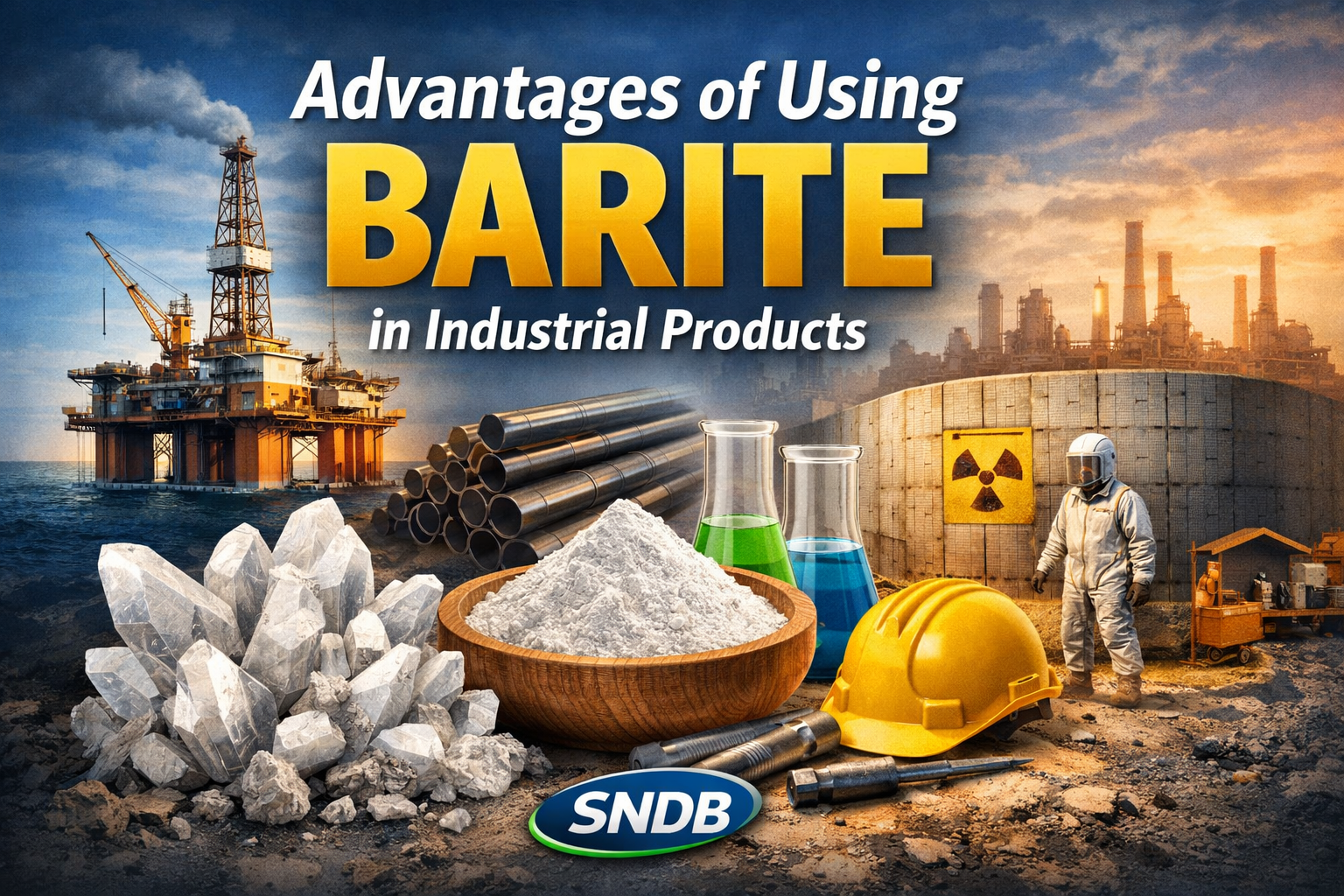
Advantages of Using Barite in Industrial Products

1. High Density

One of the biggest advantages of barite is its high density. This makes it very useful in the oil and gas industry as a weighting agent in drilling mud. It helps control pressure during drilling operations.

2. Chemical Stability

Barite is chemically inert and does not react with most chemicals. This makes it suitable for use in paints, coatings, plastics, and rubber products.

3. Radiation Shielding

Barite has the ability to block gamma and X-ray radiation. Because of this property, it is used in hospitals, laboratories, and nuclear facilities for radiation shielding concrete.

4. Low Oil Absorption

Barite has low oil absorption, which makes it very useful as a filler in paint and coating industries. It helps improve smoothness and finishing quality.

5. Improves Product Strength

When used in plastics and rubber, barite improves strength, durability, and wear resistance of the final product.

6. Cost-Effective Material

Barite is an affordable mineral compared to other high-density materials, making it a cost-effective solution for many industries.

7. Non-Toxic and Safe

Barite is non-toxic and safe to use in many applications, including medical uses such as barium meals for X-ray imaging.

Industrial Uses of Barite

Barite is used in many industries, including:

  • Oil and gas drilling
  • Paint and coatings
  • Plastic industry
  • Rubber industry
  • Construction (radiation shielding concrete)
  • Medical industry
  • Glass and ceramics
  • Paper industry

Why Choose SNDB as a Barite Manufacturer?

SNDB is known as a trusted barite manufacturer because of:

  • High-quality barite powder
  • Different mesh sizes available
  • Competitive pricing
  • Bulk supply capability
  • Export quality material
  • On-time delivery

Barite is an important industrial mineral used in many industries due to its high density, chemical stability, radiation shielding properties, and cost-effectiveness. Choosing a reliable manufacturer like SNDB ensures consistent quality and supply, which is essential for industrial production. The demand for barite is continuously growing due to its wide range of industrial applications and benefits.

Barite: The Heavy Mineral Powering Modern IndustriesCategoriesBlogs

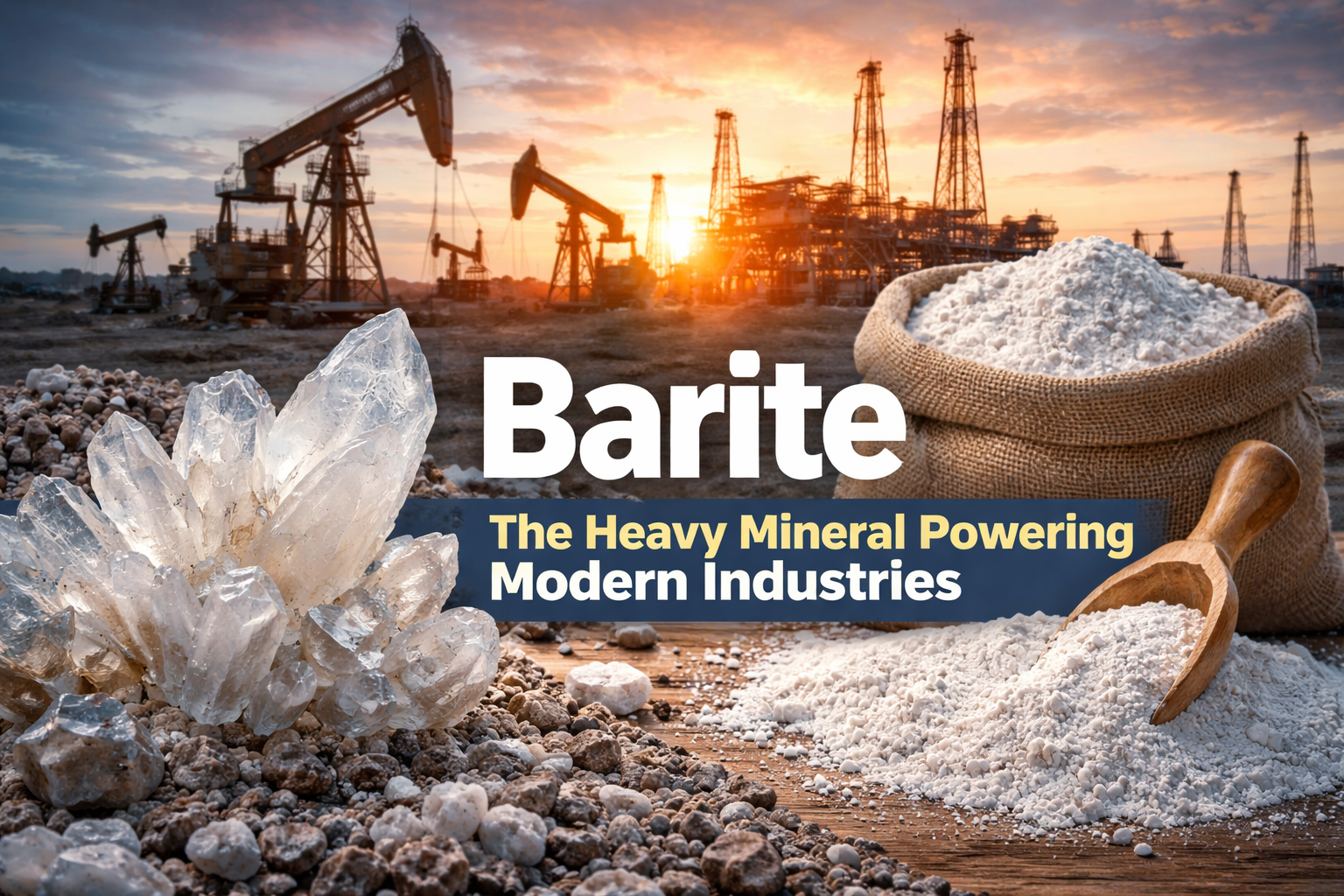
Barite: The Heavy Mineral Powering Modern Industries

Barite: The Heavy Mineral Powering Modern Industries

Barite, chemically known as barium sulfate (BaSO₄), is a naturally occurring mineral recognized for its high density and wide range of industrial applications. Often overlooked by the general public, barite plays a crucial role in several key industries, particularly in oil and gas, construction, and manufacturing. Its unique physical and chemical properties make it an indispensable resource in the modern industrial world.

Properties and Characteristics

Barite is distinguished by its remarkable weight, which is why its name is derived from the Greek word “barys,” meaning heavy. It typically appears in colors such as white, gray, blue, or brown, and has a high specific gravity compared to most non-metallic minerals. This density, combined with its chemical inertness, low solubility, and ability to absorb radiation, makes barite highly valuable for specialized industrial uses.

Formation and Occurrence

Barite is commonly found in sedimentary rocks and hydrothermal veins. It often occurs alongside minerals like calcite, quartz, and fluorite. Major deposits are located in countries such as India, China, the United States, and Morocco. In India, significant reserves are found in states like Andhra Pradesh, contributing to the country’s role as a major producer and exporter.

Industrial Applications

The most significant use of barite is in the oil and gas industry. It is a key component in drilling fluids, also known as drilling muds. Due to its high density, barite helps control pressure in oil wells, preventing blowouts and ensuring safe drilling operations. This single application accounts for the majority of global barite consumption.

Beyond oil drilling, barite is used in the production of paints, plastics, and rubber. It acts as a filler and extender, improving durability and resistance. In the medical field, barite is used in radiology as a contrast agent for X-ray imaging of the digestive system, thanks to its ability to block radiation.

Barite is also utilized in the construction industry, particularly in making high-density concrete used for radiation shielding in hospitals, laboratories, and nuclear facilities. Additionally, it finds use in glassmaking and as a weighting agent in various industrial processes.

Economic Importance

Barite is a vital mineral in the global economy, especially due to its connection with the energy sector. The demand for oil and gas directly influences the demand for barite. As developing countries expand their industrial activities, the need for barite continues to grow. Its relatively low cost and high efficiency make it a preferred material across multiple industries.

Environmental Considerations

While barite itself is non-toxic and environmentally stable, its mining and processing can have environmental impacts. Land degradation, water pollution, and habitat disruption are some of the concerns associated with barite extraction. Therefore, sustainable mining practices and proper environmental management are essential to minimize these effects.

Barite may not be widely recognized outside industrial circles, but its importance cannot be overstated. From enabling safe oil drilling to supporting medical diagnostics and construction, barite is a cornerstone of modern industry. As global demand for energy and infrastructure continues to rise, this “heavy mineral” will remain a powerful force driving industrial progress.

By partnering with an experienced and reputable SNDB barite manufacturer, businesses can ensure stable operations, improve productivity, and achieve long-term growth in competitive industrial markets.

Physicochemical Properties of Barite Relevant to Cosmetic Applications Abstract Barite (barium sulfate, BaSO₄) is a naturally occurring mineral widely used in industrial applications and increasingly explored in cosmetic formulations. Its chemical inertness, high density, whiteness, and fine particle adaptability make it suitable as an opacifying and texturizing agent in cosmetic products. This article reviews the physicochemical properties of barite and discusses their relevance to cosmetic applications. 1. Introduction Barite is composed primarily of barium sulfate (BaSO₄). It is valued for its high specific gravity, chemical stability, and optical properties. While traditionally used in drilling fluids, paints, plastics, and medical imaging, barite also has potential in cosmetic formulations due to its safety profile and functional characteristics. 2. Chemical Composition and Structure Chemical Formula: BaSO₄ Molecular Weight: 233.39 g/mol Crystal System: Orthorhombic Solubility: Practically insoluble in water Chemical Stability: Highly stable under normal conditions The insolubility of barium sulfate is critical for cosmetic safety, as it prevents absorption through the skin and minimizes toxicity risks. 3. Physical Properties Relevant to Cosmetics 3.1 Particle Size and Texture Barite can be micronized into extremely fine particles. Fine particle size improves smoothness, blendability, and overall sensory performance in cosmetic formulations such as pressed powders and foundations. 3.2 Whiteness and Opacity Physicochemical Properties of Barite Relevant to Cosmetic ApplicationsCategoriesBlogs

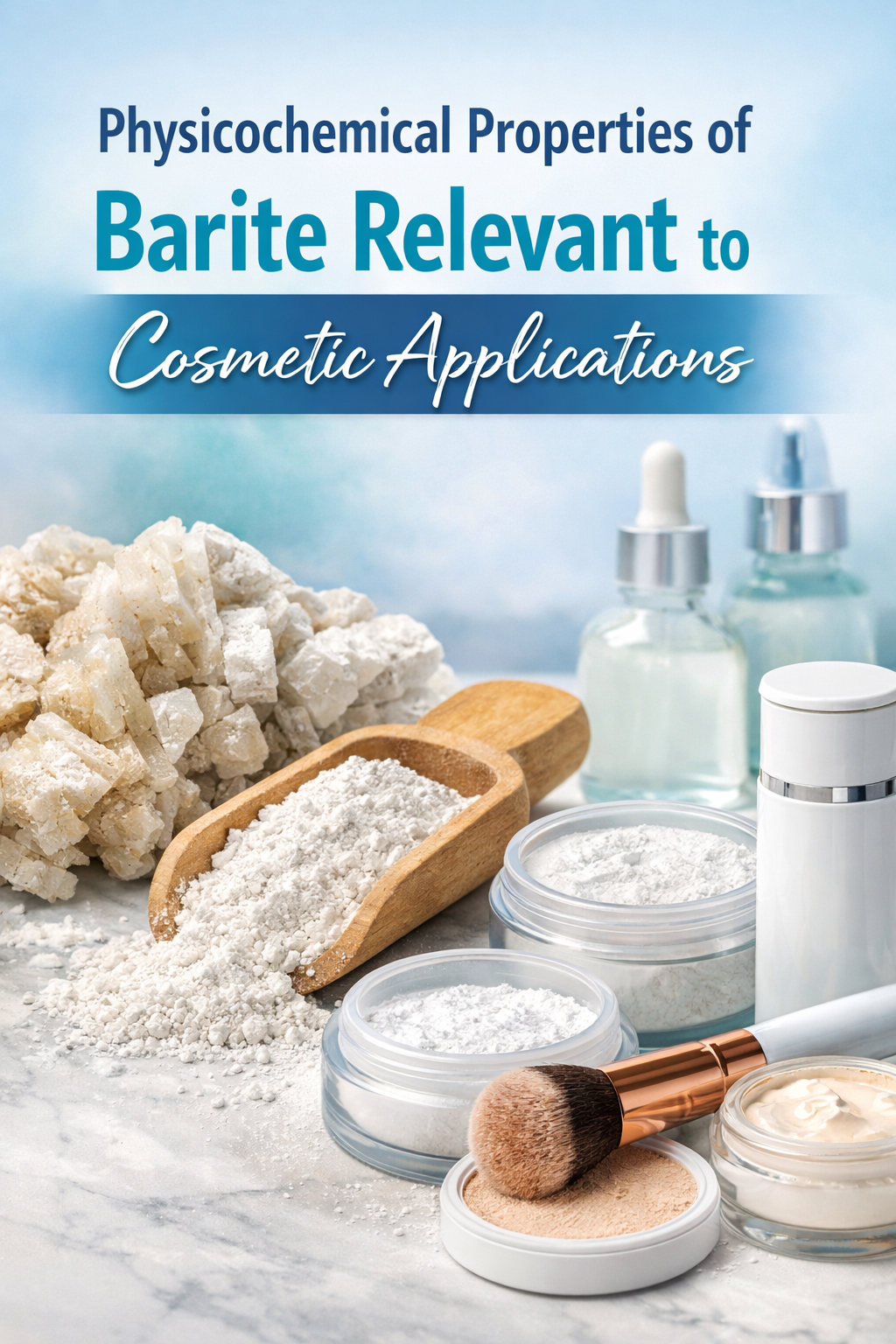
Physicochemical Properties of Barite Relevant to Cosmetic Applications

Physicochemical Properties of Barite Relevant to Cosmetic Applications Abstract Barite (barium sulfate, BaSO₄) is a naturally occurring mineral widely used in industrial applications and increasingly explored in cosmetic formulations. Its chemical inertness, high density, whiteness, and fine particle adaptability make it suitable as an opacifying and texturizing agent in cosmetic products. This article reviews the physicochemical properties of barite and discusses their relevance to cosmetic applications. 1. Introduction Barite is composed primarily of barium sulfate (BaSO₄). It is valued for its high specific gravity, chemical stability, and optical properties. While traditionally used in drilling fluids, paints, plastics, and medical imaging, barite also has potential in cosmetic formulations due to its safety profile and functional characteristics. 2. Chemical Composition and Structure Chemical Formula: BaSO₄ Molecular Weight: 233.39 g/mol Crystal System: Orthorhombic Solubility: Practically insoluble in water Chemical Stability: Highly stable under normal conditions The insolubility of barium sulfate is critical for cosmetic safety, as it prevents absorption through the skin and minimizes toxicity risks. 3. Physical Properties Relevant to Cosmetics 3.1 Particle Size and Texture Barite can be micronized into extremely fine particles. Fine particle size improves smoothness, blendability, and overall sensory performance in cosmetic formulations such as pressed powders and foundations. 3.2 Whiteness and Opacity Physicochemical Properties of Barite Relevant to Cosmetic Applications

Barite (barium sulfate, BaSO₄) is a naturally occurring mineral widely used in industrial applications and increasingly explored in cosmetic formulations. Its chemical inertness, high density, whiteness, and fine particle adaptability make it suitable as an opacifying and texturizing agent in cosmetic products. This article reviews the physicochemical properties of barite and discusses their relevance to cosmetic applications.

Barite is composed primarily of barium sulfate (BaSO₄). It is valued for its high specific gravity, chemical stability, and optical properties. While traditionally used in drilling fluids, paints, plastics, and medical imaging, barite also has potential in cosmetic formulations due to its safety profile and functional characteristics.

2. Chemical Composition and Structure

  • Chemical Formula: BaSO₄
  • Molecular Weight: 233.39 g/mol
  • Crystal System: Orthorhombic
  • Solubility: Practically insoluble in water
  • Chemical Stability: Highly stable under normal conditions

The insolubility of barium sulfate is critical for cosmetic safety, as it prevents absorption through the skin and minimizes toxicity risks.

3. Physical Properties Relevant to Cosmetics

3.1 Particle Size and Texture

Barite can be micronized into extremely fine particles. Fine particle size improves smoothness, blendability, and overall sensory performance in cosmetic formulations such as pressed powders and foundations.

3.2 Whiteness and Opacity

Barite exhibits high brightness and opacity. Its refractive index contributes to effective light scattering, improving coverage in cosmetic products.

3.3 Density

  • Specific Gravity: ~4.2–4.5

The high density enhances product weight and stability, especially in compact powder formulations.

3.4 Surface Characteristics

Surface-treated barite can improve dispersion in oil-based and water-based cosmetic systems, enhancing formulation stability.

4. Functional Roles in Cosmetic Applications

4.1 Opacifying Agent

Barite increases opacity in formulations, helping conceal skin imperfections.

4.2 Pigment Extender

It acts as a filler or extender for pigments, reducing formulation cost while maintaining performance.

4.3 Texture Modifier

Its smooth particle morphology contributes to a silky skin feel and improved spreadability.

4.4 Alternative to Titanium Dioxide

In certain formulations, barite may serve as a partial substitute for titanium dioxide, though it provides lower intrinsic opacity.

5. Safety and Regulatory Considerations

Barium sulfate is chemically inert and poorly absorbed by the skin due to its insolubility. Cosmetic-grade barite must meet strict purity standards to ensure minimal contamination with soluble barium compounds or heavy metals. When processed and purified appropriately, it is considered safe for topical use within regulated concentration limits.

Key safety considerations include:

  • High purity (typically >95% BaSO₄)
  • Controlled particle size distribution
  • Heavy metal testing
  • Compliance with cosmetic regulatory standards

6. Comparison with Other Cosmetic Fillers

PropertyBarite (BaSO₄)Titanium Dioxide (TiO₂)Talc
OpacityModerateHighModerate
DensityHighModerateLow
Chemical InertnessHighHighModerate
TextureSmooth (micronized)FineVery soft

Barite provides structural density and brightness but is generally less powerful in opacity than titanium dioxide.


Barite possesses several physicochemical properties that support its potential use in cosmetic formulations, including chemical stability, high density, opacity, and smooth texture when finely processed. Its inert nature and safety profile make it suitable for controlled cosmetic applications. However, strict quality control and regulatory compliance are essential when selecting cosmetic-grade material.

Powdered Perfection: How Barite Enhances Texture and Finish — and the Best Manufacturers, Suppliers, and ExportersCategoriesBlogs

Powdered Perfection: How Barite Enhances Texture and Finish | Best Manufacturers, Suppliers, and Exporters

The naturally occurring mineral barite, also known as barium sulfate (BaSO₄), is prized for its high density, tiny particle size, and chemical inertness. Although barite is well-known for its industrial applications in paints and drilling fluids, its special physical characteristics also make it useful in cosmetics and other beauty products. In cosmetic formulations, finely processed barite enhances texture, opacity, smooth application, and a refined finish. Its inert nature means it does not easily react with other ingredients, helping maintain product stability and consistency.

How Barite Enhances Cosmetic Texture and Finish

1. Silky Smooth Texture

Barite powder gives skin a smooth, velvety texture when it is ground to micron-level fineness. This enables the smooth application and flawless blending of cosmetics, particularly loose mineral foundations and pressed powders, producing a high-end sensory experience.

2. Improved Opacity and Coverage

Increased opacity is a result of barite’s density and crystalline structure. It feels lighter while offering improved coverage and aiding in the concealment of flaws. This makes it useful in matte foundations and face powders.

3. Enhanced Product Stability

Because barite is non-reactive and chemically inert, it helps recipes stay stable over time. It guarantees continuous performance and a longer shelf life by not interfering with pigments, binders, or active substances.

4. Matte and Refined Finish

Barite can enhance the overall finish of cosmetic formulas by adding a smooth, matte look without a heavy or chalky impact due to its natural brightness and fine particle distribution.

Leading Barite Manufacturers, Suppliers & Exporters

SNDB

SNDB is a well-known producer, distributor, and exporter of premium barite powder. The business sells finely ground barite with a high percentage of barium sulfate and mesh sizes that can be customized. SNDB serves both domestic and foreign markets with its state-of-the-art processing facilities and strict quality control standards.

How to Choose the Right Barite Supplier

When selecting a manufacturer or exporter, consider:

  • Purity level (high BaSO₄ content)
  • Whiteness and brightness
  • Fine particle size (mesh specification)
  • Consistent supply capacity
  • Export experience and logistics support
  • Quality certifications and testing standards

For cosmetic-related applications, ensure the material meets required safety and purity specifications before formulation.

In the creation of cosmetics, barite has a significant yet subtle function. It is an important mineral element in contemporary cosmetic products because of its capacity to improve texture, increase coverage, and produce a sophisticated matte finish.

Manufacturers such as SNDB and other established exporters provide high-quality barite suitable for various specialized applications. By choosing the right grade and supplier, cosmetic formulators can achieve powdered perfection with performance, stability, and elegance.

SNDB | Barite in Oil and Gas: Specifications, Standards, and ApplicationsCategoriesBlogs

SNDB | Barite in Oil and Gas: Specifications, Standards, and Applications

SNDB is a trusted barite manufacturer and supplier, delivering API-compliant, high-quality barite for oil and gas drilling operations worldwide.

In the oil and gas sector, barite (also known as barium sulfate, or BaSO4) is essential, mainly as a weighing agent in drilling fluids. Barite is essential for preserving well control during drilling operations because of its high specific gravity, chemical inertness, and relative affordability. With an emphasis on operational effectiveness and safety, this article examines the essential characteristics, industry norms, and uses of barite in the oil and gas sector.

What Is Barite?

Barium sulfate makes up the naturally occurring mineral barite. Because of its high density, which usually ranges from 4.1 to 4.5 g/cm³, it is perfect for raising the hydrostatic pressure of drilling muds without negatively changing their chemical characteristics.

Key properties include:

  • High specific gravity
  • Low solubility in water
  • Chemical and thermal stability
  • Non-toxic compared to alternative weighting agents

Role of Barite in Oil and Gas Drilling

In drilling operations, controlling formation pressure is essential to prevent:

  • Blowouts
  • Formation fluid influx
  • Wellbore instability

Barite is added to drilling fluids to increase mud weight, allowing operators to balance formation pressures safely while drilling deeper wells.

Barite Specifications for Oil and Gas

Drilling-grade barite must meet strict quality requirements to ensure performance and minimize operational risks.

Key Specifications

  • Specific Gravity: Minimum 4.2 (API standard)
  • Particle Size:
    • ≥97% passing 200 mesh (75 μm)
    • ≤30% finer than 6 μm
  • Water-Soluble Alkaline Earth Metals:
    • Calcium ≤250 mg/kg
  • Moisture Content: Typically ≤1%

Poor-quality barite can lead to increased wear on equipment, poor mud rheology, and formation damage.

Industry Standards and Certifications

API Standards

The American Petroleum Institute (API) sets the most widely accepted standards:

  • API Specification 13A – Covers physical and chemical requirements for drilling-grade barite.

ISO Standards

  • ISO 13500 – International equivalent to API 13A, used in global operations.

Compliance with these standards ensures consistency, safety, and compatibility with drilling fluid systems worldwide.

Applications of Barite in Oil and Gas

1. Drilling Fluids

The primary use of barite is as a weighting agent in:

  • Water-based muds (WBM)
  • Oil-based muds (OBM)
  • Synthetic-based muds (SBM)

2. Well Control

Barite helps maintain sufficient hydrostatic pressure to counter formation pressures and prevent kicks and blowouts.

3. Cementing Operations

In specialized applications, barite is added to cement slurries to increase density for high-pressure zones.

4. Completion and Workover Fluids

Barite-weighted fluids are used during well completion and maintenance to stabilize the wellbore.

Challenges and Quality Considerations

Despite its advantages, barite use presents challenges:

  • Sagging: Settling of barite particles in static conditions
  • Supply Chain Issues: Dependence on imported barite in many regions
  • Impurities: Can affect mud performance and downhole tools

To address these issues, operators increasingly focus on beneficiation, particle size control, and alternative weighting materials when necessary.

Environmental and Regulatory Considerations

Barite is considered environmentally benign due to its insolubility. However, mining and processing activities must comply with environmental regulations related to:

  • Land disturbance
  • Waste management
  • Water usage

Sustainable mining practices and recycling of barite from drilling waste are gaining attention across the industry.

In oil and gas drilling operations, barite is still a key component. It is a dependable and affordable well pressure control solution because of its special physical characteristics and compliance with recognized international standards like API 13A and ISO 13500. As drilling environments become more complex, maintaining high-quality barite specifications and secure supply chains will be essential for safe and efficient operations.

SNDB is a reputable producer and supplier of premium barite for the oil and gas sector. SNDB produces drilling-grade barite that satisfies stringent requirements for specific gravity, particle size, and purity with a particular emphasis on API-compliant production. Every cargo supports safe and effective drilling operations thanks to sophisticated processing facilities, reliable quality control, and skilled technical teams.

SNDB’s reasonable price, customer-focused service, and reliable supply chain make it a standout supplier. The company provides timely supplies and tailored grades to oilfield service companies, drilling contractors, and industrial users in both local and foreign markets. SNDB has established itself as a reliable partner in the international barite industry by fusing operational dependability with quality assurance.

BARITE lumpsCategoriesBlogs

The Role of Barite in High-Density Industrial Applications | SNDB – Best Manufacturer

Top Barite Lumps Exporter in India – SNDB Best Manufacturer and Supplier

Barium sulfate (BaSO4) is the main component of the naturally occurring mineral barite, often called baryte. It is one among the heaviest non-metallic minerals utilized in industry and is highly prized for its extraordinarily high density. Barite is essential in many high-density industrial applications where weight, stability, and chemical inertness are crucial because to this special quality. SNDB stands out as a trusted and leading manufacturer of high-quality barite products, supplying industries worldwide with consistent and reliable material.

Key Properties That Make Barite Essential

Barite’s industrial significance comes from its distinct physical and chemical properties:

  • High specific gravity (typically 4.2 or higher), ideal for weighting applications
  • Chemical inertness, ensuring stability in harsh environments
  • Non-toxic nature, making it safe for industrial handling
  • High radiation absorption, useful in shielding applications

These characteristics allow barite to perform reliably across demanding industrial sectors.

Major High-Density Industrial Applications of Barite

1. Oil and Gas Drilling

The largest use of barite is as a weighting agent in drilling fluids. High-density drilling muds help:

  • Control underground pressure
  • Prevent well blowouts
  • Stabilize the borehole
  • Improve removal of drill cuttings

SNDB supplies API-grade barite that meets strict industry specifications for density, purity, and particle size, ensuring efficient and safe drilling operations.

2. Paints, Coatings, and Industrial Fillers

In paints and coatings, barite is used as a filler to:

  • Improve opacity and brightness
  • Enhance durability and corrosion resistance
  • Increase coating weight and thickness

SNDB’s finely processed barite powder is ideal for high-performance coatings used in industrial and protective applications.


3. Plastics, Rubber, and Composites

Barite is widely used as a filler in plastics and rubber products to:

  • Increase product density
  • Improve mechanical strength
  • Enhance sound-dampening properties
  • Improve dimensional stability

SNDB provides barite in controlled mesh sizes suitable for polymer and rubber manufacturing.

4. Radiation Shielding and Heavy Concrete

Due to its high density and radiation-blocking capability, barite is used in:

  • Radiation shielding concrete
  • Hospitals and diagnostic imaging rooms
  • Nuclear power facilities and laboratories

Barite-based concrete offers an effective and environmentally safer alternative to lead-based shielding materials. SNDB’s barite is well suited for these specialized applications.

5. Other Industrial Uses

Additional applications of barite include:

  • Chemical manufacturing of barium compounds
  • Paper and textile industries as a weighted filler
  • Automotive components such as brake pads and friction materials

Why SNDB Is the Preferred Barite Manufacturer

SNDB is recognized as one of the best barite manufacturers due to its commitment to quality and consistency. Key advantages include:

  • High-purity barite products
  • Compliance with international and API standards
  • Consistent particle size and density control
  • Reliable supply for domestic and global markets
  • Customized grades for specific industrial needs

Barite is an indispensable mineral in high-density industrial applications, from oil and gas drilling to radiation shielding and advanced manufacturing. Its unmatched density, stability, and versatility make it a critical raw material for modern industry.

With its focus on quality, precision, and customer satisfaction, SNDB continues to lead as a trusted barite manufacturer, supplying industries with dependable solutions for demanding applications.

sndb | bariteCategoriesBlogs

Barite (Baryte): Industrial Importance and SNDB – Best Manufacturer, Supplier & Exporter

Barite, also known as baryte, is a naturally occurring mineral composed of barium sulfate (BaSO₄). It is widely used across various industries due to its high specific gravity, chemical inertness, and stability. Barite plays a crucial role in oil & gas drilling, paints and coatings, plastics, rubber, medical applications, and construction materials.

Properties of Barite

Barite is known for its:

  • High density
  • Non-toxic and chemically inert nature
  • Excellent brightness and whiteness
  • Resistance to acids and alkalis

These properties make barite an ideal industrial mineral for applications where weight, durability, and consistency are essential.

Major Applications of Barite

  1. Oil & Gas Industry
    Barite is mainly used as a weighting agent in drilling muds to control pressure during oil and gas well drilling operations.
  2. Paints & Coatings
    It improves brightness, durability, corrosion resistance, and smooth finish in paints and coatings.
  3. Plastics & Rubber
    Barite enhances strength, density, and sound-proofing properties in plastic and rubber products.
  4. Medical & Radiation Shielding
    Due to its high density, barite is used in X-ray shielding, radiation protection, and medical imaging.
  5. Construction & Industrial Uses
    It is used in cement, glass, ceramics, friction products, and as a filler material.

SNDB – Trusted Barite Manufacturer, Supplier & Exporter

SNDB is recognized as one of the best manufacturers, suppliers, and exporters of high-quality barite. With years of industry experience, SNDB delivers consistent quality products that meet international standards.

Why Choose SNDB for Barite?

  • High-Purity Barite: Manufactured using advanced processing techniques
  • Wide Product Range: Barite powder, drilling-grade barite, and barite lumps
  • Strict Quality Control: Each batch tested for purity and performance
  • Custom Specifications: Mesh sizes and packaging as per customer needs
  • Global Export Network: Supplying barite to multiple countries worldwide
  • Competitive Pricing: Best quality at cost-effective rates

Industries Served by SNDB

  • Oil & Gas
  • Paints & Coatings
  • Plastics & Rubber
  • Construction
  • Medical & Radiation Applications

Barite continues to be a vital mineral for industrial development worldwide. Choosing the right supplier is crucial for performance and consistency. SNDB stands out as a reliable and trusted barite manufacturer, supplier, and exporter, offering superior quality, timely delivery, and excellent customer support. For businesses seeking dependable barite solutions, SNDB is the preferred choice.