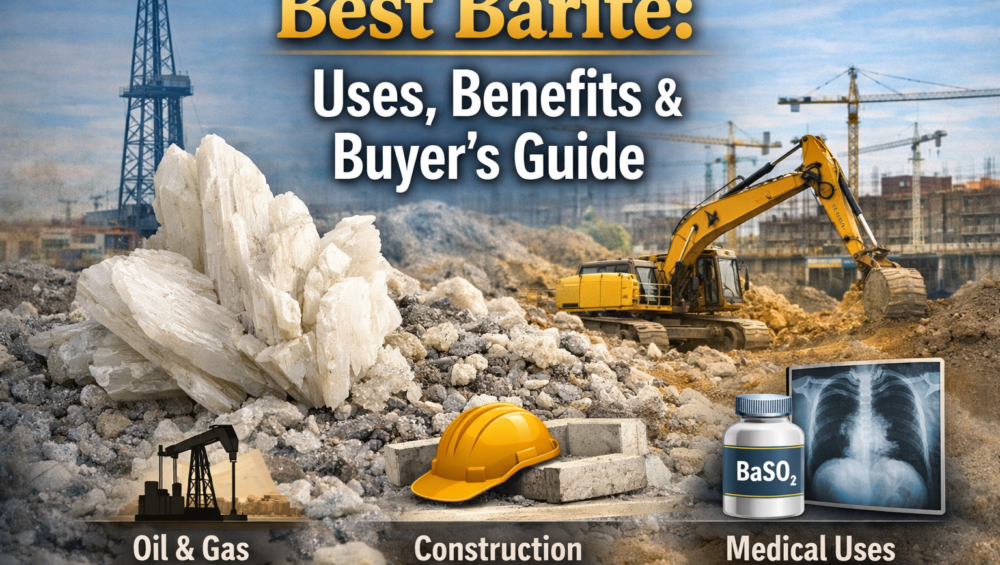
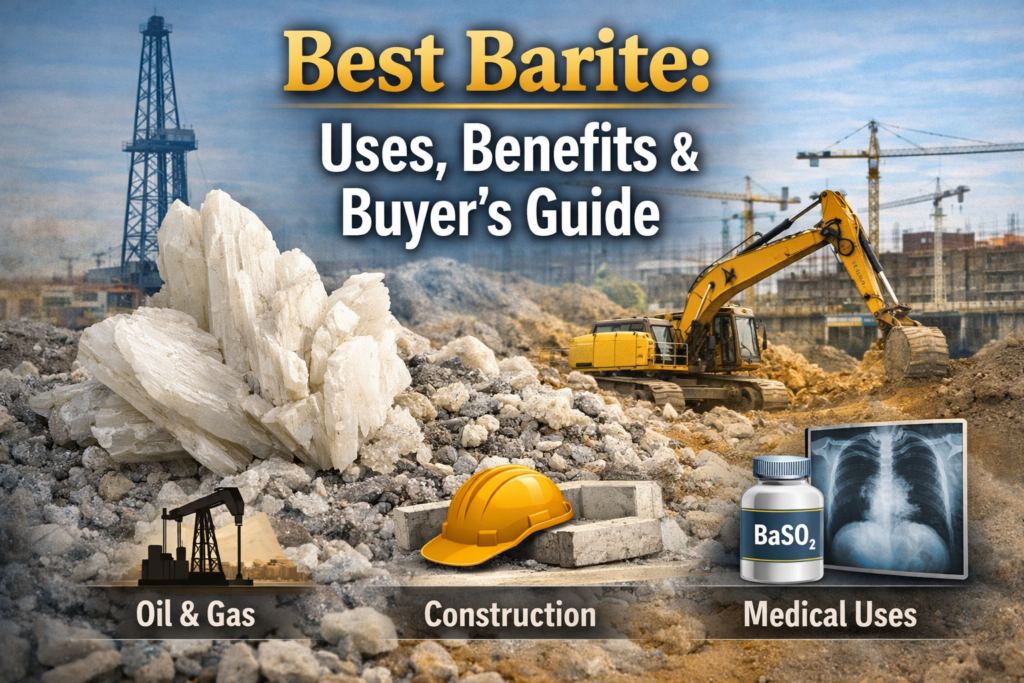
Barite (also called baryte) is one of the most important industrial minerals in the world. Known for its high specific gravity, chemical inertness, and wide range of applications, barite plays a critical role in industries such as oil & gas, construction, healthcare, and manufacturing.
This comprehensive guide covers everything you need to know about barite — including its uses, benefits, pricing factors, and frequently asked questions.
What Is Barite?
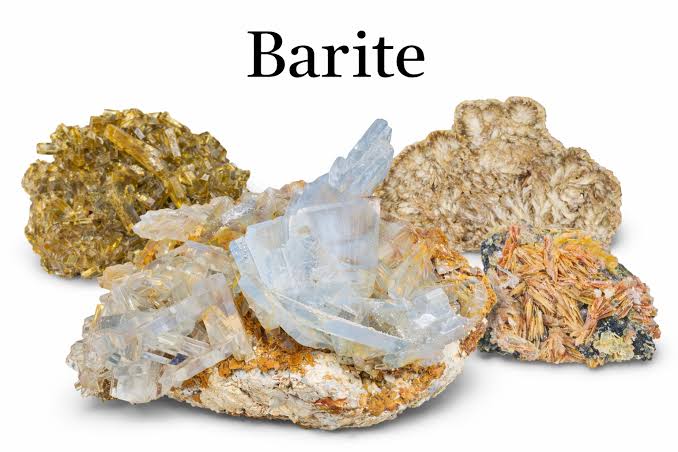
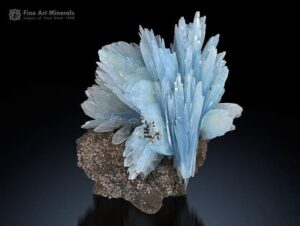
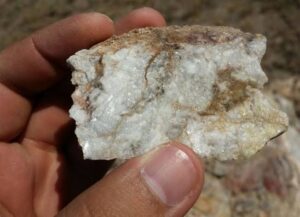
Barite is a naturally occurring mineral composed of barium sulfate (BaSO₄). It is typically white or colorless but can appear blue, brown, yellow, or gray depending on impurities.
Key Properties of Barite:
High specific gravity (4.2–4.5)
Chemically inert
Non-toxic
Insoluble in water
High density
Good radiation shielding properties
These properties make barite highly valuable across multiple industries.
Top Uses of Barite
1. Oil and Gas Drilling
Barite is primarily used as a weighting agent in drilling mud. It helps control pressure in oil and gas wells and prevents blowouts.
Major oil-producing countries like United States, China, and India are among the largest consumers of drilling-grade barite.
2. Paints and Coatings
Barite is used as a filler in paints to:
Improve durability
Increase brightness
Enhance corrosion resistance
3. Plastics and Rubber
It improves strength, weight, and sound insulation in plastic and rubber products.
4. Medical Industry
In medicine, purified barite is used for barium meals during X-ray imaging procedures. It helps doctors clearly view the digestive tract.
5. Construction Industry
Barite is used in:
Radiation-shielding concrete
Soundproofing materials
High-density cement
Benefits of Using High-Quality Barite
Improves drilling efficiency Enhances product durability Provides radiation protection Chemically stable and safe Cost-effective industrial mineral
Types of Barite
Drilling Grade Barite
Chemical Grade Barite
Paint Grade Barite
Medical Grade Barite
Each type has different purity levels and specifications.
Factors Affecting Barite Price
Barite prices depend on:
Purity (BaSO₄ content)
Specific gravity
Particle size
Supply & demand
Export regulations
Transportation cost
Countries like Morocco and Turkey are major exporters of barite globally.
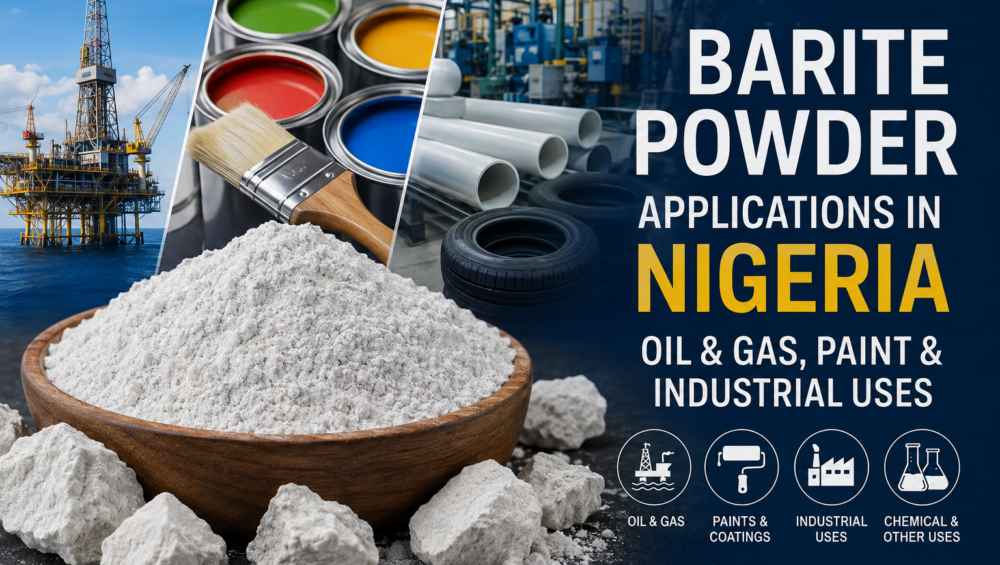
Barite powder is an important industrial mineral used across several sectors in Nigeria, particularly the oil and gas industry. Also known as barytes, barite is naturally occurring barium sulfate (BaSO₄) and is valued for its high specific gravity, low solubility, chemical stability, and durability.
Nigeria has significant barite resources, creating opportunities for industries that require reliable supplies of high-quality barite powder. From drilling fluids to paints, plastics, rubber, chemicals, and other industrial applications, barite continues to play an important role in manufacturing and industrial operations.
Barite Powder in Nigeria’s Oil & Gas Industry
One of the most important applications of barite powder is in oil and gas drilling. Barite is added to drilling fluids as a weighting agent to increase fluid density and help control formation pressure during drilling.
Maintaining appropriate drilling-fluid density is essential for safe and efficient drilling operations. Barite’s high specific gravity makes it particularly suitable for this purpose. Research on Nigerian barite has also examined properties such as specific gravity, chemical composition, and particle-size distribution for drilling-fluid applications.
For drilling applications, buyers generally require material that meets the relevant technical specifications and quality requirements for their operation. Therefore, selecting a dependable barite powder supplier is important for oilfield service companies and drilling-fluid manufacturers.
Barite Powder for Paints and Coatings
Barite is also used as a filler and extender in paint and coating formulations. Its physical properties can contribute to density, durability, and formulation performance.
High-quality processed barite can be particularly valuable in applications where particle size, whiteness, brightness, and consistency are important. The Nigerian Ministry of Solid Minerals Development notes that more highly processed barite can command higher value in filler applications.
For Nigerian paint manufacturers, the right barite grade can help support consistent production and product quality.
Barite Applications in Rubber and Plastics
Barite powder is used as a mineral filler in rubber and plastic products. It can increase density and contribute to specific physical characteristics of finished products.
Research on Nigerian barite has identified filler applications in rubber and paper industries, particularly for material that may not meet the requirements of drilling-grade applications.
This makes barite useful beyond petroleum applications and creates additional opportunities for industrial manufacturers in Nigeria.
Barite in Chemical Manufacturing
Barite is also an important raw material for producing various barium compounds and industrial chemicals. These compounds can be used in different manufacturing processes, including applications involving glass, ceramics, and other industrial products.
Manufacturers requiring barite for chemical processing should select material according to the required purity, particle size, chemical composition, and processing requirements.
Barite for Glass and Ceramics
Another application of barite is in glass and ceramic manufacturing. Barium-based materials derived from barite can be used in specialized industrial formulations, while barite itself may serve specific functions depending on the manufacturing process.
Nigeria’s Ministry of Solid Minerals Development lists glass and ceramics among the value-added application areas for barytes.
Radiation Shielding and Other Industrial Uses
Because of its high density, barite is also used in radiation-shielding materials and heavy-weight concrete. Other reported applications include automotive friction products, plastics, paper, rubber, and certain specialized industrial products.
These applications demonstrate why barite is considered a versatile industrial mineral rather than a material limited only to oil and gas.
Why Quality Matters When Buying Barite Powder
The required characteristics of barite depend on the intended application. Drilling-fluid applications may place strong emphasis on specific gravity, chemical composition, soluble salts, and particle-size distribution, while paint, plastic, and other filler applications may prioritize whiteness, brightness, fineness, and consistency.
Studies of Nigerian barite deposits have found that quality can vary between locations and that some material may require beneficiation before it is suitable for particular drilling-fluid applications.
For this reason, businesses should work with an experienced barite powder manufacturer and exporter capable of supplying material according to the customer’s technical requirements.
SNDB – Barite Powder Supply for the Nigerian Market
SNDB provides barite powder solutions for customers looking for dependable industrial mineral supply. For businesses in Nigeria, choosing an experienced exporter can help simplify procurement and ensure access to barite suitable for the intended industrial application.
Whether the requirement is related to oil and gas drilling, paints, rubber, plastics, chemicals, glass, ceramics, or other industrial uses, the appropriate barite grade should be selected according to the application’s specifications.
Barite powder has a wide range of applications in Nigeria, with oil and gas drilling being one of its most important uses. Its high density and chemical stability also make it valuable in paints, plastics, rubber, chemical manufacturing, glass, ceramics, radiation shielding, and other industrial applications.
As demand for industrial minerals continues to develop, reliable sourcing and consistent product quality are important considerations for Nigerian businesses. Working with a trusted barite powder manufacturer and exporter such as SNDB can help industries source barite according to their specific requirements.
Barite is an important industrial mineral widely used across several industries because of its high specific gravity, chemical stability, and excellent performance in specialized applications. India has a strong demand for barite, particularly from the oil and gas, chemical, paint, plastics, rubber, and construction sectors.
SNDB focuses on supplying quality barite products suitable for different industrial requirements. With consistent product quality and reliable supply, barite suppliers play an important role in meeting the growing needs of industries across India.
What Is Barite?
Barite, also known as baryte, is a naturally occurring mineral primarily composed of barium sulfate (BaSO₄). It is recognized for its high density, low solubility, and resistance to chemical reactions.
These properties make barite particularly valuable in applications where a heavy, stable, and chemically resistant mineral is required.
Major Applications of Barite in India
1. Oil and Gas Industry
One of the largest applications of barite is in oil and gas drilling. Barite is added to drilling fluids to increase their density. This helps control formation pressure and supports safer and more efficient drilling operations.
Its high specific gravity makes barite an important component of drilling mud formulations used in exploration and well development.
2. Paint and Coatings
Finely processed barite powder can be used as a functional filler in paints and coatings. It can contribute to improved density, durability, and surface characteristics while supporting the required formulation properties.
3. Plastics and Rubber
Barite is also used as a filler in selected plastic and rubber formulations. Its physical properties can help manufacturers achieve desired weight, dimensional stability, and performance characteristics.
4. Chemical Industry
Barite is an important raw material for the production of various barium-based chemicals. Its chemical composition makes it useful in applications requiring barium compounds.
5. Construction and Other Industrial Applications
Depending on its grade and processing quality, barite can be used in specialized construction materials and other industrial formulations where high density is required.
Importance of Quality Barite Supply
The quality of barite can directly influence its suitability for a particular industrial application. Important factors may include:
Specific gravity
Barium sulfate content
Particle size and fineness
Moisture level
Chemical purity
Color and physical appearance
Consistency from batch to batch
Industries should select barite according to their technical requirements rather than relying only on price.
Growing Demand for Barite in India
India’s expanding industrial and infrastructure sectors continue to support demand for minerals such as barite. The oil and gas sector remains a major consumer, while demand from paints, coatings, plastics, rubber, chemicals, and other industries contributes to the broader market.
Reliable domestic supply can help industries maintain production schedules, reduce procurement challenges, and obtain material that matches their required specifications.
Why Choose SNDB for Barite Supply?
SNDB aims to provide quality-focused barite solutions for industrial customers. A dependable supplier should be able to support customers with consistent material quality, suitable specifications, professional service, and reliable order fulfillment.
For businesses purchasing barite in bulk, working with an experienced supplier can make procurement easier and help ensure that the material is appropriate for its intended application.
Barite is a versatile industrial mineral with significant applications in India’s oil and gas, chemical, paint, plastics, rubber, and other sectors. Its high density, stability, and useful physical properties make it an important material for many industrial processes.
As demand continues to evolve, choosing a reliable barite supplier is essential for maintaining quality and supply consistency. SNDB can serve as a dependable source for businesses looking for quality barite products for their industrial requirements.
Natural barite is an important industrial mineral known for its high density, chemical stability, and excellent performance in a wide range of applications. Also known as baryte, barite is primarily composed of barium sulfate (BaSO₄) and is widely used in oil and gas drilling, chemical manufacturing, paints, coatings, construction, and other industrial sectors.
SNDB provides quality mineral and chemical products designed to meet the requirements of different industrial applications. Understanding the properties and uses of natural barite can help businesses select the right material for their specific needs.
What Is Natural Barite?
Natural barite is a naturally occurring mineral belonging to the sulfate mineral group. Its chemical formula is BaSO₄, which represents barium sulfate. It is generally recognized by its high specific gravity, making it considerably denser than many other common industrial minerals.
Barite can occur in different colors, including white, colorless, gray, brown, and yellowish shades, depending on the geological conditions and impurities present in the mineral.
Because of its high density and chemical stability, natural barite has become an essential raw material for several industries.
Key Properties of Natural Barite
The properties of barite make it suitable for demanding industrial applications.
1. High Specific Gravity
One of the most important characteristics of barite is its high density. This property makes it particularly valuable in drilling fluids, where additional weight is required to control formation pressure.
2. Chemical Stability
Barite is chemically stable and has low solubility in water under normal conditions. This stability allows it to perform effectively in various industrial environments.
3. High Barium Sulfate Content
High-quality barite contains a high proportion of barium sulfate. The purity and composition of the mineral can influence its suitability for different applications.
4. Good Radiation Shielding Properties
Because of its high density and barium content, barite can be used in certain radiation-shielding materials, including specialized construction applications.
5. Low Oil Absorption
Certain grades of processed barite can offer useful characteristics for paints, coatings, and other formulations where controlled filler properties are required.
Major Applications of Natural Barite
Natural barite is used across several industries because of its unique physical and chemical properties.
Barite in Oil and Gas Drilling
The oil and gas industry is one of the largest users of barite. Finely ground barite is added to drilling fluids, commonly called drilling mud.
Its high density increases the weight of the drilling fluid, helping control formation pressure during drilling operations. It can also help reduce the risk of uncontrolled fluid movement and support safer drilling processes.
The quality of barite used in drilling fluids is important because factors such as particle size, density, purity, and chemical composition can affect drilling-fluid performance.
Barite in Paints and Coatings
Barite can be used as a functional filler or extender in paints and coatings. Its density, chemical stability, and suitable particle characteristics make it useful in selected coating formulations.
Depending on the grade and processing method, barite may contribute to the desired physical properties of industrial and protective coatings.
Barite in Construction
Barite is also used in specialized construction materials where high density is required. Barite-containing concrete and aggregates can be used for radiation shielding in specific facilities.
Its high density makes it particularly useful where conventional aggregates do not provide sufficient mass for the intended application.
Barite in Chemical Manufacturing
Barite is an important source of barium compounds. Through chemical processing, barium sulfate can be used as a raw material for producing various barium-based products.
These materials are used in different industrial and manufacturing processes.
Barite in Plastics and Rubber
Processed barite may also be used as a filler in selected rubber and plastic applications. The mineral can contribute to density and other formulation characteristics depending on the product specification.
Barite in Other Industrial Applications
Other applications of barite include friction materials, adhesives, sealants, ceramics, and specialized industrial formulations. The suitability of barite depends on its grade, particle size, purity, and the technical requirements of the end product.
Why Barite Quality Matters
Not all barite is suitable for every application. Industrial buyers should consider important parameters such as:
Barium sulfate content
Specific gravity
Particle size distribution
Moisture content
Chemical composition
Brightness or color, where relevant
Impurity levels
Application-specific specifications
For drilling applications, density and particle characteristics are particularly important. For coatings, plastics, and other formulations, factors such as particle size, purity, and surface characteristics may be more important.
Selecting the appropriate grade helps manufacturers achieve consistent performance and product quality.
Natural Barite vs Processed Barite
Natural barite is extracted from mineral deposits and then processed according to its intended application. Processing may include crushing, grinding, screening, washing, or other beneficiation steps.
The level of processing required depends on the end-use requirements. While some applications may require relatively simple processing, specialized industrial applications may require carefully controlled particle sizes and purity levels.
Benefits of Using Natural Barite
Natural barite offers several advantages for industrial users:
High density
Good chemical stability
High barium sulfate content in suitable grades
Versatile industrial applications
Useful filler and extender properties
Suitable for specialized radiation-shielding applications
Important role in oil and gas drilling
Availability in different grades and particle sizes
These characteristics make barite a valuable mineral for industries requiring a dense, stable, and reliable material.
Choosing the Right Barite Supplier
Choosing a reliable supplier is important when barite is being used as a critical industrial raw material. Businesses should evaluate product quality, consistency, technical specifications, packaging, supply capacity, and application suitability.
A dependable supplier should be able to provide material that meets the agreed specifications and support customers in selecting the appropriate grade for their application.
SNDB – Quality Barite for Industrial Applications
SNDB focuses on supplying industrial chemicals and minerals for diverse business requirements. High-quality raw materials can help manufacturers maintain consistent production and meet application-specific performance requirements.
When sourcing natural barite, customers should clearly define their required specifications, including purity, specific gravity, particle size, packaging, and intended application.
Natural barite is a versatile industrial mineral with significant applications in oil and gas drilling, construction, coatings, chemical manufacturing, plastics, rubber, and other specialized industries.
Its high density, chemical stability, and barium sulfate composition make it valuable for applications where reliable physical and chemical performance is required.
For businesses looking for quality barite, selecting the right grade and working with a dependable supplier such as SNDB can help ensure that the material meets the technical requirements of the intended application.
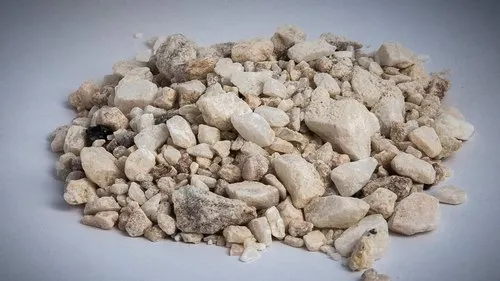
Barite lumps are one of the most valuable industrial minerals widely used in construction, chemical manufacturing, oil drilling, paints, plastics, rubber, and several other industries. Due to their high density, chemical stability, and excellent physical properties, barite lumps have become an essential raw material for various industrial applications worldwide.
Among the leading companies in the industry, SNDB has established itself as the best manufacturer, supplier, and exporter of premium-quality barite lumps, delivering high-purity products to domestic and international markets.
What Are Barite Lumps?
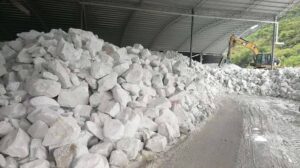
Barite is a naturally occurring mineral composed mainly of barium sulfate (BaSO4). It is known for its high specific gravity, non-toxic nature, and resistance to chemicals and heat. Barite is usually found in lump form before being processed into powder for industrial use.
Barite lumps are available in different grades and sizes depending on the application requirements. Industries prefer high-quality barite lumps because they improve performance, durability, and efficiency in manufacturing processes.
Importance of Barite Lumps in the Construction Industry
The construction sector extensively uses barite lumps due to their strength-enhancing and radiation-resistant properties. Some major applications include:
1. Heavy Concrete Production
Barite is used to manufacture heavyweight concrete that provides excellent density and durability. This type of concrete is commonly used in bridges, tunnels, dams, and large infrastructure projects.
2. Radiation Shielding
Hospitals, laboratories, and nuclear power plants use barite-based concrete for radiation protection. The high density of barite helps absorb harmful gamma rays and X-rays effectively.
3. Soundproofing Applications
Barite is also used in construction materials for sound insulation and vibration reduction in commercial and residential buildings.
4. Industrial Flooring
Factories and industrial facilities use barite-based flooring materials because of their durability, chemical resistance, and heavy-load bearing capacity.
Role of Barite Lumps in the Chemical Industry
The chemical industry relies heavily on barite lumps for producing high-quality compounds and industrial products.
1. Paint Industry
Barite acts as a filler and extender in paints and coatings. It improves brightness, smoothness, and chemical resistance while reducing production costs.
2. Plastic Manufacturing
Plastic manufacturers use barite to increase product strength, density, and resistance to wear and tear.
3. Rubber Industry
In rubber production, barite enhances flexibility, durability, and resistance against chemicals and environmental damage.
4. Chemical Production
Barite is used in producing barium chemicals that are widely applied in ceramics, glass manufacturing, electronics, and pharmaceuticals.
Why Industries Prefer High-Quality Barite Lumps
Industries prefer premium-grade barite lumps because they offer:
High purity levels
Excellent density and strength
Superior chemical stability
Cost-effective industrial performance
Better product durability
Improved manufacturing efficiency
Choosing the right supplier is essential for obtaining consistent quality and reliable delivery.
SNDB – Best Manufacturer, Supplier, and Exporter of Barite Lumps
SNDB is recognized as a trusted manufacturer, supplier, and exporter of superior-quality barite lumps. The company focuses on delivering industrial-grade minerals that meet international quality standards.
Why Choose SNDB?
High-purity barite lumps
Advanced processing technology
Competitive pricing
Timely global delivery
Customized product solutions
Strong quality control system
Reliable customer support
SNDB supplies barite lumps to construction companies, chemical manufacturers, oil drilling industries, and industrial clients across multiple countries.
Global Demand for Barite Lumps
The demand for barite lumps continues to grow due to increasing infrastructure development, industrial expansion, and rising energy exploration activities worldwide. Countries involved in oil drilling, construction, and chemical manufacturing are major consumers of barite products.
With rising industrial requirements, companies like SNDB are playing a significant role in supplying high-quality barite lumps to global markets.
Barite lumps are essential industrial minerals widely used in construction and chemical industries because of their density, durability, and chemical resistance. From radiation shielding concrete to paints, plastics, and rubber manufacturing, barite continues to support modern industrial growth.
As the best manufacturer, supplier, and exporter of barite lumps, SNDB delivers premium-quality products that meet the diverse needs of industries worldwide. With a commitment to quality, reliability, and customer satisfaction, SNDB remains a trusted name in the global mineral industry.
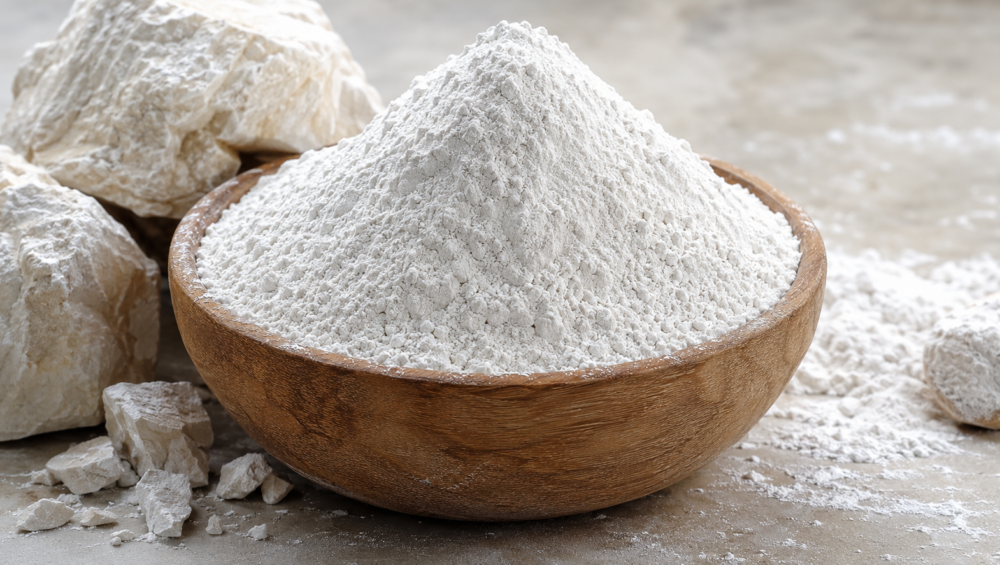
Barite powder is a naturally occurring mineral that manufacturers process into a fine powder. It mainly contains barium sulfate (BaSO₄) and offers high density, excellent chemical stability, and strong resistance to moisture and corrosion. Industries such as oil and gas, paints, plastics, rubber, construction, and chemicals use barite powder to improve product quality and performance. Its versatility and reliability make it one of the most valuable industrial minerals.
Composition and Key Properties of Barite Powder
High-quality barite powder contains a high percentage of barium sulfate with only small amounts of silica, iron oxide, and calcium compounds. It provides high specific gravity, excellent whiteness, low oil absorption, and outstanding chemical stability. Since it does not dissolve in water and remains chemically inert, manufacturers can use it in demanding industrial environments. These properties help increase the strength, durability, and efficiency of many industrial products.
Different Grades of Barite Powder
Manufacturers produce barite powder in different grades to meet specific industrial requirements. Oil and gas companies use drilling-grade barite to increase drilling fluid density and maintain well pressure. Paint manufacturers choose paint-grade barite to improve brightness, smoothness, and durability. Plastic and rubber manufacturers use suitable grades to increase strength, wear resistance, and dimensional stability. Chemical companies use chemical-grade barite to produce various barium compounds.
Industrial Applications of Barite Powder
Many industries rely on barite powder because it delivers consistent performance. Oil and gas companies add it to drilling mud to improve drilling efficiency and enhance operational safety. Paint manufacturers use it as a filler to achieve better opacity and smoother finishes. Plastic, rubber, paper, adhesive, construction, and chemical manufacturers also depend on barite powder to improve product quality, durability, and overall performance.
Why Choose SNDB for Premium Barite Powder?
SNDB supplies premium-quality barite powder to customers across India and international markets. The company follows strict quality standards and uses advanced processing technology to deliver consistent purity, particle size, and performance. SNDB offers competitive pricing, reliable supply, timely delivery, and excellent customer support. Businesses across multiple industries trust SNDB for high-quality barite powder that meets their production needs.
Barite, also known as barium sulfate (BaSO₄), is one of the most important industrial minerals used across multiple sectors worldwide. Due to its high specific gravity, chemical inertness, and exceptional purity, barite has become an essential raw material for industries such as oil and gas, paints and coatings, plastics, rubber, construction, and pharmaceuticals.
As industries continue to expand globally, the demand for high-quality barite is increasing rapidly. SNDB has established itself as a trusted manufacturer, exporter, and supplier of premium-quality barite products, delivering reliable solutions to customers across various industries.
What Is Barite?
Barite is a naturally occurring mineral composed primarily of barium sulfate. It is characterized by its high density, low solubility, non-toxic nature, and excellent chemical stability. These unique properties make it suitable for a wide range of industrial applications where performance and consistency are critical.
Key Properties of Barite
High specific gravity
Excellent chemical resistance
Low oil absorption
High brightness and whiteness
Non-reactive and non-toxic
Superior filler and weighting capabilities
These properties have made barite an indispensable mineral in modern manufacturing and industrial operations.
Importance of Barite in the Oil and Gas Industry
The oil and gas sector is the largest consumer of barite worldwide. Barite is primarily used as a weighting agent in drilling fluids and drilling muds.
Benefits in Drilling Operations
Controls underground pressure during drilling
Prevents blowouts and well instability
Improves drilling efficiency
Reduces operational risks
Enhances lubrication and cooling of drilling equipment
Without barite, safe and efficient oil and gas exploration would be significantly more challenging.
Barite in Paints and Coatings
Barite plays a crucial role in the paints and coatings industry. It improves the durability, brightness, and performance of coatings used in residential, commercial, and industrial applications.
Advantages
Enhances paint smoothness
Improves weather resistance
Increases coating durability
Provides excellent filler properties
Reduces production costs
Manufacturers rely on high-purity barite to achieve superior coating performance and long-lasting results.
Application of Barite in Plastics and Rubber
Barite is widely used as a filler material in plastic and rubber manufacturing. It helps improve product quality while maintaining cost efficiency.
Benefits
Enhances product strength
Improves dimensional stability
Increases wear resistance
Improves surface finish
Reduces manufacturing costs
Its versatility makes barite a preferred mineral for producing high-performance plastic and rubber products.
Barite in Construction and Infrastructure
The construction industry uses barite in cement, concrete, and radiation-shielding materials. Due to its high density, barite-based concrete is commonly used in hospitals, laboratories, and nuclear facilities.
Construction Applications
Heavy concrete production
Radiation shielding walls
Soundproofing materials
Specialized construction projects
As infrastructure development continues worldwide, the demand for barite in construction applications remains strong.
Use of Barite in the Chemical Industry
Barite serves as an important raw material for manufacturing various barium compounds used in chemicals, electronics, ceramics, and glass production.
Industrial Benefits
High chemical stability
Consistent quality
Reliable performance
Excellent purity levels
Industries prefer high-grade barite because it ensures efficient production processes and superior end products.
Why Choose SNDB for High-Quality Barite?
SNDB has built a strong reputation as a leading manufacturer, exporter, and supplier of premium-quality barite. The company focuses on delivering products that meet international quality standards and industrial requirements.
What Makes SNDB Different?
Premium Quality Products
SNDB sources and processes high-grade barite to ensure superior performance across all applications.
Advanced Manufacturing Facilities
Modern processing technologies guarantee consistency, purity, and reliability.
Global Export Expertise
SNDB serves customers across domestic and international markets with timely deliveries and professional support.
Customized Solutions
The company provides barite products tailored to specific industrial requirements.
Competitive Pricing
SNDB offers cost-effective solutions without compromising on quality.
Growing Demand for Barite in Global Markets
The global barite market continues to grow due to increasing oil and gas exploration activities, infrastructure development, and expanding manufacturing industries. Businesses worldwide are seeking reliable suppliers capable of delivering high-quality barite consistently.
SNDB remains committed to meeting this growing demand through advanced production capabilities, strict quality control, and customer-focused service.
Barite is a critical mineral that supports numerous industries, from oil and gas drilling to construction, paints, plastics, rubber, and chemical manufacturing. Its unique physical and chemical properties make it an essential component in modern industrial processes.
For businesses seeking high-quality barite products, SNDB stands out as a trusted manufacturer, exporter, and supplier known for quality, reliability, and customer satisfaction. With a commitment to excellence and innovation, SNDB continues to serve industries worldwide with premium-grade barite solutions.
Barite, also known as barium sulfate (BaSO₄), is a naturally occurring mineral widely used across various industries due to its high density, chemical inertness, and excellent physical properties. While it is best known for its role in oil and gas drilling, barite has become an essential material in the rubber and polymer manufacturing sector. Manufacturers rely on barite as a functional filler to improve product quality, enhance performance, and reduce production costs.
This article explores the importance of barite in rubber and polymer manufacturing, its benefits, applications, and why it remains a preferred choice for industrial producers worldwide.
What Is Barite?
Barite is a mineral composed primarily of barium sulfate. It is characterized by its high specific gravity, low oil absorption, chemical stability, and resistance to acids and alkalis. These properties make barite an ideal additive in numerous industrial applications, including plastics, rubber, paints, coatings, and construction materials.
In the rubber and polymer industry, finely ground barite powder is used as a filler material to improve mechanical properties and optimize manufacturing processes.
Why Barite Is Used in Rubber Manufacturing
Rubber products require fillers to enhance their performance, durability, and cost-effectiveness. Barite offers several advantages that make it highly valuable in rubber production.
1. Improves Product Density
One of the most significant benefits of barite is its high density. Manufacturers use barite when producing rubber products that require additional weight and stability. Applications such as industrial mats, conveyor belts, vibration dampeners, and automotive components often benefit from the increased density provided by barite.
2. Enhances Durability
Barite contributes to improved wear resistance and mechanical strength in rubber compounds. This helps manufacturers create products that can withstand harsh operating conditions, heavy loads, and prolonged use without significant deterioration.
3. Reduces Manufacturing Costs
Barite serves as a cost-effective filler that partially replaces more expensive raw materials. By incorporating barite into rubber formulations, manufacturers can lower production costs while maintaining desired product performance and quality standards.
4. Improves Chemical Resistance
Rubber products used in industrial environments are frequently exposed to chemicals, oils, and solvents. Barite’s chemical inertness helps improve the resistance of rubber compounds to these substances, extending product lifespan and reliability.
5. Enhances Surface Finish
Finely processed barite powder contributes to smoother surfaces and improved appearance in finished rubber products. This is particularly important for products where aesthetics and consistent quality are essential.
Role of Barite in Polymer Manufacturing
Polymers and plastics are widely used in packaging, automotive, electronics, healthcare, and construction industries. Manufacturers incorporate barite into polymer formulations to achieve specific performance characteristics.
Increased Mechanical Strength
Barite acts as a reinforcing filler that enhances the rigidity and dimensional stability of polymer products. This makes the material more resistant to deformation under stress and improves overall structural integrity.
Better Processability
The controlled particle size distribution of barite allows manufacturers to achieve consistent processing during extrusion, molding, and compounding operations. This improves production efficiency and product uniformity.
Enhanced Radiation Shielding
Due to its high density, barite is often used in specialized polymer products designed for radiation protection. Medical, nuclear, and industrial applications utilize barite-filled polymers to create effective shielding materials.
Improved Thermal Stability
Barite can help improve the thermal performance of certain polymer formulations, allowing products to maintain stability under elevated temperatures.
Cost Optimization
Like rubber manufacturing, polymer producers use barite as a cost-efficient filler to reduce raw material expenses while maintaining product functionality and performance.
Applications of Barite in Rubber and Polymer Products
Barite is utilized in a wide variety of rubber and polymer applications, including:
Automotive components
Rubber hoses and seals
Conveyor belts
Industrial flooring materials
Cable insulation compounds
Plastic pipes and fittings
Packaging materials
Injection molded products
Medical shielding materials
Construction plastics
Vibration and sound dampening products
Its versatility makes it a valuable ingredient across multiple manufacturing sectors.
Key Advantages of Using Barite
Manufacturers choose barite because of its unique combination of benefits:
High specific gravity
Excellent chemical stability
Non-toxic nature
Low oil absorption
Superior whiteness and brightness
Good dispersion characteristics
Enhanced product durability
Improved dimensional stability
Cost-effective filler solution
Compatibility with various rubber and polymer systems
These advantages contribute to better product performance and increased manufacturing efficiency.
Choosing High-Quality Barite for Manufacturing
The performance of rubber and polymer products depends significantly on the quality of barite used. Manufacturers should consider factors such as:
Purity of barium sulfate content
Particle size distribution
Whiteness level
Moisture content
Specific gravity
Consistency of supply
Compliance with industry standards
Selecting high-quality barite ensures reliable production processes and superior end-product performance.
Future Outlook of Barite in Rubber and Polymer Industries
As industries continue to demand high-performance, durable, and cost-effective materials, the use of barite in rubber and polymer manufacturing is expected to grow. Advances in processing technology are enabling the production of finer and more specialized barite grades that offer enhanced performance characteristics.
The increasing demand for automotive components, infrastructure development, industrial products, and advanced polymer applications will continue to drive the adoption of barite as a preferred filler material.
Barite plays a crucial role in modern rubber and polymer manufacturing by improving product density, durability, chemical resistance, and cost efficiency. Its unique physical and chemical properties make it an indispensable filler for a wide range of industrial applications. As manufacturers seek to enhance product performance while controlling production costs, barite will remain a key raw material supporting innovation and growth across the rubber and polymer industries.
Organizations that invest in high-quality barite products can achieve superior manufacturing outcomes, enhanced product reliability, and greater competitiveness in today’s demanding industrial marketplace.
Barite is one of the most valuable industrial minerals used across various industries, especially in paints and coatings. Known for its high density, chemical inertness, and excellent whiteness, barite enhances the quality and performance of coating formulations. As a trusted manufacturer and supplier of premium-quality barite, SNDB delivers high-grade products that meet the requirements of modern paint and coating applications.
What is Barite?
Barite, also known as barium sulfate (BaSO₄), is a naturally occurring mineral widely used as a functional filler in paints, coatings, plastics, rubber, and drilling fluids. Due to its unique physical and chemical properties, barite improves durability, appearance, and overall product performance.
Benefits of Barite in Paints and Coatings
1. Enhanced Brightness and Whiteness
Barite possesses excellent whiteness, making it an ideal filler for decorative and industrial coatings. It helps improve the visual appeal of paints while reducing the amount of expensive pigments required.
2. Improved Durability
Paints containing barite exhibit greater resistance to weathering, abrasion, and environmental damage. This makes them suitable for both indoor and outdoor applications.
3. Better Chemical Resistance
Barite is chemically inert and resistant to acids and alkalis. Coatings formulated with barite provide enhanced protection against corrosion and chemical exposure.
4. Increased Density and Film Strength
The high specific gravity of barite contributes to improved film thickness and strength, ensuring long-lasting coating performance.
5. Cost-Effective Formulation
By acting as an effective extender pigment, barite reduces production costs without compromising paint quality. Manufacturers can achieve superior performance while optimizing raw material expenses.
6. Improved Gloss and Finish
Fine barite particles contribute to smoother paint surfaces and enhanced gloss retention, resulting in attractive and professional-looking finishes.
Applications of Barite in Paints and Coatings
Architectural Paints
Barite is commonly used in interior and exterior wall paints to improve coverage, brightness, and durability.
Industrial Coatings
Heavy-duty industrial coatings benefit from barite’s chemical resistance and protective properties, making it ideal for factories, pipelines, and machinery.
Marine Coatings
Marine environments require coatings that can withstand harsh conditions. Barite enhances corrosion resistance and extends coating lifespan.
Automotive Coatings
Automotive manufacturers use barite to improve paint finish, durability, and scratch resistance.
Powder Coatings
Barite contributes to better flow properties, uniform application, and enhanced coating performance in powder coating formulations.
Why Choose SNDB for High-Quality Barite?
SNDB is recognized as a leading manufacturer and supplier of premium-quality barite products. The company focuses on delivering consistent quality, high purity, and customized solutions for various industrial applications.
Key Advantages of SNDB Barite:
High-purity barite with consistent quality
Excellent particle size distribution
Superior whiteness and brightness
Reliable supply and timely delivery
Competitive pricing for bulk orders
Suitable for paints, coatings, plastics, rubber, and other industries
With advanced manufacturing processes and strict quality control standards, SNDB ensures that customers receive barite products that meet industry specifications and performance expectations.
Barite plays a crucial role in enhancing the quality, durability, and cost-effectiveness of paints and coatings. From architectural paints to industrial and automotive coatings, its unique properties make it an indispensable mineral for modern formulations. As a trusted manufacturer, SNDB continues to provide high-quality barite products that help businesses achieve superior coating performance and long-lasting results.
For industries seeking reliable barite solutions, SNDB remains a preferred choice for quality, consistency, and customer satisfaction.
Barite (barium sulfate, BaSO₄) is a critical industrial mineral widely used in oil and gas drilling, paints, rubber, chemicals, and radiation shielding. As global industries move toward sustainability and cost efficiency, the future of barite is being shaped by three major forces: recycling, development of substitutes, and sustainable mining practices. At the same time, manufacturers, suppliers, and exporters like SNDB(as referenced by you) play an important role in ensuring steady supply and meeting global industrial demand.
1. The Future of Barite in Industry
Demand for barite is strongly tied to the oil and gas sector, where it is used in drilling mud to control pressure in deep wells. Despite fluctuations in oil markets, global demand remains stable due to:
However, sustainability pressures are pushing the industry to innovate.
2. Recycling of Barite: Is It Possible?
Unlike metals, barite is a naturally occurring mineral that is typically not recycled in a traditional sense. However, sustainability efforts include:
A. Recovery from Drilling Waste
Used drilling mud containing barite can sometimes be processed
Separation and reuse of barite particles is being explored
B. Industrial Waste Reprocessing
Barite can be recovered from waste streams in chemical and industrial plants
Limited but growing research in circular mineral use
C. Challenges
Contamination during drilling reduces purity
Recovery is often more expensive than mining new barite
3. Substitutes for Barite
Because barite is heavy, chemically stable, and inexpensive, it is difficult to fully replace. However, alternatives exist:
A. Hematite (Fe₂O₃)
Higher density than barite
Used in some high-pressure drilling fluids
B. Ilmenite
Titanium-iron oxide mineral
Used in specialized drilling applications
C. Calcium Carbonate
Used in shallow drilling
Less dense than barite, so limited use
D. Synthetic Materials
Engineered weighting agents are being developed
More expensive but cleaner and more consistent
Conclusion: No perfect substitute exists yet; barite remains dominant.
4. Sustainability in Barite Mining and Supply
Sustainability is becoming a key focus in the barite industry:
A. Eco-Friendly Mining Practices
Reduced land disturbance
Water recycling in processing plants
Dust control systems
B. Responsible Supply Chains
Traceability of ore sources
Compliance with environmental regulations
Reduced carbon footprint in transportation
C. Energy Efficiency
Modern beneficiation plants consume less energy
Automation reduces waste
5. Role of Manufacturers, Suppliers, and Exporters (SNDB Perspective)
Companies like SNDB (as referenced)—assumed here as a barite manufacturer, supplier, and exporter—typically contribute in the following ways:
A. Manufacturing & Processing
Crushing, grinding, and micronizing barite ore
Producing different grades (lump barite, powder, API-grade barite)
B. Supply Chain Role
Sourcing raw barite from mines
Ensuring consistent quality and purity standards
Meeting bulk industrial demand
C. Export Activities
Supplying barite to oilfield markets globally
Managing logistics, packaging, and shipping compliance
Competing in international mineral markets
D. Quality Standards
Leading suppliers focus on:
API specification compliance (for drilling-grade barite)
High specific gravity (typically ≥4.2 SG)
Low impurities (iron, silica, moisture control)
If SNDB is your intended company, it would typically be positioned as a bulk supplier serving oilfield and industrial clients worldwide.
6. Market Outlook for Barite
The future market is expected to be shaped by:
Continued oil & gas exploration
Growing demand in Asia-Pacific industrial sectors
Increasing environmental regulation
Technological improvements in drilling fluids
Despite emerging substitutes, barite will likely remain the primary weighting agent for drilling fluids for decades.
The future of barite lies in balancing industrial demand with environmental responsibility. While recycling is still limited and substitutes are not fully competitive, improvements in sustainable mining and supply chain management are shaping a cleaner future.
Manufacturers, suppliers, and exporters like SNDB play a key role in maintaining global supply while adapting to stricter sustainability expectations.