Barite: An Important Industrial MineralCategoriesBlogs

Barite: An Important Industrial Mineral

Barite: An Important Industrial Mineral

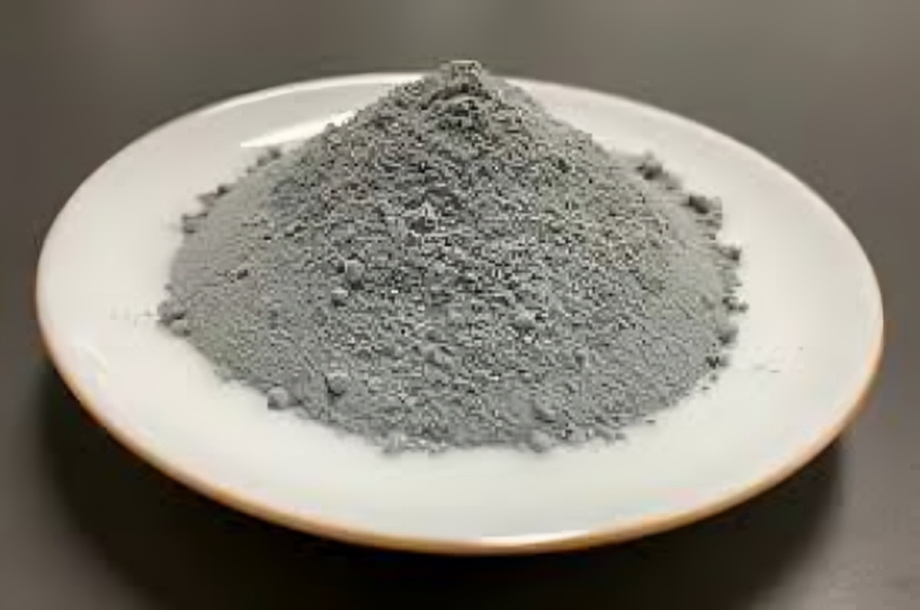
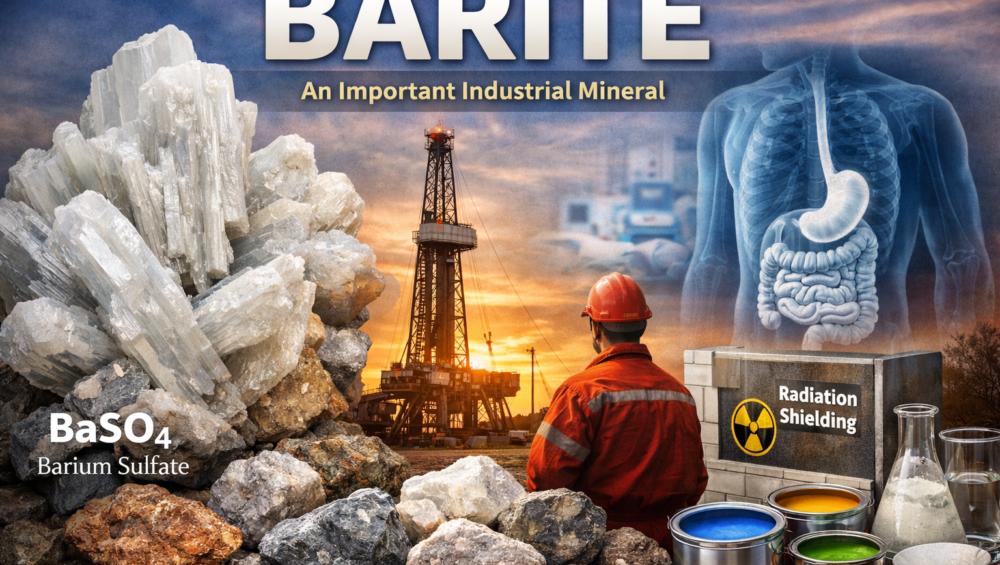
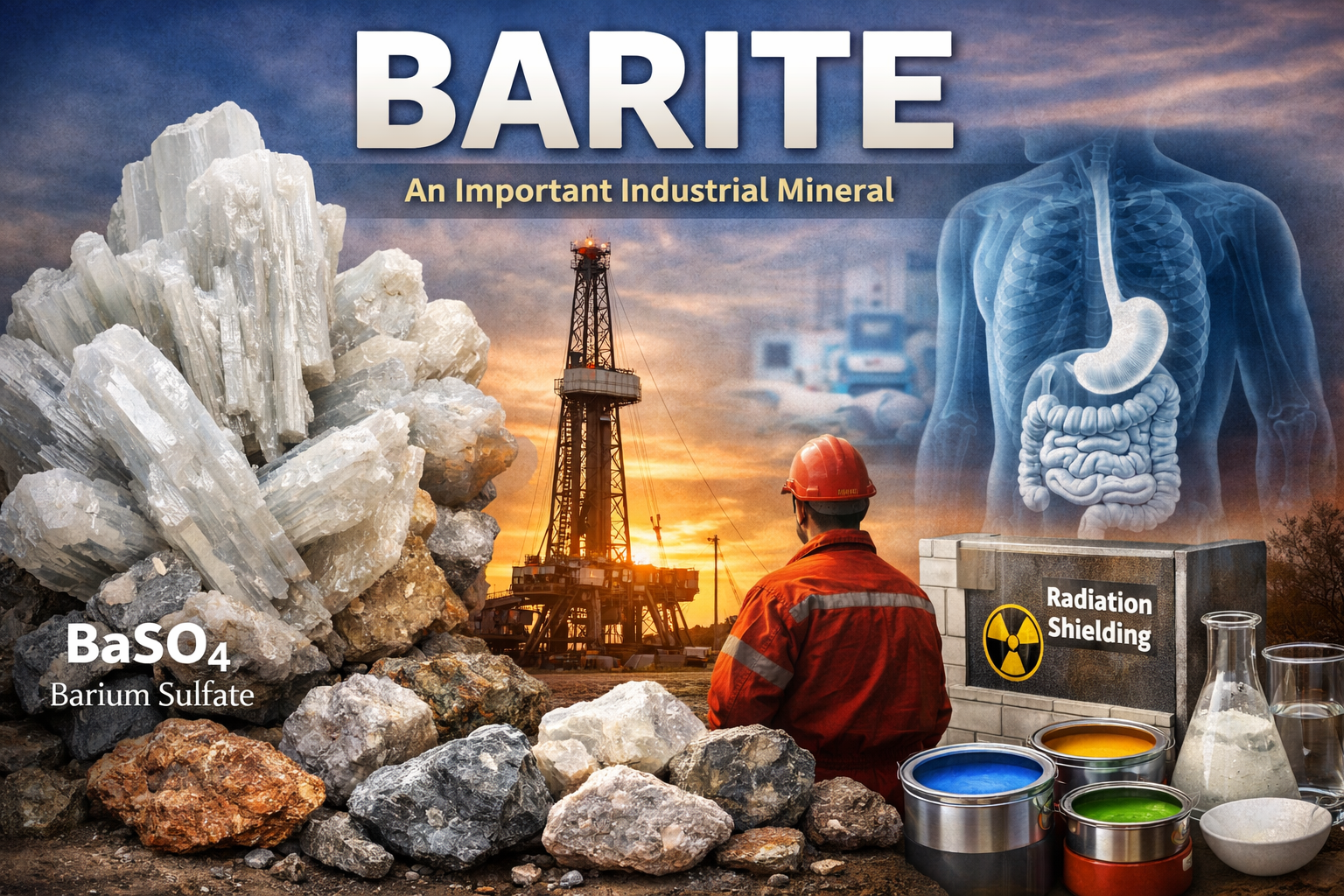
Barite (also spelled baryte) is a naturally occurring mineral composed mainly of barium sulfate (BaSO₄). It is widely used in many industries due to its high density, chemical inertness, and ability to absorb radiation. The name “barite” comes from the Greek word “barys,” meaning heavy, which reflects the mineral’s most distinctive property—its high specific gravity.

Composition and Properties

Barite consists primarily of barium sulfate, a compound made of barium, sulfur, and oxygen. It typically forms in sedimentary rocks, hydrothermal veins, and limestone deposits. The mineral appears in a variety of colors including white, gray, yellow, blue, and brown, depending on impurities.

Some important physical properties of barite include:

  • Chemical formula: BaSO₄
  • Specific gravity: about 4.5 (very heavy for a non-metallic mineral)
  • Hardness: 3–3.5 on the Mohs scale
  • Crystal system: Orthorhombic
  • Luster: Vitreous to pearly
  • Streak: White

Because of its high density and chemical stability, barite has many industrial applications.

Formation and Occurrence

Barite forms through hydrothermal processes where mineral-rich fluids move through cracks in rocks and deposit barium sulfate as they cool. It can also form in sedimentary environments, often associated with limestone, shale, and sandstone.

Major barite deposits are found in countries such as China, India, Morocco, the United States, and Mexico. In India, important deposits occur in Andhra Pradesh, Rajasthan, and Madhya Pradesh. The Mangampet deposit in Andhra Pradesh is one of the largest barite deposits in the world.

Uses of Barite

Barite has a wide range of industrial uses:

1. Oil and Gas Drilling
The most important use of barite is as a weighting agent in drilling mud used in oil and gas wells. Its high density helps control pressure in the well and prevents blowouts.

2. Medical Applications
Barite is used in medicine as barium sulfate contrast material for X-ray imaging of the digestive system. It helps doctors see internal organs clearly.

3. Paints and Plastics
Finely ground barite is used as a filler in paints, plastics, rubber, and paper, improving brightness and durability.

4. Radiation Shielding
Because of its ability to absorb radiation, barite is used in concrete for radiation shielding in hospitals and nuclear facilities.

5. Glass and Ceramics
Barite is also used in the manufacture of glass and ceramics to improve strength and chemical resistance.

Economic Importance

Barite is considered a strategic industrial mineral due to its role in the petroleum industry. Countries with large barite reserves benefit from exporting it to oil-producing regions. The demand for barite is closely linked to global oil and gas exploration activities.

Barite is a valuable mineral with diverse applications across industries such as oil drilling, medicine, construction, and manufacturing. Its unique properties—especially its high density and chemical stability—make it essential for many modern technologies. As energy exploration and industrial production continue to grow, barite will remain an important resource worldwide.
Learn the physical and chemical properties of barite, its industrial uses, and why SNDB is a trusted supplier of high-quality barite worldwide.CategoriesBlogs

Physical and Chemical Properties of Barite Explained | SNDB Best Supplier

Learn the physical and chemical properties of barite, its industrial uses, and why SNDB is a trusted supplier of high-quality barite worldwide.

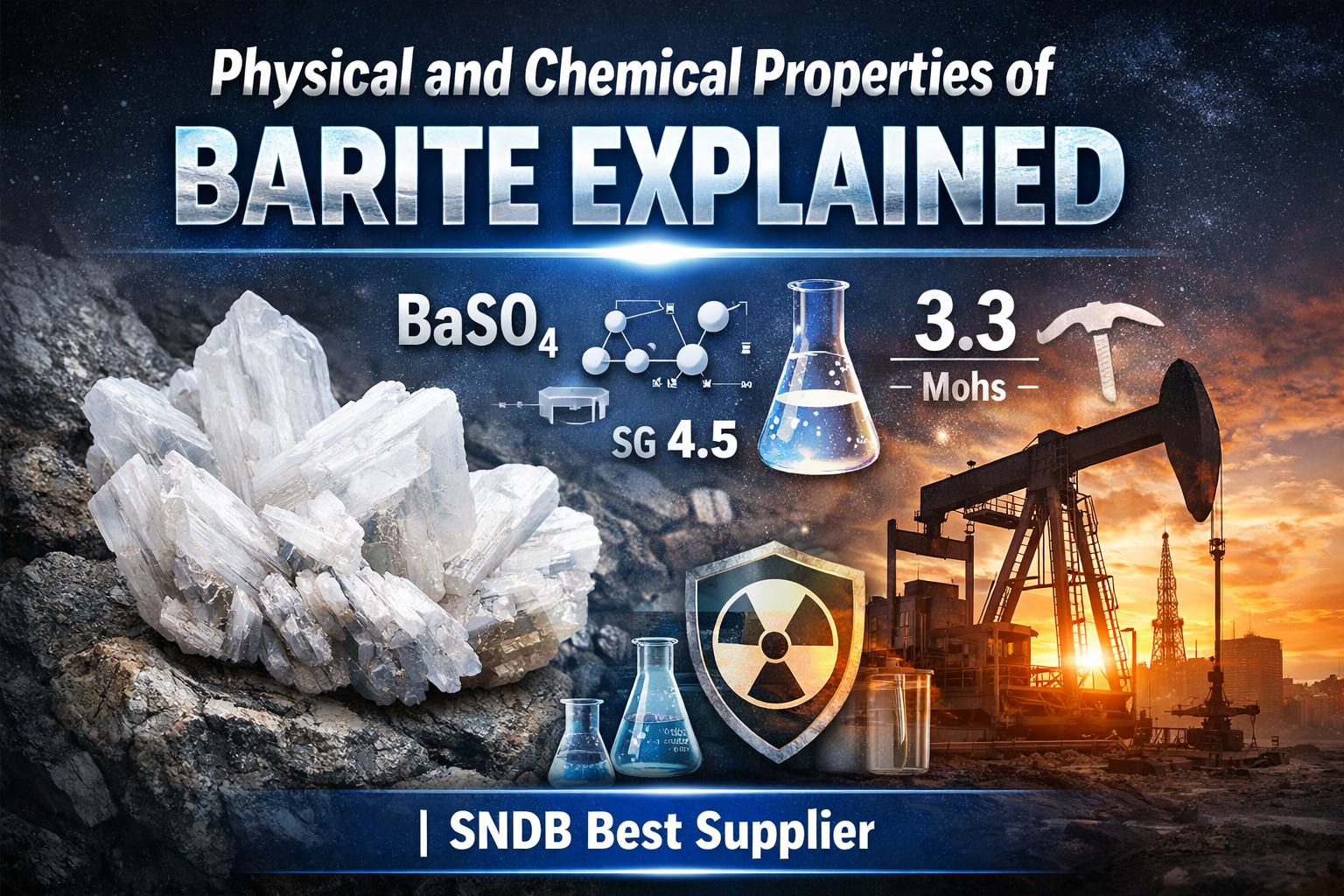
Barite is an important industrial mineral widely used in many industries such as oil and gas drilling, paint, plastics, rubber, and pharmaceuticals. Due to its high density and unique chemical composition, barite has become an essential raw material in modern manufacturing and industrial processes. In this article, we will explore the physical and chemical properties of barite and understand why it is so valuable across various industries.

What is Barite?

Barite, also known as baryte, is a naturally occurring mineral composed mainly of barium sulfate (BaSO₄). The name “barite” comes from the Greek word “barys,” meaning heavy, which refers to its high specific gravity compared to most other non-metallic minerals.

Barite is commonly found in hydrothermal veins, sedimentary rocks, and limestone deposits. It forms in a variety of geological environments and is mined in many parts of the world.

Physical Properties of Barite

Barite has several distinctive physical characteristics that make it suitable for industrial applications.

1. Color
Barite occurs in a range of colors including white, colorless, light yellow, blue, brown, and gray. The most common and commercially valuable form is white barite because of its purity and suitability for industrial processing.

2. Crystal Structure
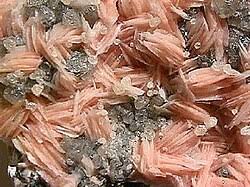
Barite belongs to the orthorhombic crystal system. Its crystals often appear as tabular, prismatic, or blade-like structures.

3. Hardness
On the Mohs hardness scale, barite has a hardness of 3 to 3.5, which means it is relatively soft compared to many other minerals. This softness makes it easier to grind into fine powder for industrial use.

4. Specific Gravity
One of the most important physical properties of barite is its high specific gravity, typically around 4.3 to 4.6. This makes barite significantly heavier than many other minerals, which is why it is widely used as a weighting agent in drilling fluids.

5. Luster
Barite typically exhibits a vitreous to pearly luster, giving it a glass-like shine when light reflects off its crystal surfaces.

6. Cleavage
Barite has perfect cleavage in one direction and good cleavage in other directions, which allows it to break into flat surfaces.

7. Transparency
Barite can range from transparent to translucent, depending on the quality and impurities present in the mineral.

Chemical Properties of Barite

The chemical composition of barite plays a key role in its industrial usefulness.

1. Chemical Formula
The chemical formula of barite is BaSO₄ (Barium Sulfate). It consists of barium, sulfur, and oxygen.

2. Chemical Stability
Barite is chemically stable and does not easily react with most chemicals. This stability makes it ideal for applications where resistance to chemical reactions is required.

3. Insolubility
Barite is insoluble in water and has very low solubility in acids. This property makes it useful in drilling fluids because it does not dissolve under harsh conditions.

4. High Density
The presence of barium in its chemical structure gives barite its characteristic high density. This property is particularly important in the oil and gas industry where barite is used to control pressure in drilling operations.

5. Non-Toxic Nature
Pure barium sulfate is non-toxic and safe for certain medical and industrial applications, such as medical imaging and radiation shielding.

Industrial Applications of Barite

Because of its unique physical and chemical properties, barite is used in many industries:

  • Oil and Gas Industry: Used as a weighting agent in drilling mud to control well pressure.
  • Paint Industry: Acts as a filler to improve paint durability and brightness.
  • Rubber and Plastics: Used as a filler to enhance strength and stability.
  • Medical Industry: Barium sulfate is used in diagnostic imaging such as X-ray contrast agents.
  • Radiation Shielding: Used in concrete and protective materials to block radiation.

Why Quality Barite Supply Matters

Industries that rely on barite require consistent quality, proper particle size, and high purity levels. Reliable suppliers ensure that barite meets industry standards and delivers optimal performance in industrial processes.

SNDB – Best Supplier of Barite

SNDB is known as a trusted supplier of high-quality barite products for various industrial applications. With a strong commitment to quality, reliable supply, and customer satisfaction, SNDB provides barite that meets strict industry requirements.

Whether it is for drilling fluids, paints, plastics, or other industrial uses, SNDB offers premium-grade barite designed to support efficient production and superior results.

Barite is a highly valuable mineral due to its unique physical and chemical properties, particularly its high density, chemical stability, and versatility. These characteristics make it indispensable across multiple industries worldwide. Partnering with a reliable supplier like SNDB ensures access to high-quality barite that supports industrial efficiency and performance.

Physicochemical Properties of Barite Relevant to Cosmetic Applications Abstract Barite (barium sulfate, BaSO₄) is a naturally occurring mineral widely used in industrial applications and increasingly explored in cosmetic formulations. Its chemical inertness, high density, whiteness, and fine particle adaptability make it suitable as an opacifying and texturizing agent in cosmetic products. This article reviews the physicochemical properties of barite and discusses their relevance to cosmetic applications. 1. Introduction Barite is composed primarily of barium sulfate (BaSO₄). It is valued for its high specific gravity, chemical stability, and optical properties. While traditionally used in drilling fluids, paints, plastics, and medical imaging, barite also has potential in cosmetic formulations due to its safety profile and functional characteristics. 2. Chemical Composition and Structure Chemical Formula: BaSO₄ Molecular Weight: 233.39 g/mol Crystal System: Orthorhombic Solubility: Practically insoluble in water Chemical Stability: Highly stable under normal conditions The insolubility of barium sulfate is critical for cosmetic safety, as it prevents absorption through the skin and minimizes toxicity risks. 3. Physical Properties Relevant to Cosmetics 3.1 Particle Size and Texture Barite can be micronized into extremely fine particles. Fine particle size improves smoothness, blendability, and overall sensory performance in cosmetic formulations such as pressed powders and foundations. 3.2 Whiteness and Opacity Physicochemical Properties of Barite Relevant to Cosmetic ApplicationsCategoriesBlogs

Physicochemical Properties of Barite Relevant to Cosmetic Applications

Physicochemical Properties of Barite Relevant to Cosmetic Applications Abstract Barite (barium sulfate, BaSO₄) is a naturally occurring mineral widely used in industrial applications and increasingly explored in cosmetic formulations. Its chemical inertness, high density, whiteness, and fine particle adaptability make it suitable as an opacifying and texturizing agent in cosmetic products. This article reviews the physicochemical properties of barite and discusses their relevance to cosmetic applications. 1. Introduction Barite is composed primarily of barium sulfate (BaSO₄). It is valued for its high specific gravity, chemical stability, and optical properties. While traditionally used in drilling fluids, paints, plastics, and medical imaging, barite also has potential in cosmetic formulations due to its safety profile and functional characteristics. 2. Chemical Composition and Structure Chemical Formula: BaSO₄ Molecular Weight: 233.39 g/mol Crystal System: Orthorhombic Solubility: Practically insoluble in water Chemical Stability: Highly stable under normal conditions The insolubility of barium sulfate is critical for cosmetic safety, as it prevents absorption through the skin and minimizes toxicity risks. 3. Physical Properties Relevant to Cosmetics 3.1 Particle Size and Texture Barite can be micronized into extremely fine particles. Fine particle size improves smoothness, blendability, and overall sensory performance in cosmetic formulations such as pressed powders and foundations. 3.2 Whiteness and Opacity Physicochemical Properties of Barite Relevant to Cosmetic Applications

Barite (barium sulfate, BaSO₄) is a naturally occurring mineral widely used in industrial applications and increasingly explored in cosmetic formulations. Its chemical inertness, high density, whiteness, and fine particle adaptability make it suitable as an opacifying and texturizing agent in cosmetic products. This article reviews the physicochemical properties of barite and discusses their relevance to cosmetic applications.

Barite is composed primarily of barium sulfate (BaSO₄). It is valued for its high specific gravity, chemical stability, and optical properties. While traditionally used in drilling fluids, paints, plastics, and medical imaging, barite also has potential in cosmetic formulations due to its safety profile and functional characteristics.

2. Chemical Composition and Structure

  • Chemical Formula: BaSO₄
  • Molecular Weight: 233.39 g/mol
  • Crystal System: Orthorhombic
  • Solubility: Practically insoluble in water
  • Chemical Stability: Highly stable under normal conditions

The insolubility of barium sulfate is critical for cosmetic safety, as it prevents absorption through the skin and minimizes toxicity risks.

3. Physical Properties Relevant to Cosmetics

3.1 Particle Size and Texture

Barite can be micronized into extremely fine particles. Fine particle size improves smoothness, blendability, and overall sensory performance in cosmetic formulations such as pressed powders and foundations.

3.2 Whiteness and Opacity

Barite exhibits high brightness and opacity. Its refractive index contributes to effective light scattering, improving coverage in cosmetic products.

3.3 Density

  • Specific Gravity: ~4.2–4.5

The high density enhances product weight and stability, especially in compact powder formulations.

3.4 Surface Characteristics

Surface-treated barite can improve dispersion in oil-based and water-based cosmetic systems, enhancing formulation stability.

4. Functional Roles in Cosmetic Applications

4.1 Opacifying Agent

Barite increases opacity in formulations, helping conceal skin imperfections.

4.2 Pigment Extender

It acts as a filler or extender for pigments, reducing formulation cost while maintaining performance.

4.3 Texture Modifier

Its smooth particle morphology contributes to a silky skin feel and improved spreadability.

4.4 Alternative to Titanium Dioxide

In certain formulations, barite may serve as a partial substitute for titanium dioxide, though it provides lower intrinsic opacity.

5. Safety and Regulatory Considerations

Barium sulfate is chemically inert and poorly absorbed by the skin due to its insolubility. Cosmetic-grade barite must meet strict purity standards to ensure minimal contamination with soluble barium compounds or heavy metals. When processed and purified appropriately, it is considered safe for topical use within regulated concentration limits.

Key safety considerations include:

  • High purity (typically >95% BaSO₄)
  • Controlled particle size distribution
  • Heavy metal testing
  • Compliance with cosmetic regulatory standards

6. Comparison with Other Cosmetic Fillers

PropertyBarite (BaSO₄)Titanium Dioxide (TiO₂)Talc
OpacityModerateHighModerate
DensityHighModerateLow
Chemical InertnessHighHighModerate
TextureSmooth (micronized)FineVery soft

Barite provides structural density and brightness but is generally less powerful in opacity than titanium dioxide.


Barite possesses several physicochemical properties that support its potential use in cosmetic formulations, including chemical stability, high density, opacity, and smooth texture when finely processed. Its inert nature and safety profile make it suitable for controlled cosmetic applications. However, strict quality control and regulatory compliance are essential when selecting cosmetic-grade material.

Top Barite Lumps Exporter in India – SNDB Best Manufacturer and SupplierCategoriesBlogs

The Formation and Characteristics of Barite Lumps | SNDB Best Manufacturer and Supplier

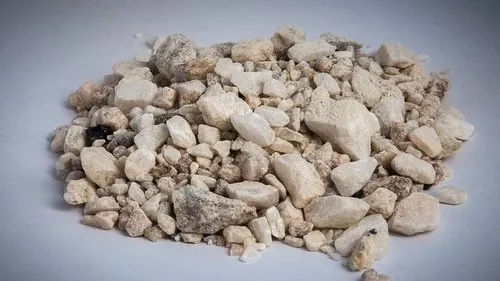
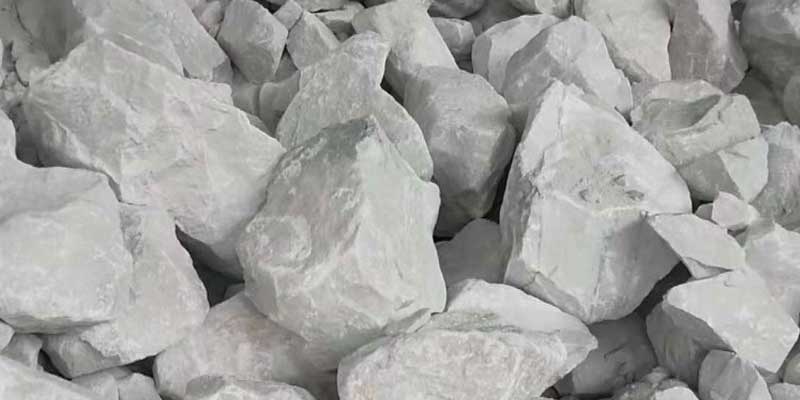
In many industrial areas, but especially in building, chemical manufacture, and oil and gas drilling, barite lumps are an essential material. Known for their high density and chemical stability, barite lumps are naturally occurring forms of barium sulfate (BaSO₄) that are extracted from mineral-rich deposits around the world.SNDB stands out as a leading manufacturer and supplier of high-quality barite lumps.

Formation of Barite Lumps

Barite lumps are created by sedimentary deposits and hydrothermal processes. Over time, barium-rich fluids react with sulfate ions in hydrothermal conditions to crystallize barite, which frequently fills in rock fissures and voids. When barium and sulfate interact in saltwater, the result is sedimentary barite, which slowly settles and compacts into solid mineral beds.

Barite lumps of different sizes and purities are produced by these natural processes. Barium sulfate, which is essential for industrial applications requiring heavy, chemically inert minerals, usually makes up more than 90% of high-quality lumps.

Characteristics of Barite Lumps

Barite lumps possess unique physical and chemical properties:

  • High Specific Gravity: With a density of 4.2–4.5 g/cm³, barite lumps are heavier than most common minerals, making them ideal for drilling fluids in oil and gas exploration.
  • Chemical Stability: Barite is chemically inert and does not react easily with acids or other chemicals, ensuring longevity and safety in industrial processes.
  • Varied Color and Size: While mostly white to gray, barite lumps can have yellow, brown, or even blue hues depending on impurities. Sizes range from small nuggets to large blocks suitable for crushing and processing.
  • Crystalline Structure: Barite exhibits an orthorhombic crystal system, which affects its breakage patterns and grinding behavior during processing.

Industrial Applications

Barite lumps are highly sought after in multiple industries:

  1. Oil & Gas Drilling: Used as a weighting agent in drilling mud to control well pressure and prevent blowouts.
  2. Paints and Coatings: Ground barite is used as a filler to improve brightness and durability.
  3. Rubber and Plastics: Enhances density, strength, and chemical resistance.
  4. Medical Uses: Barium sulfate from barite lumps is used in radiology as a contrast agent for imaging.

Why Choose SNDB as Your Supplier

SNDB stands out as a leading manufacturer and supplier of high-quality barite lumps. With years of experience in mining and processing, SNDB ensures:

  • Consistent purity levels above 90% BaSO₄
  • Compliance with industrial standards
  • Timely delivery and reliable supply chains
  • Competitive pricing for bulk orders

By sourcing barite lumps from SNDB, industries can ensure they receive premium materials optimized for efficiency and performance.

More than just a mineral, barite lumps are essential to industrial processes all around the world. Businesses can depend on premium barite that satisfies operational and regulatory requirements when they work with reliable suppliers like SNDB.

sndb | Sustainable Manufacturing: Recycling and Alternative Materials to Reduce Barite DemandCategoriesBlogs

SNDB | Sustainable Manufacturing: Recycling and Alternative Materials to Reduce Barite Demand

sndb | Sustainable Manufacturing: Recycling and Alternative Materials to Reduce Barite Demand

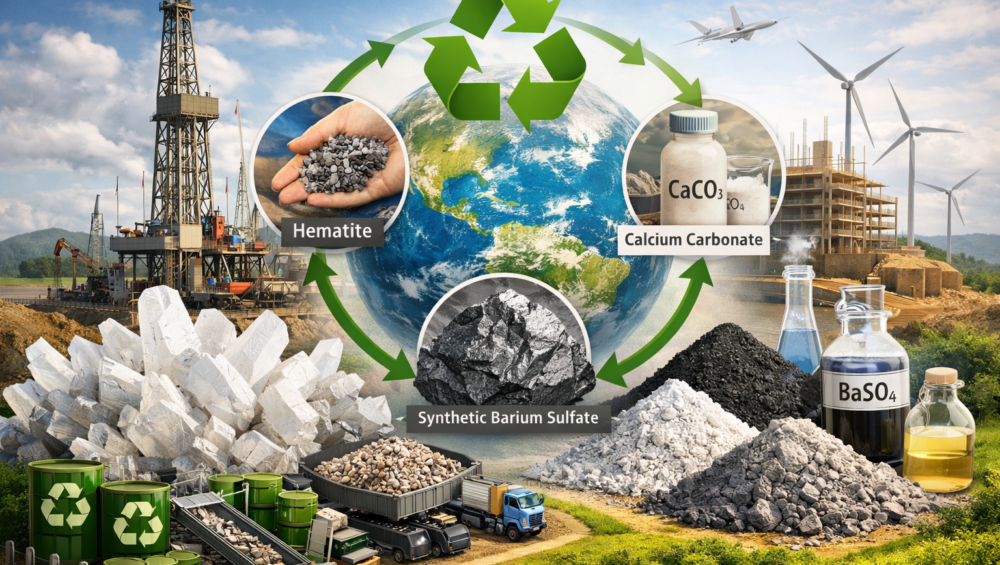
Barite (barium sulfate, BaSO₄) is a high-density mineral widely used in drilling fluids, paints, plastics, rubber, medical imaging, and radiation shielding. While it plays a crucial role in industries such as oil and gas, growing environmental concerns and resource depletion have increased interest in sustainable manufacturing practices. Recycling and the development of alternative materials are emerging as effective strategies to reduce global dependence on barite while maintaining industrial performance standards.

Why Reducing Barite Demand Matters

Barite mining involves land disturbance, energy consumption, and waste generation. Major producing countries such as China, India, and the United States supply a significant portion of global demand, particularly for the oil and gas sector. As drilling activities expand, pressure on natural barite reserves increases.

Reducing demand through recycling and material substitution can:

  • Lower environmental impact
  • Reduce mining waste
  • Decrease carbon emissions
  • Improve supply chain stability
  • Support circular economy initiatives

Recycling Strategies to Reduce Barite Use

1. Recycling of Drilling Fluids

In the oil and gas industry, barite is primarily used to increase the density of drilling mud. Instead of disposing of used drilling fluids, companies are now:

  • Recovering barite through gravity separation systems
  • Reconditioning drilling mud for reuse
  • Filtering contaminants for material recovery

Modern solid-control equipment allows up to 70–80% of barite to be reclaimed from drilling operations, significantly reducing fresh material requirements.

2. Industrial Waste Recovery

Barite-containing waste from:

  • Paint manufacturing
  • Plastic production
  • Rubber compounding

can be processed and reintroduced into manufacturing streams. Advanced filtration and particle separation technologies help maintain quality standards while reducing raw mineral consumption.

3. Closed-Loop Manufacturing Systems

Sustainable manufacturers are implementing closed-loop systems where production waste is collected, processed, and reused internally. This reduces both material costs and environmental liabilities.

Alternative Materials to Barite

Although barite is valued for its high specific gravity and chemical stability, several alternative materials can partially replace it in various applications.

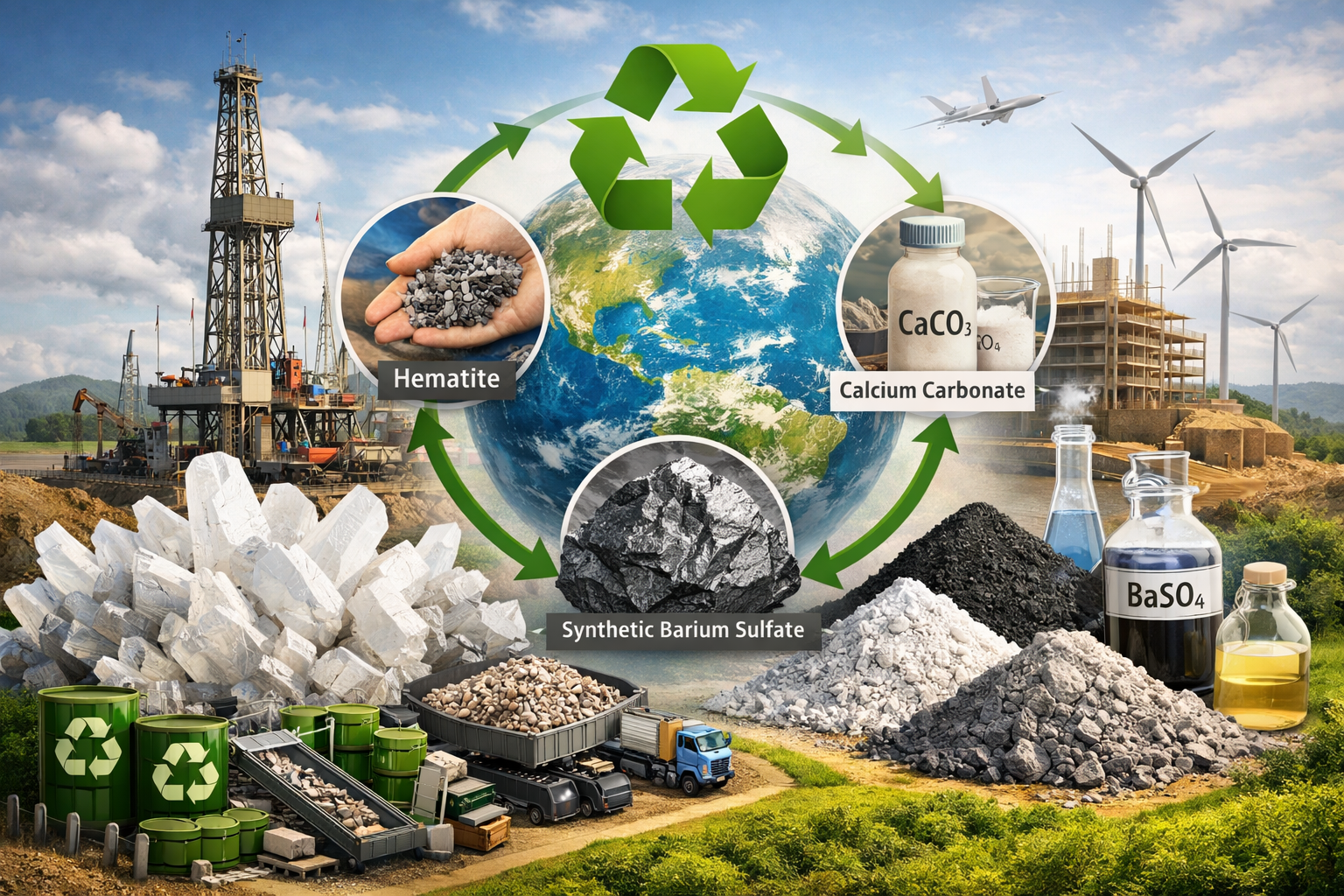
1. Hematite

Hematite (Fe₂O₃) is used as a weighting material in drilling fluids. It offers high density and magnetic properties that allow easier separation and recycling compared to barite.

2. Calcium Carbonate

In paints and plastics, calcium carbonate can substitute barite as a filler material. While lighter in density, it is cost-effective and widely available.

3. Ilmenite

Ilmenite (FeTiO₃) is sometimes used in specialized drilling operations requiring higher density materials.

4. Synthetic Barium Sulfate

Laboratory-produced barium sulfate can serve industries that require extremely pure material, such as medical imaging. Synthetic production reduces reliance on mined barite, though it involves additional processing costs.

Sustainable Manufacturing Best Practices

To successfully reduce barite demand, manufacturers can adopt the following strategies:

  • Conduct material efficiency audits
  • Invest in recovery technologies
  • Optimize formulation designs to reduce filler usage
  • Implement lifecycle assessment (LCA) tools
  • Collaborate with suppliers for responsible sourcing

Industries adopting eco-design principles are better positioned to meet environmental regulations and sustainability targets.

Economic and Environmental Benefits

Reducing barite dependency offers measurable advantages:

  • Lower raw material procurement costs
  • Reduced waste disposal expenses
  • Improved ESG (Environmental, Social, Governance) performance
  • Enhanced brand reputation
  • Increased long-term resource security

As global industries move toward sustainable development goals, responsible mineral consumption is becoming a competitive advantage rather than merely a compliance requirement.

Technological innovation will continue to drive improvements in recycling efficiency and alternative material performance. With growing environmental awareness and stricter regulations worldwide, sustainable manufacturing practices are expected to become standard across mining-dependent industries.

Powdered Perfection: How Barite Enhances Texture and Finish — and the Best Manufacturers, Suppliers, and ExportersCategoriesBlogs

Powdered Perfection: How Barite Enhances Texture and Finish | Best Manufacturers, Suppliers, and Exporters

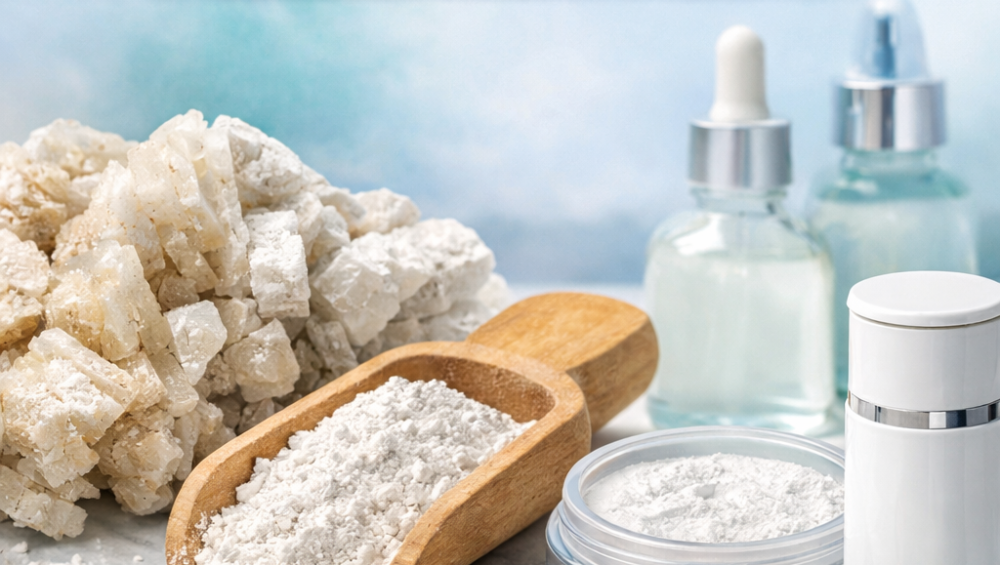
The naturally occurring mineral barite, also known as barium sulfate (BaSO₄), is prized for its high density, tiny particle size, and chemical inertness. Although barite is well-known for its industrial applications in paints and drilling fluids, its special physical characteristics also make it useful in cosmetics and other beauty products. In cosmetic formulations, finely processed barite enhances texture, opacity, smooth application, and a refined finish. Its inert nature means it does not easily react with other ingredients, helping maintain product stability and consistency.

How Barite Enhances Cosmetic Texture and Finish

1. Silky Smooth Texture

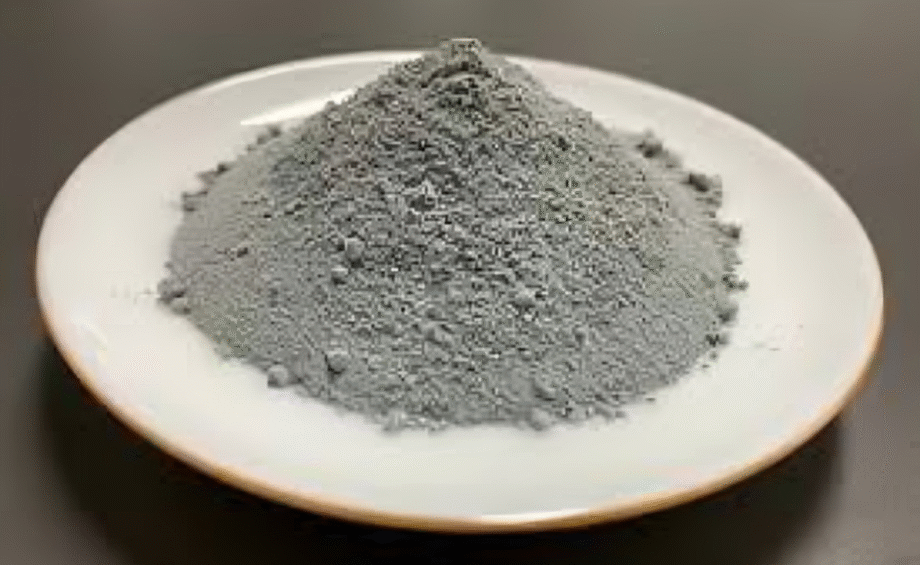
Barite powder gives skin a smooth, velvety texture when it is ground to micron-level fineness. This enables the smooth application and flawless blending of cosmetics, particularly loose mineral foundations and pressed powders, producing a high-end sensory experience.

2. Improved Opacity and Coverage

Increased opacity is a result of barite’s density and crystalline structure. It feels lighter while offering improved coverage and aiding in the concealment of flaws. This makes it useful in matte foundations and face powders.

3. Enhanced Product Stability

Because barite is non-reactive and chemically inert, it helps recipes stay stable over time. It guarantees continuous performance and a longer shelf life by not interfering with pigments, binders, or active substances.

4. Matte and Refined Finish

Barite can enhance the overall finish of cosmetic formulas by adding a smooth, matte look without a heavy or chalky impact due to its natural brightness and fine particle distribution.

Leading Barite Manufacturers, Suppliers & Exporters

SNDB

SNDB is a well-known producer, distributor, and exporter of premium barite powder. The business sells finely ground barite with a high percentage of barium sulfate and mesh sizes that can be customized. SNDB serves both domestic and foreign markets with its state-of-the-art processing facilities and strict quality control standards.

How to Choose the Right Barite Supplier

When selecting a manufacturer or exporter, consider:

  • Purity level (high BaSO₄ content)
  • Whiteness and brightness
  • Fine particle size (mesh specification)
  • Consistent supply capacity
  • Export experience and logistics support
  • Quality certifications and testing standards

For cosmetic-related applications, ensure the material meets required safety and purity specifications before formulation.

In the creation of cosmetics, barite has a significant yet subtle function. It is an important mineral element in contemporary cosmetic products because of its capacity to improve texture, increase coverage, and produce a sophisticated matte finish.

Manufacturers such as SNDB and other established exporters provide high-quality barite suitable for various specialized applications. By choosing the right grade and supplier, cosmetic formulators can achieve powdered perfection with performance, stability, and elegance.

The Essential Role of Barite in the Oil and Gas Industry | SNDB Best Manufacturer and SupplierCategoriesBlogs

SNDB – Your Trusted Partner for High-Grade Barite Worldwide

SNDB: Leading Barite Exporter | Trusted Global Supplier of High-Quality Barite

A well-known brand in the world of minerals, SNDB is regarded as a reliable manufacturer, supplier, and exporter of premium barite. With years of experience, SNDB has established a reputation for excellence, dependability, and client satisfaction.

Oil and gas, paints and coatings, rubber, plastics, cement, and chemicals are just a few of the sectors that employ barium sulfate, or barite, a crucial mineral. By guaranteeing that their BaSo4 satisfies global requirements for density, purity, and particle size, SNDB makes it the go-to option for customers everywhere.

Why Choose SNDB for Barite?

1. Premium Quality Barite

BaSo4 is produced by SNDB using cutting-edge technology to guarantee high density, chemical purity, and uniform particle size. The goods can be used for specialized purposes, industrial applications, and drilling fluids.

2. Reliable Supply & Timely Delivery

As a reliable provider, SNDB promises reliable logistics and on-time delivery. Companies can depend on SNDB for international exports, bespoke packaging, and large shipments.

3. Global Export Experience

Following worldwide quality standards such as ISO and ASTM, SNDB sells premium barite to nations in Asia, Europe, Africa, and the Middle East.

4. Custom Solutions for Industries

Barite is available from SNDB in a range of sizes and grades to satisfy certain industrial requirements. Customers obtain customized solutions whether they are for powdered BaSo4 , premium grade, or industrial grade.

5. Sustainable & Ethical Practices

Assuring little environmental impact while preserving high product quality, SNDB is dedicated to environmentally friendly mining and manufacturing practices.

Applications of SNDB Barite

  • Oil & Gas Industry: Used in drilling fluids for well stability.
  • Paint & Coating Industry: Acts as a high-quality filler.
  • Rubber & Plastic Manufacturing: Improves weight, strength, and durability.
  • Cement & Construction: Enhances density and industrial performance.
  • Chemical Industry: Used in the production of barium chemicals.

Why SNDB is the Best Choice

  • High-density, pure Barite products
  • Experienced manufacturer and trusted supplier
  • ISO & ASTM certified for international quality standards
  • Customized solutions for diverse industrial requirements
  • Efficient global export network
  • Sustainable and eco-friendly manufacturing

Frequently Asked Questions (FAQs)

1. What makes SNDB Barite superior to other suppliers?
SNDB Barite is processed with advanced technology to maintain high purity, density, and uniform particle size, ensuring optimal performance for industrial applications.

2. Can SNDB supply Barite for international exports?
Yes, SNDB is a global exporter of high-grade BaSo4 with experience shipping to countries in Asia, Europe, Africa, and the Middle East, meeting international standards.

3. What grades of Barite does SNDB offer?
SNDB provides industrial grade, premium grade, and powdered BaSo4 , tailored to specific industrial requirements and applications.

4. How does SNDB ensure timely delivery?
SNDB maintains a robust logistics network and streamlined supply chain, ensuring bulk orders and customized shipments are delivered on time, every time.


SNDB is the most reliable partner in the world for enterprises looking for high-quality barite. SNDB, which has a reputation for excellence, dependability, and customer-focused service, guarantees that each customer obtains high-quality BaSo4 products that satisfy global standards, promote industrial efficiency, and propel company success.

BARITE lumpsCategoriesBlogs

Pure and Natural Barite Lumps Manufactured by SNDB

BARITE lumps

Barite is a naturally occurring mineral known for its high specific gravity, chemical inertness, and exceptional purity. Among its various forms, barite lumps are widely used across industries such as oil & gas, chemicals, paints, rubber, and construction. SNDB takes pride in being a trusted manufacturer and exporter of pure and natural barite lumps, delivering consistent quality to global markets.

What Are Barite Lumps?

Barite lumps are mined directly from natural barite deposits and processed with minimal alteration to preserve their original properties. These lumps are characterized by:

  • High specific gravity
  • Excellent whiteness
  • Low impurities
  • Chemical stability

Due to these features, barite lumps serve as a vital raw material for further processing into barite powder or for direct industrial use.

SNDB’s Commitment to Purity and Quality

At SNDB, quality begins at the source. Our barite lumps are carefully extracted from reliable mines and undergo strict quality checks to ensure they meet international standards. We focus on delivering pure and natural barite lumps with consistent physical and chemical properties.

Key quality aspects include:

  • High BaSO₄ content
  • Controlled particle size (lump form as required)
  • Minimal moisture content
  • Free from unwanted contaminants

Our advanced processing and inspection methods ensure that every shipment reflects SNDB’s commitment to excellence.

Applications of Barite Lumps

SNDB’s barite lumps are widely used in multiple industries, including:

  • Oil & Gas Industry: Used as a weighting agent in drilling fluids to control pressure.
  • Chemical Industry: Raw material for barium-based chemicals.
  • Paints & Coatings: Enhances brightness, durability, and corrosion resistance.
  • Rubber & Plastics: Improves density and strength.
  • Construction Industry: Used in radiation shielding and heavy concrete applications.

Why Choose SNDB as Your Barite Lumps Manufacturer?

SNDB has earned a strong reputation as a reliable barite supplier due to:

  • Consistent and high-grade material
  • Ethical mining and processing practices
  • Competitive pricing
  • Customized packaging options
  • On-time delivery for domestic and international orders

Our ability to meet bulk requirements while maintaining quality makes us a preferred barite lumps exporter for clients worldwide.

Global Export Expertise

With a well-established logistics network, SNDB exports barite lumps to various international markets, ensuring safe packaging and timely delivery. We comply with global trade standards and provide all necessary documentation for smooth exports.

When it comes to pure and natural barite lumps, SNDB stands out as a dependable manufacturer and exporter committed to quality, reliability, and customer satisfaction. Whether for oil drilling, chemical processing, or industrial manufacturing, SNDB delivers barite lumps you can trust.

Contact SNDB today to learn more about our barite products and how we can support your business needs.

High-Quality Barite Powder for Industrial Use | SNDB: Best Barite Manufacturer & Supplier in IndiaCategoriesBlogs

SNDB Barite for Drilling Fluids: Performance You Can Trust

High-Quality Barite Powder for Industrial Use | SNDB: Best Barite Manufacturer & Supplier in India

In drilling fluid systems, where uniformity, density, and purity have a direct impact on well safety and operating efficiency, barite is essential. As a reputable producer, supplier, and exporter of premium Baso4 SNDB has made a name for itself by providing dependable performance for oil and gas drilling operations all over the world.

Importance of Barite in Drilling Fluids

In drilling fluids, barium sulfate, or barite, is frequently employed as a weighing agent to regulate formation pressure, stabilize the wellbore, and stop blowouts. Barite’s specific gravity, particle size distribution, and chemical purity all affect how effective it is. Any deviation may result in decreased drilling efficiency, increased equipment wear, or fluid instability.

SNDB’s Commitment to Quality

Strict quality control procedures are used in the production of SNDB barite in order to satisfy API and global industry requirements. Every batch is meticulously handled to guarantee:

  • High specific gravity for effective pressure control
  • Low impurities to minimize abrasion and equipment damage
  • Uniform particle size for optimal suspension and rheology
  • Consistent performance across different drilling environments

This commitment ensures dependable drilling fluid behavior, even in high-pressure and high-temperature conditions.

Advanced Manufacturing and Processing

SNDB produces barite fit for demanding oilfield applications by employing contemporary mining, beneficiation, and micronization processes. Every step of the production process, from choosing the raw materials to packing the finished product, is tracked to ensure uniformity and traceability. The end product is drilling-grade barite that works well with both oil-and water-based mud systems.

Reliable Supply and Global Reach

Being a seasoned exporter and supplier of barite, SNDB is aware of how crucial a steady supply is to drilling operations. SNDB provides clients in both domestic and foreign markets with reliable service and on-time delivery thanks to its strong logistics, adaptable packaging solutions, and export-ready documentation.

Applications in Oil & Gas Drilling

SNDB barite is widely used in:

  • Onshore and offshore drilling operations
  • High-density drilling fluids
  • Workover and completion fluids
  • Challenging geological formations requiring precise pressure control

Its consistent quality helps operators maintain well integrity while optimizing drilling performance and cost efficiency.

Why Choose SNDB Barite

Customers choose SNDB because of:

  • Proven expertise in barite manufacturing
  • Compliance with global drilling standards
  • Stable, high-performance products
  • Responsive technical and commercial support

When drilling operations demand reliability and precision, SNDB Barite for drilling fluids delivers performance you can trust. With consistent quality, global supply capability,

Cosmetic-Grade Barite (SNDB): Manufacturing Process, Quality Control, and Supply ChainCategoriesBlogs

Cosmetic-Grade Barite (SNDB): Manufacturing Process, Quality Control, and Supply Chain

Cosmetic-Grade Barite (SNDB): Manufacturing Process, Quality Control, and Supply Chain

The cosmetics and personal care industries make extensive use of cosmetic-grade barite, a high-purity type of barium sulfate. Barite contributes significantly to improving the texture, opacity, and stability of cosmetic formulations because of its chemical inertness, high brightness, tiny particle size, and superior oil-absorption qualities. Cosmetic-grade barite satisfies the safety, purity, and consistency requirements required by international cosmetic manufacturers when produced in accordance with SNDB-approved standards.

The production method, quality assurance procedures, and supply chain organization of cosmetic-grade barite are examined in this paper.

Manufacturing Process of Cosmetic-Grade Barite (SNDB)

The production of cosmetic-grade barite requires precise processing to ensure high purity and uniform particle size.

1. Raw Material Selection
Carefully chosen mines with naturally low concentrations of contaminants including iron, silica, and heavy metals are the source of high-quality barite ore. Processing is only permitted for ore that satisfies SNDB and cosmetic industry requirements.

2. Crushing and Grinding
To produce ultra-fine particle sizes, the raw barite is crushed and ground using sophisticated grinding machinery. For smooth texture and performance, micronized barite with regulated particle dispersion is usually needed for cosmetic applications.

3. Purification and Beneficiation
Unwanted contaminants are eliminated by physical and chemical beneficiation techniques. Achieving the brightness, whiteness, and purity required for cosmetic-grade material depends on this stage.

4. Classification and Micronization
Air classifiers and precision sieves ensure consistent particle size. Micronization enhances dispersion and prevents grittiness in cosmetic formulations.

5. Drying and Packaging
The finished barite powder is dried under controlled conditions and packed in contamination-free environments using moisture-resistant, cosmetic-safe packaging.

Quality Control and SNDB Compliance

Strict quality control is essential to ensure cosmetic-grade barite is safe, reliable, and compliant with industry regulations.

Key Quality Control Measures Include:

  • Chemical purity testing (BaSO₄ content)
  • Heavy metal analysis (lead, mercury, arsenic, cadmium)
  • Particle size distribution analysis
  • Whiteness and brightness measurement
  • Moisture content testing
  • Microbiological safety checks (where required)

Each batch undergoes laboratory testing before release. SNDB-approved manufacturers maintain detailed documentation, batch traceability, and compliance with international cosmetic standards such as ISO and GMP guidelines.

Supply Chain of Cosmetic-Grade Barite

A well-managed supply chain ensures consistent availability and quality for cosmetic manufacturers worldwide.

1. Ethical and Reliable Sourcing
Raw materials are sourced from approved mines following responsible mining practices and regulatory compliance.

2. In-House Processing and Storage
Manufacturers maintain controlled processing facilities and dedicated storage areas to prevent cross-contamination.

3. Logistics and Export Handling
Cosmetic-grade barite is transported using clean, sealed packaging and handled according to international export regulations. Reliable exporters ensure timely delivery and proper documentation.

4. Global Distribution
SNDB-compliant barite suppliers serve cosmetic brands, contract manufacturers, and distributors across domestic and international markets.

Applications of Cosmetic-Grade Barite

Cosmetic-grade barite is commonly used in:

  • Face powders and foundations
  • Compact powders
  • Creams and lotions
  • Sunscreen formulations
  • Decorative cosmetics

Its inert nature and fine texture help improve product feel, opacity, and formulation stability.

A crucial raw ingredient for the cosmetics industry is cosmetic-grade barite made in accordance with SNDB regulations. Manufacturers guarantee a product that satisfies international safety and performance standards through meticulous raw material selection, sophisticated production techniques, stringent quality control, and a dependable supply chain. Cosmetic brands may preserve quality, consistency, and customer confidence by selecting a reliable cosmetic-grade barite supplier who has been approved by the SNDB.