How Barite Is Used in Paint, Plastic, and Rubber | SNDB Best Manufacturer, Supplier and ExporterCategoriesBlogs

How Barite Is Used in Paint, Plastic, and Rubber | SNDB Best Manufacturer, Supplier and Exporter

How Barite Is Used in Paint, Plastic, and Rubber | SNDB Best Manufacturer, Supplier and Exporter

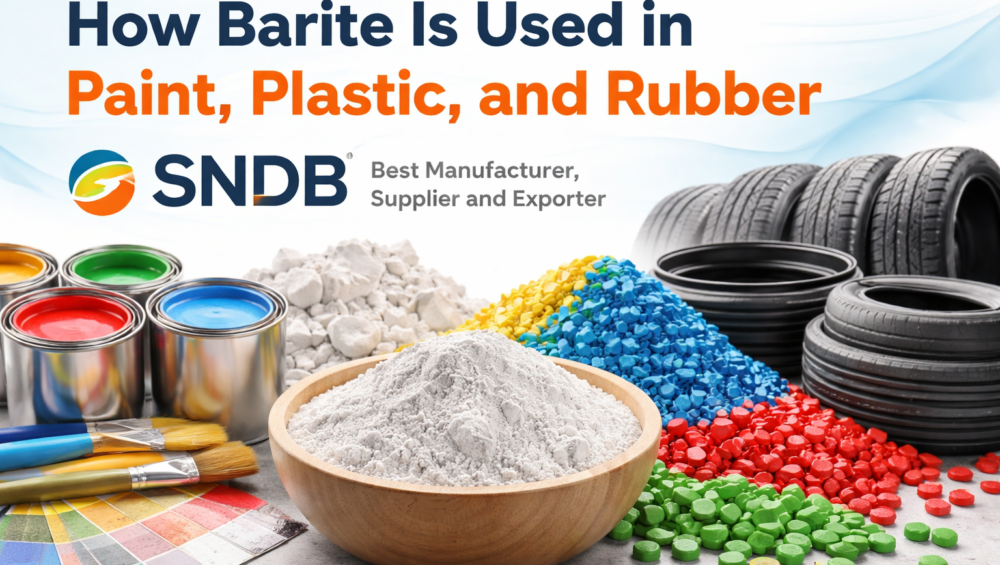
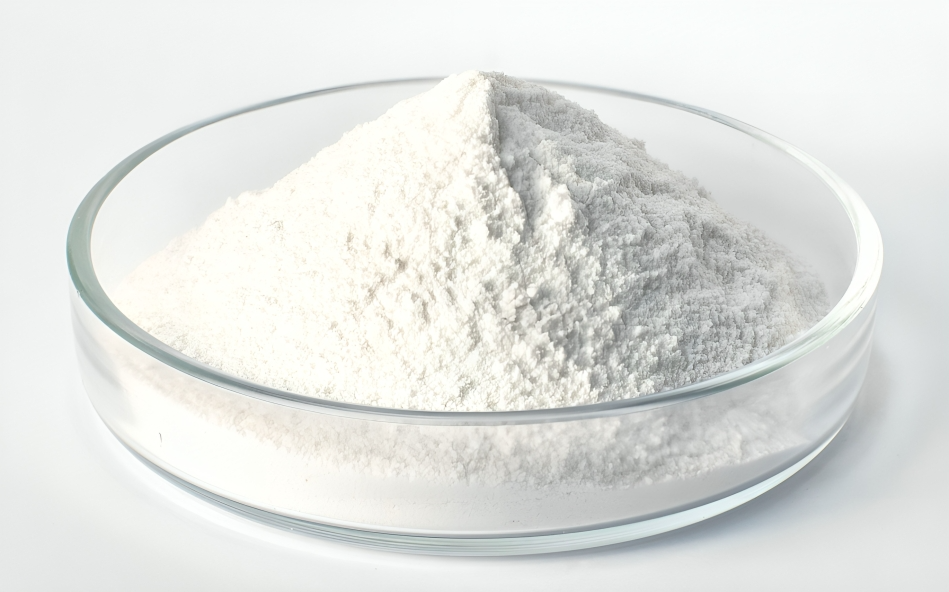
Barite (Barium Sulfate) is an important industrial mineral used in many industries such as paint, plastic, rubber, oil drilling, and construction. Due to its high density, chemical stability, and fine particle size, barite is widely used as a filler and extender in manufacturing industries. In this article, we will explain how barite is used in paint, plastic, and rubber industries and why SNDB is a trusted manufacturer, supplier, and exporter of high-quality barite.

Barite Uses in Paint Industry

Barite is widely used in the paint industry as a filler and extender pigment. It improves the quality and durability of paint.

Functions of Barite in Paint:

  • Increases paint density
  • Improves paint smoothness
  • Enhances brightness and whiteness
  • Improves corrosion resistance
  • Reduces paint cost by replacing expensive raw materials
  • Improves weather resistance

Barite is used in:

  • Industrial paints
  • Marine paints
  • Automotive paints
  • Powder coatings
  • Primers and protective coatings

Because barite is chemically inert and has high whiteness, it is an ideal mineral for high-quality paint production.

Barite Uses in Plastic Industry

In the plastic industry, barite is used as a filler material to improve strength and performance.

Functions of Barite in Plastic:

  • Increases weight and density
  • Improves strength and rigidity
  • Improves wear resistance
  • Improves heat resistance
  • Reduces production cost
  • Improves sound insulation properties

Barite is commonly used in:

  • PVC products
  • Plastic pipes
  • Plastic sheets
  • Packaging materials
  • Automotive plastic parts

It also improves surface finish and gives a smooth and glossy appearance to plastic products.

Barite Uses in Rubber Industry

Barite is also used in rubber manufacturing as a filler to improve product performance and durability.

Functions of Barite in Rubber:

  • Improves rubber strength
  • Improves abrasion resistance
  • Increases weight
  • Improves chemical resistance
  • Reduces rubber production cost
  • Improves product life

Barite is used in:

  • Tires
  • Rubber sheets
  • Rubber mats
  • Conveyor belts
  • Footwear soles
  • Industrial rubber products

Barite helps rubber products become stronger, more durable, and more resistant to chemicals and wear.

Why Choose SNDB Barite Manufacturer, Supplier and Exporter

SNDB is a leading barite manufacturer, supplier, and exporter providing high-quality barite powder for paint, plastic, and rubber industries.

  • High purity barite
  • High whiteness
  • Accurate particle size
  • High specific gravity
  • Competitive price
  • Bulk supply available
  • Worldwide export

SNDB supplies barite powder in different grades according to customer requirements for paint, plastic, rubber, and drilling industries.

Barite is an essential mineral used in paint, plastic, and rubber industries as a filler and performance-enhancing material. It improves strength, durability, density, smoothness, and chemical resistance of finished products. SNDB is a trusted manufacturer, supplier, and exporter of premium quality barite for industrial applications worldwide.
SNDB: Best Global Barite Powder | High Purity & Superior QualityCategoriesBlogs

Barite Mining and Processing for Oil Industry Applications

SNDB Barite Powder Exporters – Consistent Quality, Global Reach

Barite is an important industrial mineral mainly used in the oil and gas industry as a weighting agent in drilling fluids. Due to its high specific gravity, chemical inertness, and low solubility, barite plays a crucial role in maintaining pressure control during drilling operations. The mining and processing of barite are therefore essential to support global energy production.

What is Barite?

Barite is a mineral composed of barium sulfate (BaSO₄). It is known for its high density, typically ranging from 4.2 to 4.5 g/cm³, which makes it suitable for use in drilling mud. Barite is usually found in sedimentary deposits and hydrothermal veins.

Barite Mining Methods

Baso4 is mined using both surface and underground mining methods, depending on the depth and type of deposit.

1. Surface Mining

Surface mining is the most common method and includes:

  • Open-pit mining
  • Quarrying
  • Strip mining

In this method, the overburden (soil and rock covering the deposit) is removed, and barite ore is extracted using heavy machinery such as excavators and loaders.

2. Underground Mining

Underground mining is used when barite deposits are deep below the surface. This method involves:

  • Shaft mining
  • Room and pillar mining

Although more expensive, underground mining is sometimes necessary for high-quality barite deposits.

Barite Processing

After mining, barite ore undergoes several processing steps to meet the specifications required for oil drilling applications.

1. Crushing

The mined barite is first crushed using jaw crushers and cone crushers to reduce the size of the ore.

2. Grinding

The crushed ore is then ground into fine powder using ball mills or roller mills. The oil industry requires barite powder with very fine particle size.

3. Beneficiation

Beneficiation improves the purity and density of barite. Common methods include:

  • Gravity separation
  • Flotation
  • Magnetic separation
  • Washing

These processes remove impurities such as silica, iron oxide, and clay.

4. Drying and Packaging

The processed barite is dried and packed into bags or bulk containers for transportation to oil drilling companies.

Barite in Oil Drilling

Barite is mainly used as a weighting agent in drilling mud. Its main functions include:

  • Controlling formation pressure
  • Preventing blowouts
  • Stabilizing the borehole
  • Cooling and lubricating the drill bit
  • Carrying drill cuttings to the surface

Without barite, drilling deep oil and gas wells would be extremely dangerous and inefficient.

Specifications for Oil Industry Barite

The oil industry has strict specifications for barite:

  • Specific gravity: Minimum 4.2
  • Low soluble salts
  • Fine particle size
  • High purity BaSO₄
  • Low abrasive materials

These specifications ensure safe and efficient drilling operations.

Environmental Considerations

Barite mining can have environmental impacts such as land degradation, water pollution, and dust generation. Proper environmental management practices include:

  • Land reclamation
  • Waste management
  • Water treatment
  • Dust control systems

Sustainable mining practices are important to reduce environmental damage.

Barite mining and processing are essential to the oil and gas industry. From extraction to beneficiation and final use in drilling fluids, barite plays a critical role in safe and efficient drilling operations. With increasing global energy demand, the importance of barite will continue to grow, making it a valuable mineral resource worldwide.

SNDB Best Exporter | Industrial Applications of Barite in Cosmetic and Personal Care ProductsCategoriesUncategorized

SNDB Best Exporter | Industrial Applications of Barite in Cosmetic and Personal Care Products

SNDB Best Exporter | Industrial Applications of Barite in Cosmetic and Personal Care Products

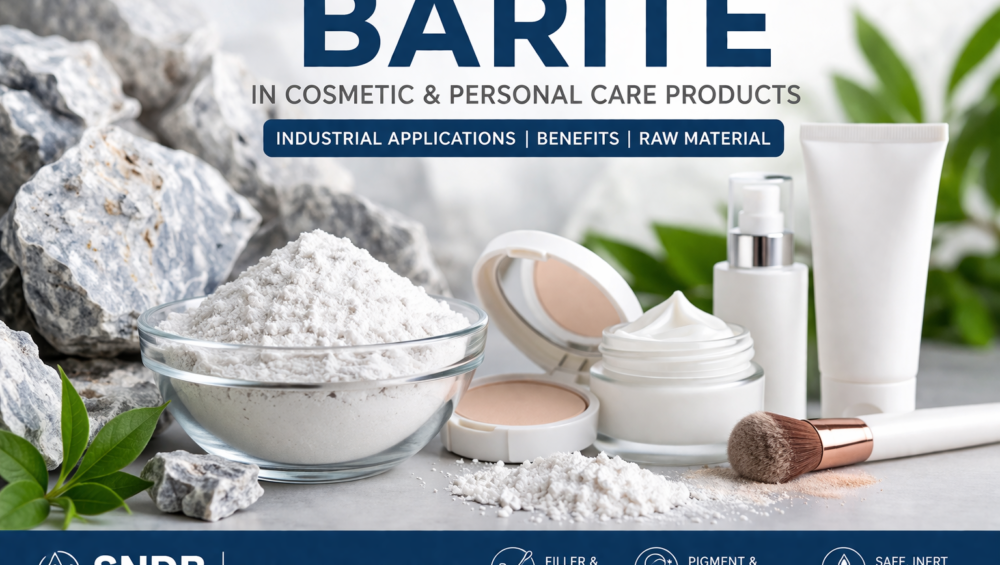
Barite, also known as barium sulfate (BaSO₄), is an important industrial mineral widely used in many industries, including cosmetics and personal care products. Due to its high whiteness, chemical inertness, non-toxicity, and high density, barite is an ideal raw material for cosmetic formulations. Many global companies use high-purity barite supplied by exporters like SNDB for industrial and cosmetic applications.

SNDB is recognized as one of the leading barite manufacturers and exporters from India, supplying high-quality barite powder and lumps to various industries worldwide. The company exports barite to many countries and provides barite for paint, plastics, pharmaceuticals, and other industrial uses.

SNDB – Best Barite Exporter

SNDB is a well-known chemical manufacturer and exporter specializing in barite and other industrial minerals. The company is known for high purity barite, consistent particle size, and reliable global supply. SNDB exports large volumes of barite annually and follows international quality standards such as ISO certifications.

Why SNDB is a Leading Exporter

  • High purity barite (over 95% BaSO₄)
  • Global export network
  • ISO certified company
  • Bulk supply capability
  • Competitive pricing
  • Reliable logistics and delivery

SNDB barite is used in multiple industries such as oil drilling, paints, plastics, rubber, pharmaceuticals, glass, and ceramics due to its chemical stability and whiteness.

Industrial Applications of Barite in Cosmetic and Personal Care Products

1. Opacifying Agent

Barite is used as an opacifying agent in cosmetic products. It helps make products opaque and improves product appearance. It is commonly used in face powders, foundations, creams, lotions, and sunscreens. Its high density and whiteness help provide better coverage and smooth texture in cosmetic products.

2. Pigment and Whitening Agent

Barite is used as a white pigment in cosmetics. It improves brightness and whiteness in products such as compact powder, BB cream, whitening cream, talcum powder, and body powder. Barite can also be used as a partial substitute for titanium dioxide in some cosmetic products.

3. Filler in Cosmetic Products

Barite is used as a filler material in cosmetic formulations to increase volume and improve texture. It helps improve smoothness, improve spreadability, increase product stability, and reduce production cost.

4. Thickening Agent

Barite powder is used as a thickening agent in creams and lotions. It helps maintain product consistency and improves the feel of cosmetic products.

5. Radiation Protection in Cosmetics

Because barite contains barium sulfate, it has radiation-blocking properties. It is sometimes used in specialized cosmetic products like protective creams and sunscreens.

6. Non-Toxic and Chemically Inert Material

Barite is insoluble in water and chemically inert, making it safe for cosmetic and personal care applications when used in controlled amounts. These properties make it suitable for skin-contact products.

Other Industrial Uses of Barite

Apart from cosmetics, barite is widely used in oil and gas drilling, paint and coatings, plastics and rubber, pharmaceuticals, glass and ceramics, and chemical manufacturing. Barite improves strength, brightness, and durability in many industrial products.

Barite is an important industrial mineral used in cosmetic and personal care products due to its whiteness, density, chemical inertness, and non-toxic nature. It is used as an opacifier, pigment, filler, and thickening agent in many cosmetic formulations. Companies like SNDB supply high-quality barite for industrial and cosmetic applications worldwide. With increasing demand for mineral-based cosmetics, the use of barite in personal care products is expected to grow in the future.

SNDB: Leading Barite SupplierCategoriesBlogs

SNDB – Best Barite Supplier

SNDB is one of the leading barite manufacturers and exporters from India. The company supplies high-quality barite powder and lumps to industries such as oil & gas, paint, plastics, rubber, chemicals, and pharmaceuticals. SNDB exports barite to more than 40 countries and is known for consistent quality, global supply, and competitive pricing.

Barite (BaSO₄) is a mineral with high specific gravity and chemical stability, making it very useful in drilling mud, paints, plastics, and chemical manufacturing. SNDB provides barite with high purity (above 95%) and different grades like 4.0, 4.1, and 4.2 specific gravity for industrial use.

Why SNDB is the Best Barite Supplier

  • High purity barite (above 95% BaSO₄)
  • ISO certified company
  • Global export to 40+ countries
  • Reliable bulk supply
  • Competitive price
  • Strong logistics and export documentation
  • Sustainable mining practices
  • Multiple grades available
  • Used in major industries
  • On-time delivery worldwide

10 FAQs About SNDB Barite Supplier

Q1. What is barite?
Barite is a mineral made of barium sulfate (BaSO₄) used in drilling, paint, plastics, and chemicals.

Q2. What industries use SNDB barite?
Oil & gas, paint, plastics, rubber, glass, chemicals, and pharmaceuticals.

Q3. What grades of barite are available?
4.0, 4.1, 4.2 specific gravity barite powder and lumps.

Q4. What is the purity of SNDB barite?
Above 95% BaSO₄.

Q5. Does SNDB export barite?
Yes, SNDB exports to more than 40 countries worldwide.

Q6. What is barite used for in oil drilling?
It is used as a weighting agent in drilling mud to control pressure.

Q7. Is SNDB ISO certified?
Yes, SNDB follows international quality standards and certifications.

Q8. Does SNDB supply barite powder and lumps?
Yes, both powder and lumps are available.

Q9. Why choose SNDB over other suppliers?
Because of quality, global supply, experience, and competitive price.

Q10. How to contact SNDB for barite?
You can contact SNDB through their sales team for bulk orders, export inquiries, and technical specifications.

SNDB barite supplier, barite exporter India, barite powder supplier, barite manufacturer India, API grade barite supplier, barite lumps supplier, oil drilling barite supplier, high purity barite powder, barite for paint industry, barite for plastics, barite for rubber industry, bulk barite supplier, barite export company, barium sulfate supplier, industrial barite supplier, best barite supplier India, SNDB minerals, barite price per ton, barite powder 4.2 SG, barite for oil and gas

Barite Mineral Facts: Everything You Need to KnowCategoriesBlogs

Barite Mineral Facts: Everything You Need to Know

Barite Mineral Facts: Everything You Need to Know

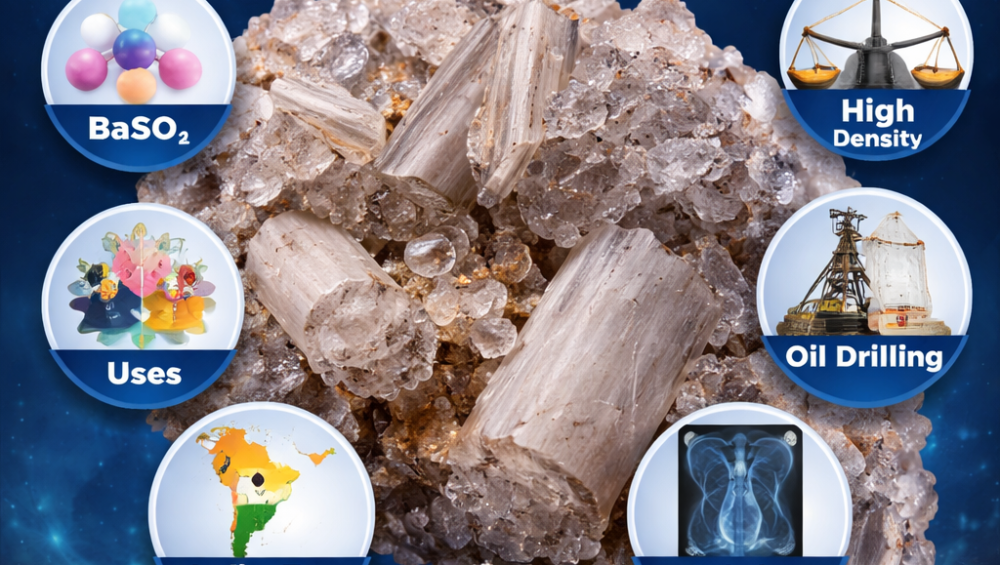
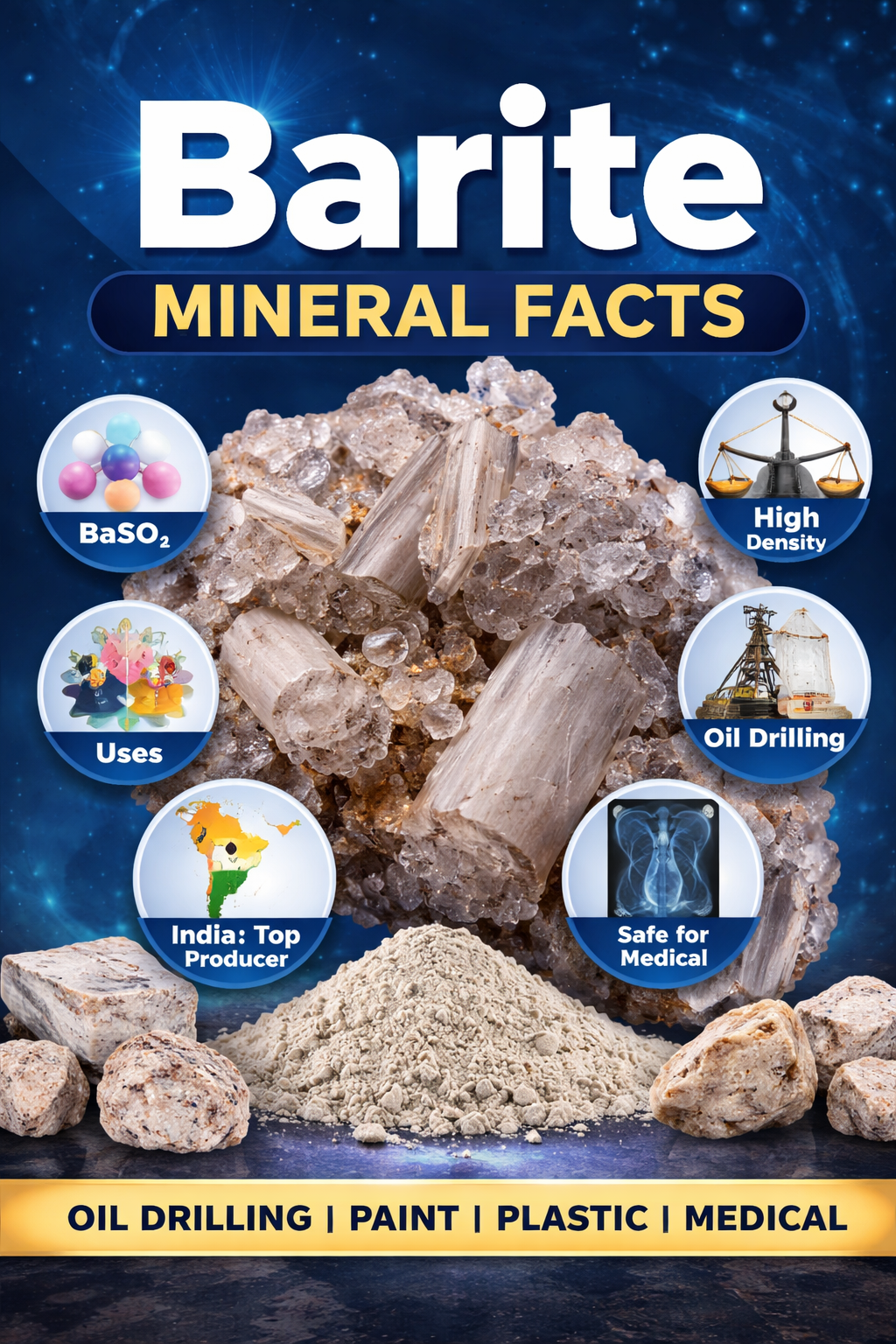
Barite is a naturally occurring mineral composed of barium sulfate (BaSO₄). It is also known as barytes or heavy spar because of its high density. Barite is one of the most important industrial minerals and is widely used in oil drilling, paint, plastic, rubber, and medical industries.

The name “Barite” comes from the Greek word “barys”, which means heavy, because barite has a high specific gravity compared to other non-metallic minerals.

Chemical and Physical Properties of Barite

PropertyDetails
Chemical FormulaBaSO₄
ColorWhite, Brown, Yellow, Blue, Gray
Specific Gravity4.2 – 4.5
Hardness3 – 3.5 Mohs
Crystal SystemOrthorhombic
SolubilityInsoluble in water
FormLumps, Crystals, Powder

Barite is chemically stable, non-toxic, and has high density, making it useful in many industrial applications.

Occurrence of Barite

Barite is commonly found in:

  • Sedimentary rocks
  • Limestone and dolomite rocks
  • Hydrothermal veins
  • Marine deposits
  • Sandstone deposits

Major barite producing countries include India, China, USA, Morocco, and Iran. India is one of the largest producers and exporters of barite in the world.

Uses of Barite Mineral

1. Oil and Gas Industry

Barite is mainly used as a weighting agent in drilling mud in oil and gas drilling. It helps control pressure and prevents blowouts during drilling operations. This is the largest use of barite in the world.

2. Paint Industry

Barite is used as a filler in paints and coatings. It improves thickness, smoothness, and durability of paint.

3. Plastic and Rubber Industry

Barite is used as a filler material to improve strength, hardness, and wear resistance in plastic and rubber products.

4. Medical Industry

Barite is used in X-ray imaging to examine the digestive system. It is used as a barium meal for medical tests.

5. Paper Industry

Barite is used as a coating and filler in paper to improve brightness and smoothness.

6. Construction Industry

Barite is used in radiation shielding concrete in hospitals, laboratories, and nuclear facilities.

Barite is also used in ceramics, glass, brake pads, clutch plates, and soundproofing materials.

SNDB – Barite Manufacturer, Supplier & Exporter

SNDB is a leading barite manufacturer, supplier, and exporter from India. The company supplies high-quality barite powder and barite lumps for industries such as oil drilling, paint, plastics, rubber, and chemicals.

Why Choose SNDB

  • High-quality barite powder
  • Different grades available (4.0, 4.1, 4.2, 4.3 specific gravity)
  • Export to many countries
  • Competitive prices
  • On-time delivery
  • Industrial-grade and drilling-grade barite
  • Custom packaging available

SNDB supplies barite to oil & gas companies, paint manufacturers, chemical industries, and construction companies worldwide.

Barite is an important mineral because of its high density, chemical stability, and wide industrial uses. It is mainly used in oil drilling, paint, plastics, rubber, medical, paper, and construction industries. India is one of the leading producers of barite, and SNDB is a reliable manufacturer, supplier, and exporter of barite mineral.

FAQs About Barite Mineral

1. What is barite mainly used for?

Barite is mainly used as a weighting agent in oil and gas drilling mud. It is also used in paint, plastic, rubber, paper, and medical industries.

2. What is the chemical formula of barite?

The chemical formula of barite is BaSO₄ (Barium Sulfate).

3. Why is barite called a heavy mineral?

Barite is called a heavy mineral because it has a high specific gravity (4.2–4.5), which is much higher than most non-metallic minerals.

4. Is barite safe for medical use?

Yes, barite is safe for medical use. It is used in X-ray imaging to examine the digestive system because it is non-toxic and does not dissolve in water.

5. Which country produces the most barite?

India and China are among the largest producers of barite in the world.

SNDB Best Supplier | Barite in Radiation Shielding: Medical and Nuclear ApplicationsCategoriesBlogs

SNDB Best Supplier | Barite in Radiation Shielding: Medical and Nuclear Applications

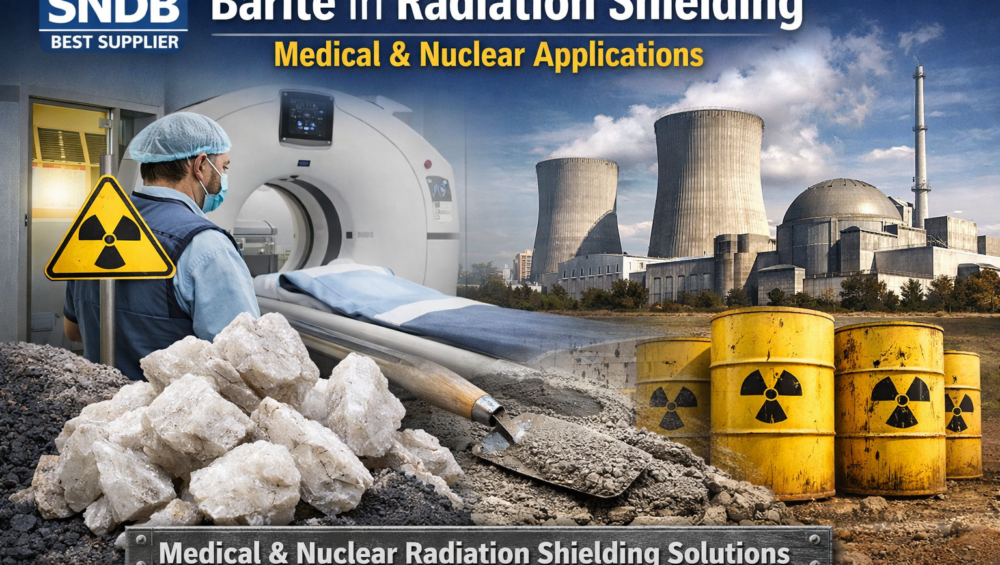
Barite (BaSO₄) is a high-density mineral widely used in radiation shielding applications, particularly in medical and nuclear industries. Due to its high specific gravity, chemical stability, and radiation absorption properties, barite is an important material in shielding structures such as hospital X-ray rooms, CT scan rooms, nuclear power plants, and radioactive storage facilities. Barite is commonly used in the form of barite concrete, barite plaster, and barite blocks for radiation protection.sndb best barite supplier in india .

Properties of Barite for Radiation Shielding

Barite is highly suitable for radiation shielding due to the following properties:

  • High density (around 4.5 g/cm³)
  • High atomic number (barium)
  • Chemical stability
  • Non-toxic compared to lead
  • Strong gamma and X-ray absorption capacity

When barite is added to concrete, it significantly increases the density of the concrete, improving its ability to absorb gamma rays and neutron radiation. Barite concrete can reach densities above 3.0 g/cm³, which is much higher than ordinary concrete, making it more effective for radiation shielding.

Barite in Medical Applications

In the medical field, radiation shielding is required to protect doctors, technicians, and patients from harmful radiation exposure. Barite is used in:

  • X-ray room walls
  • CT scan room walls
  • Radiotherapy rooms
  • Diagnostic imaging facilities
  • Nuclear medicine departments

Barite plaster and barite concrete are used to construct radiation-proof walls. These materials absorb X-rays and gamma rays and prevent radiation leakage outside the room. Compared to ordinary concrete, barite concrete provides better protection and allows thinner walls due to its higher density.

Barite is also used in medical imaging as a contrast material (barium sulfate) for X-ray imaging of the digestive system because it blocks X-rays and makes internal organs visible.

Barite in Nuclear Applications

In nuclear power plants and radioactive storage facilities, strong radiation shielding is required to protect workers and the environment. Barite is used in:

  • Nuclear reactor shielding walls
  • Radioactive waste storage
  • Research laboratories
  • Hot cells
  • Nuclear fuel processing plants

Barite concrete is particularly effective in nuclear facilities because it can absorb both gamma radiation and neutron radiation. Heavyweight concrete made with barite reduces radiation penetration and improves safety in nuclear installations.

Advantages of Barite Radiation Shielding

  • High radiation absorption efficiency
  • Reduces wall thickness
  • Cost-effective compared to lead shielding
  • Durable and strong
  • Environmentally safer than lead
  • Easy to mix with concrete and plaster
  • Suitable for both medical and nuclear shielding

Barite plays a crucial role in radiation shielding in both medical and nuclear industries. Its high density and radiation absorption properties make it an ideal material for constructing radiation-proof structures such as hospital imaging rooms and nuclear power plants. With increasing demand for radiation protection in healthcare and nuclear energy sectors, the demand for high-quality barite from reliable suppliers like SNDB continues to grow.

SNDB Best Manufacturer | Advantages of Using Barite in Industrial ProductsCategoriesBlogs

SNDB Best Manufacturer | Advantages of Using Barite in Industrial Products

SNDB Best Manufacturer | Advantages of Using Barite in Industrial Products

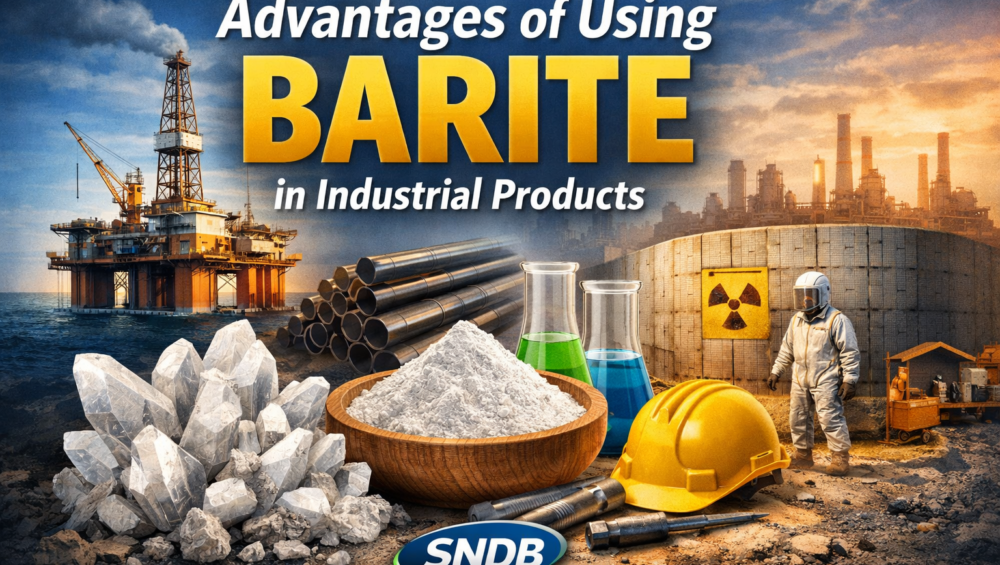
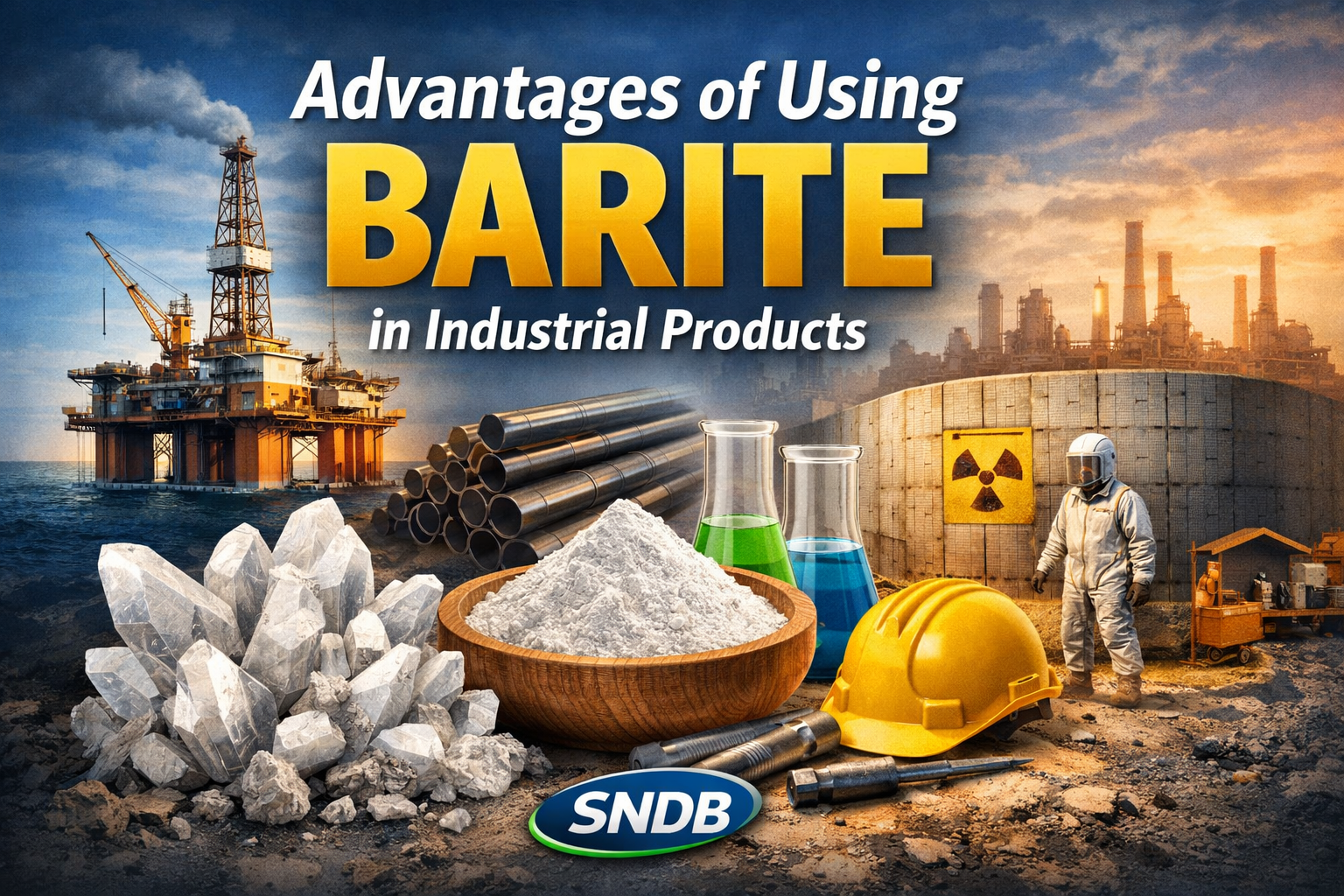
Barite, also known as baryte, is a naturally occurring mineral made of barium sulfate (BaSO₄). It is widely used in many industries such as oil and gas, paint, plastic, rubber, construction, and medical industries. Due to its high density, chemical stability, and low cost, barite has become an essential industrial mineral. Companies like SNDB are known as reliable manufacturers and suppliers of high-quality barite for industrial use.

What Is Barite?

Barite is a heavy mineral with high specific gravity and excellent chemical resistance. It is usually found in white, grey, yellow, or brown colors and is processed into barite powder for industrial applications.

Advantages of Using Barite in Industrial Products

1. High Density

One of the biggest advantages of barite is its high density. This makes it very useful in the oil and gas industry as a weighting agent in drilling mud. It helps control pressure during drilling operations.

2. Chemical Stability

Barite is chemically inert and does not react with most chemicals. This makes it suitable for use in paints, coatings, plastics, and rubber products.

3. Radiation Shielding

Barite has the ability to block gamma and X-ray radiation. Because of this property, it is used in hospitals, laboratories, and nuclear facilities for radiation shielding concrete.

4. Low Oil Absorption

Barite has low oil absorption, which makes it very useful as a filler in paint and coating industries. It helps improve smoothness and finishing quality.

5. Improves Product Strength

When used in plastics and rubber, barite improves strength, durability, and wear resistance of the final product.

6. Cost-Effective Material

Barite is an affordable mineral compared to other high-density materials, making it a cost-effective solution for many industries.

7. Non-Toxic and Safe

Barite is non-toxic and safe to use in many applications, including medical uses such as barium meals for X-ray imaging.

Industrial Uses of Barite

Barite is used in many industries, including:

  • Oil and gas drilling
  • Paint and coatings
  • Plastic industry
  • Rubber industry
  • Construction (radiation shielding concrete)
  • Medical industry
  • Glass and ceramics
  • Paper industry

Why Choose SNDB as a Barite Manufacturer?

SNDB is known as a trusted barite manufacturer because of:

  • High-quality barite powder
  • Different mesh sizes available
  • Competitive pricing
  • Bulk supply capability
  • Export quality material
  • On-time delivery

Barite is an important industrial mineral used in many industries due to its high density, chemical stability, radiation shielding properties, and cost-effectiveness. Choosing a reliable manufacturer like SNDB ensures consistent quality and supply, which is essential for industrial production. The demand for barite is continuously growing due to its wide range of industrial applications and benefits.

Worldwide Barite Export Services | SNDB Trusted SupplierCategoriesBlogs

Top SNDB Manufacturer and Supplier in 2026: Quality, Reliability, and Innovation

Worldwide Barite Export Services | SNDB Trusted Supplier

In today’s competitive market, finding a trustworthy SNDB manufacturer and supplier is critical for businesses seeking high-quality, reliable products. SNDB, known for its versatile applications in [specify industry, e.g., electronics, construction, or chemical production], demands precision manufacturing, consistent quality, and timely delivery. In 2026, several manufacturers have emerged as leaders in this field, offering solutions that combine innovation with efficiency.

Why Quality Matters in SNDB Manufacturing

Quality is the cornerstone of any successful SNDB product. Manufacturers must adhere to strict industry standards and employ advanced production techniques to ensure every batch meets the required specifications. High-quality SNDB not only improves performance but also reduces waste and operational costs, giving businesses a competitive edge.

Reliability: A Key Factor for Businesses

Reliable SNDB suppliers ensure consistent availability and timely delivery. Companies that experience delays or inconsistencies in supply risk production interruptions and increased costs. The top manufacturers in 2026 focus on robust supply chain management, rigorous testing, and transparent communication to maintain reliability across the board.

Innovation Driving the SNDB Industry

Innovation is transforming the SNDB market. Leading manufacturers invest in research and development to improve product performance, enhance environmental sustainability, and reduce production costs. From advanced formulations to automated production systems, innovation ensures that businesses can stay ahead of industry trends while maintaining high standards.

How to Choose the Best SNDB Manufacturer

When selecting a SNDB manufacturer and supplier, consider the following factors:

  • Certifications and Compliance: Ensure the supplier adheres to industry standards and regulatory requirements.
  • Production Capacity: Verify that they can meet your order volumes without compromising quality.
  • Customer Support: A responsive and knowledgeable support team is invaluable.
  • Track Record: Look for manufacturers with proven experience and positive client testimonials.
  • Sustainability Practices: Environmentally responsible production can enhance your brand reputation.

Leading SNDB Manufacturers in 2026

Some manufacturers have set themselves apart through a combination of advanced technology, commitment to quality, and excellent customer service. These companies are recognized globally for their expertise and dedication to supplying top-tier SNDB products.

Choosing the right SNDB manufacturer and supplier is crucial for businesses seeking quality, reliability, and innovation. By focusing on certified, experienced, and innovative manufacturers, companies can ensure smooth operations and superior product performance. In 2026, the leaders in SNDB manufacturing continue to set the benchmark for excellence, helping businesses grow and succeed in a competitive market.

baryteCategoriesBlogs

SNDB | Global Baryte Market: Trends and Future Demand

Barite Powder: Composition, Properties & SNDB’s Global Supply Excellence

Baryte, also known as barite (BaSO₄), is a vital industrial mineral widely used across multiple sectors, particularly in oil and gas drilling. Due to its high density, chemical inertness, and cost-effectiveness, baryte has become an indispensable component in modern industries. In recent years, the global baryte market has witnessed steady growth, driven by increasing energy demand and expanding industrial applications.

Market Overview

The global baryte market is primarily fueled by its extensive use in drilling fluids for oil and gas exploration. Baryte acts as a weighting agent, helping to control pressure in drilling operations and prevent blowouts. As global energy consumption rises, especially in developing economies, the demand for baryte continues to grow.

Apart from the petroleum industry, baryte is also used in:

  • Paints and coatings
  • Plastics and rubber
  • Pharmaceuticals
  • Radiation shielding in medical and nuclear facilities

Key Market Trends

1. Rising Oil & Gas Exploration Activities
Increased exploration in regions such as the Middle East, North America, and Asia-Pacific has significantly boosted baryte demand. Offshore drilling projects, in particular, require large quantities of high-quality baryte.

2. Growth in Infrastructure and Manufacturing
Rapid urbanization and industrialization are increasing the use of baryte in construction materials, paints, and plastics, contributing to market expansion.

3. Shift Toward High-Purity Baryte
Industries are increasingly demanding high-purity baryte for specialized applications like medical imaging and radiation protection, creating opportunities for advanced processing technologies.

4. Sustainable Mining Practices
Environmental concerns are encouraging companies to adopt eco-friendly mining and processing techniques, shaping the future of the baryte industry.

Future Demand Outlook

The future of the baryte market looks promising, with consistent growth expected over the next decade. Key factors influencing future demand include:

  • Expansion of the global energy sector
  • Increasing use in high-tech and medical applications
  • Growing demand from emerging economies like India and China

However, challenges such as fluctuating oil prices, environmental regulations, and supply chain disruptions may impact market stability.

Role of Leading Manufacturers, Suppliers, and Exporters

Reliable supply and consistent quality are critical in the baryte market. Leading companies play a significant role in meeting global demand by ensuring efficient mining, processing, and distribution.

SNDB stands out as a trusted manufacturer, supplier, and exporter of high-quality baryte. With a strong commitment to quality standards, advanced processing facilities, and a global distribution network, SNDB caters to diverse industrial needs. The company focuses on delivering premium-grade baryte suitable for drilling, industrial, and specialized applications, making it a preferred partner in the international market.

The global baryte market is on a steady growth trajectory, supported by its essential role in energy production and industrial applications. As demand continues to rise, companies that prioritize quality, sustainability, and innovation—like SNDB—are well-positioned to lead the market and meet future challenges effectively.

SNDB | Barite Chemical Safety, Handling, and Storage GuideCategoriesBlogs

Barite Chemical Safety, Handling, and Storage Guide

SNDB | Barite Chemical Safety, Handling, and Storage Guide

Barite is a naturally occurring mineral composed of barium sulfate (BaSO₄). It is widely used in industries such as oil and gas drilling, paints, plastics, rubber, pharmaceuticals, and radiation shielding due to its high density, chemical inertness, and low solubility. Although barite is considered relatively safe compared to many industrial chemicals, proper safety, handling, and storage procedures are essential to prevent health risks and environmental contamination.

This guide provides important information about barite chemical safety, handling practices, and proper storage methods for industrial and commercial use.

1. Barite Chemical Identification

  • Chemical Name: Barium Sulfate
  • Chemical Formula: BaSO₄
  • Appearance: White or off-white powder
  • Odor: Odorless
  • Solubility: Insoluble in water
  • Main Use: Drilling fluids, paints, coatings, plastics, rubber, pharmaceuticals

2. Hazards Identification

Baso4 is generally non-toxic and chemically inert, but exposure to barite dust can cause health issues.

Health Hazards

  • Inhalation: Breathing barite dust may cause irritation to the respiratory tract, coughing, and shortness of breath.
  • Eye Contact: Dust may cause mechanical irritation.
  • Skin Contact: Usually non-irritating but may cause dryness.
  • Ingestion: Low toxicity, but large amounts should be avoided.

Environmental Hazards

  • Baso4 is not classified as a hazardous environmental substance, but large spills may affect soil and water bodies.

3. Safety Precautions

To minimize risks when working with barite powder:

  • Use dust masks or respirators
  • Wear safety goggles
  • Use protective gloves
  • Wear protective clothing
  • Ensure proper ventilation in the work area
  • Avoid generating dust
  • Wash hands after handling
  • Do not eat, drink, or smoke while handling barite

4. Handling Guidelines

Proper handling ensures safety and maintains product quality.

  • Handle in a well-ventilated area
  • Avoid dust formation
  • Use mechanical handling equipment where possible
  • Keep containers tightly closed
  • Avoid contact with strong acids
  • Follow workplace safety standards and MSDS guidelines

5. Storage Guidelines

Proper storage is important to maintain the quality of barite powder.

  • Store in a dry, cool, and well-ventilated area
  • Keep away from moisture and water
  • Store in sealed bags or containers
  • Keep away from strong acids
  • Stack bags properly to avoid damage
  • Keep away from food materials

Recommended Storage Temperature: Room temperature
Shelf Life: Usually 2–5 years if stored properly

6. Spill and Leak Measures

If barite powder is spilled:

  • Avoid creating dust
  • Use a vacuum or shovel to collect material
  • Place collected material in a container for reuse or disposal
  • Clean area with water after removal
  • Workers should wear protective equipment during cleanup

7. Fire Fighting Measures

  • Barite is non-flammable
  • Use fire extinguishers suitable for surrounding materials
  • Firefighters should wear protective equipment to avoid dust inhalation

8. Disposal Considerations

  • Dispose according to local environmental regulations
  • Do not dispose into drains or water bodies
  • Dispose at approved industrial waste disposal sites

Barite is a stable and relatively safe industrial mineral, but proper safety procedures must be followed when handling barite powder to avoid dust inhalation and workplace hazards. Using protective equipment, proper ventilation, and correct storage methods ensures worker safety and maintains product quality.

SNDB is a leading manufacturer and supplier of high-quality barite chemicals, known for providing premium grade barite powder for industries such as oil and gas drilling, paints, plastics, rubber, and construction. The company focuses on consistent product quality, advanced processing technology, and strict safety standards to meet international industrial requirements. With strong supply capacity, reliable packaging, and timely delivery, SNDB has built a reputation as a trusted barite supplier in domestic and global markets. Their commitment to quality control, customer satisfaction, and competitive pricing makes SNDB one of the preferred choices for companies looking for a dependable barite chemical manufacturer and supplier.