
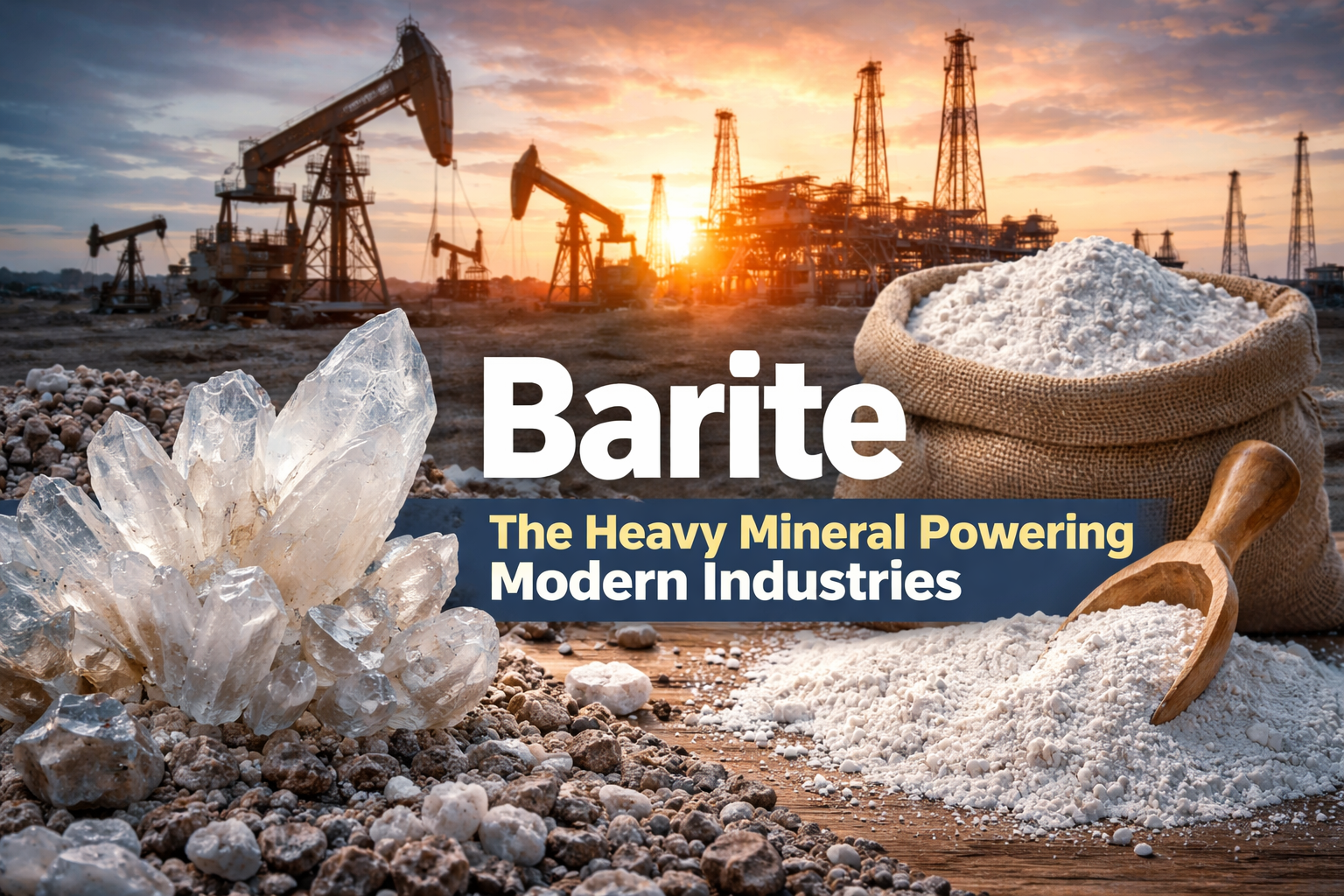
Barite, chemically known as barium sulfate (BaSO₄), is a naturally occurring mineral recognized for its high density and wide range of industrial applications. Often overlooked by the general public, barite plays a crucial role in several key industries, particularly in oil and gas, construction, and manufacturing. Its unique physical and chemical properties make it an indispensable resource in the modern industrial world.
Properties and Characteristics
Barite is distinguished by its remarkable weight, which is why its name is derived from the Greek word “barys,” meaning heavy. It typically appears in colors such as white, gray, blue, or brown, and has a high specific gravity compared to most non-metallic minerals. This density, combined with its chemical inertness, low solubility, and ability to absorb radiation, makes barite highly valuable for specialized industrial uses.
Formation and Occurrence
Barite is commonly found in sedimentary rocks and hydrothermal veins. It often occurs alongside minerals like calcite, quartz, and fluorite. Major deposits are located in countries such as India, China, the United States, and Morocco. In India, significant reserves are found in states like Andhra Pradesh, contributing to the country’s role as a major producer and exporter.
Industrial Applications
The most significant use of barite is in the oil and gas industry. It is a key component in drilling fluids, also known as drilling muds. Due to its high density, barite helps control pressure in oil wells, preventing blowouts and ensuring safe drilling operations. This single application accounts for the majority of global barite consumption.
Beyond oil drilling, barite is used in the production of paints, plastics, and rubber. It acts as a filler and extender, improving durability and resistance. In the medical field, barite is used in radiology as a contrast agent for X-ray imaging of the digestive system, thanks to its ability to block radiation.
Barite is also utilized in the construction industry, particularly in making high-density concrete used for radiation shielding in hospitals, laboratories, and nuclear facilities. Additionally, it finds use in glassmaking and as a weighting agent in various industrial processes.
Economic Importance
Barite is a vital mineral in the global economy, especially due to its connection with the energy sector. The demand for oil and gas directly influences the demand for barite. As developing countries expand their industrial activities, the need for barite continues to grow. Its relatively low cost and high efficiency make it a preferred material across multiple industries.
Environmental Considerations
While barite itself is non-toxic and environmentally stable, its mining and processing can have environmental impacts. Land degradation, water pollution, and habitat disruption are some of the concerns associated with barite extraction. Therefore, sustainable mining practices and proper environmental management are essential to minimize these effects.
Barite may not be widely recognized outside industrial circles, but its importance cannot be overstated. From enabling safe oil drilling to supporting medical diagnostics and construction, barite is a cornerstone of modern industry. As global demand for energy and infrastructure continues to rise, this “heavy mineral” will remain a powerful force driving industrial progress.
By partnering with an experienced and reputable SNDB barite manufacturer, businesses can ensure stable operations, improve productivity, and achieve long-term growth in competitive industrial markets.