
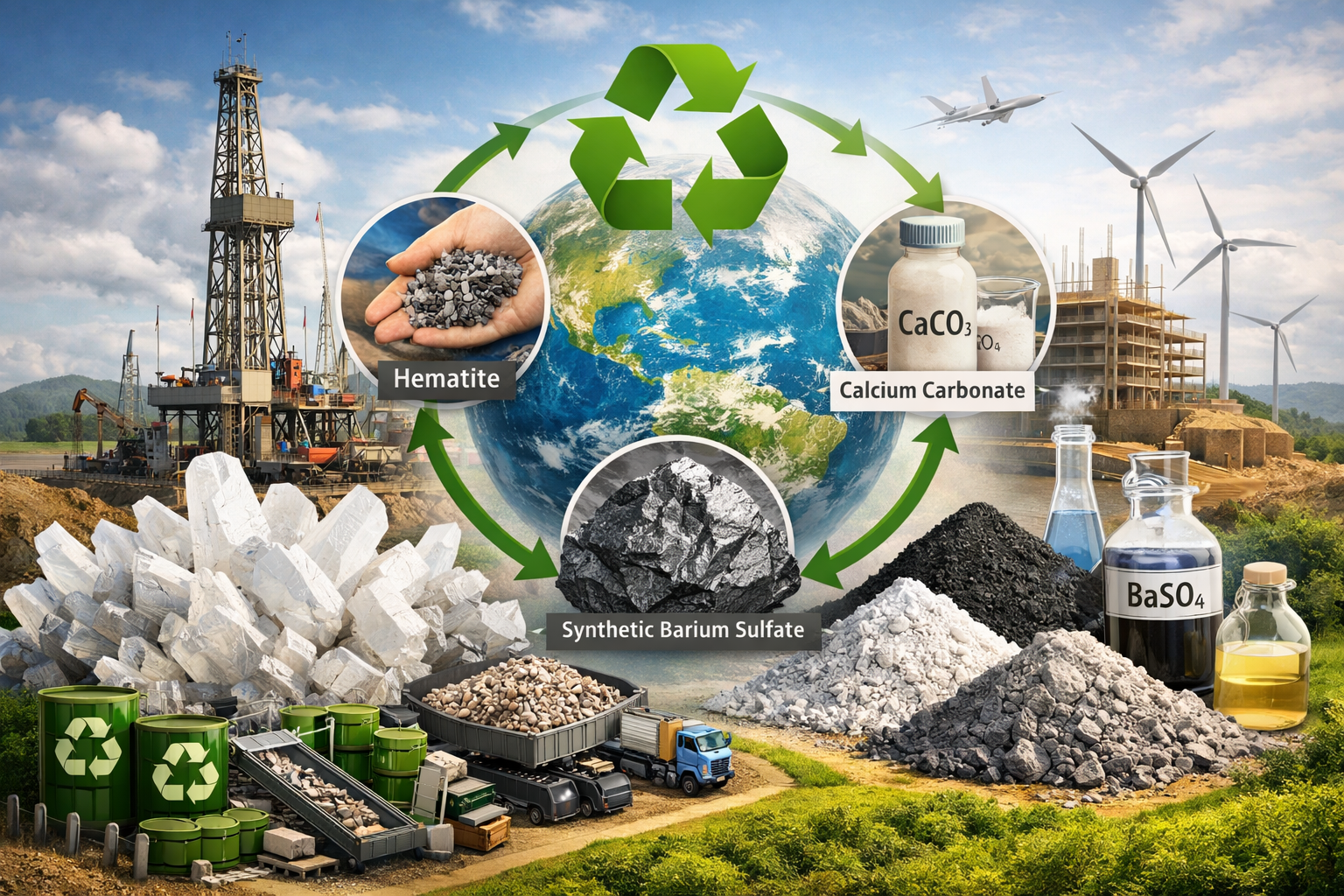
Barite (barium sulfate, BaSO₄) is a high-density mineral widely used in drilling fluids, paints, plastics, rubber, medical imaging, and radiation shielding. While it plays a crucial role in industries such as oil and gas, growing environmental concerns and resource depletion have increased interest in sustainable manufacturing practices. Recycling and the development of alternative materials are emerging as effective strategies to reduce global dependence on barite while maintaining industrial performance standards.
Why Reducing Barite Demand Matters
Barite mining involves land disturbance, energy consumption, and waste generation. Major producing countries such as China, India, and the United States supply a significant portion of global demand, particularly for the oil and gas sector. As drilling activities expand, pressure on natural barite reserves increases.
Reducing demand through recycling and material substitution can:
- Lower environmental impact
- Reduce mining waste
- Decrease carbon emissions
- Improve supply chain stability
- Support circular economy initiatives
Recycling Strategies to Reduce Barite Use
1. Recycling of Drilling Fluids
In the oil and gas industry, barite is primarily used to increase the density of drilling mud. Instead of disposing of used drilling fluids, companies are now:
- Recovering barite through gravity separation systems
- Reconditioning drilling mud for reuse
- Filtering contaminants for material recovery
Modern solid-control equipment allows up to 70–80% of barite to be reclaimed from drilling operations, significantly reducing fresh material requirements.
2. Industrial Waste Recovery
Barite-containing waste from:
- Paint manufacturing
- Plastic production
- Rubber compounding
can be processed and reintroduced into manufacturing streams. Advanced filtration and particle separation technologies help maintain quality standards while reducing raw mineral consumption.
3. Closed-Loop Manufacturing Systems
Sustainable manufacturers are implementing closed-loop systems where production waste is collected, processed, and reused internally. This reduces both material costs and environmental liabilities.
Alternative Materials to Barite
Although barite is valued for its high specific gravity and chemical stability, several alternative materials can partially replace it in various applications.
1. Hematite
Hematite (Fe₂O₃) is used as a weighting material in drilling fluids. It offers high density and magnetic properties that allow easier separation and recycling compared to barite.
2. Calcium Carbonate
In paints and plastics, calcium carbonate can substitute barite as a filler material. While lighter in density, it is cost-effective and widely available.
3. Ilmenite
Ilmenite (FeTiO₃) is sometimes used in specialized drilling operations requiring higher density materials.
4. Synthetic Barium Sulfate
Laboratory-produced barium sulfate can serve industries that require extremely pure material, such as medical imaging. Synthetic production reduces reliance on mined barite, though it involves additional processing costs.
Sustainable Manufacturing Best Practices
To successfully reduce barite demand, manufacturers can adopt the following strategies:
- Conduct material efficiency audits
- Invest in recovery technologies
- Optimize formulation designs to reduce filler usage
- Implement lifecycle assessment (LCA) tools
- Collaborate with suppliers for responsible sourcing
Industries adopting eco-design principles are better positioned to meet environmental regulations and sustainability targets.
Economic and Environmental Benefits
Reducing barite dependency offers measurable advantages:
- Lower raw material procurement costs
- Reduced waste disposal expenses
- Improved ESG (Environmental, Social, Governance) performance
- Enhanced brand reputation
- Increased long-term resource security
As global industries move toward sustainable development goals, responsible mineral consumption is becoming a competitive advantage rather than merely a compliance requirement.
Technological innovation will continue to drive improvements in recycling efficiency and alternative material performance. With growing environmental awareness and stricter regulations worldwide, sustainable manufacturing practices are expected to become standard across mining-dependent industries.